
Whole-system duct and dryer vent check with before-and-after photos - you see exactly what came out of your vents
That "$99 whole-house special" is a bait ad - the real number appears once they are in your hallway, or the "clean" is a shop-vac at the register. We photograph the inside of your ducts before and after instead.
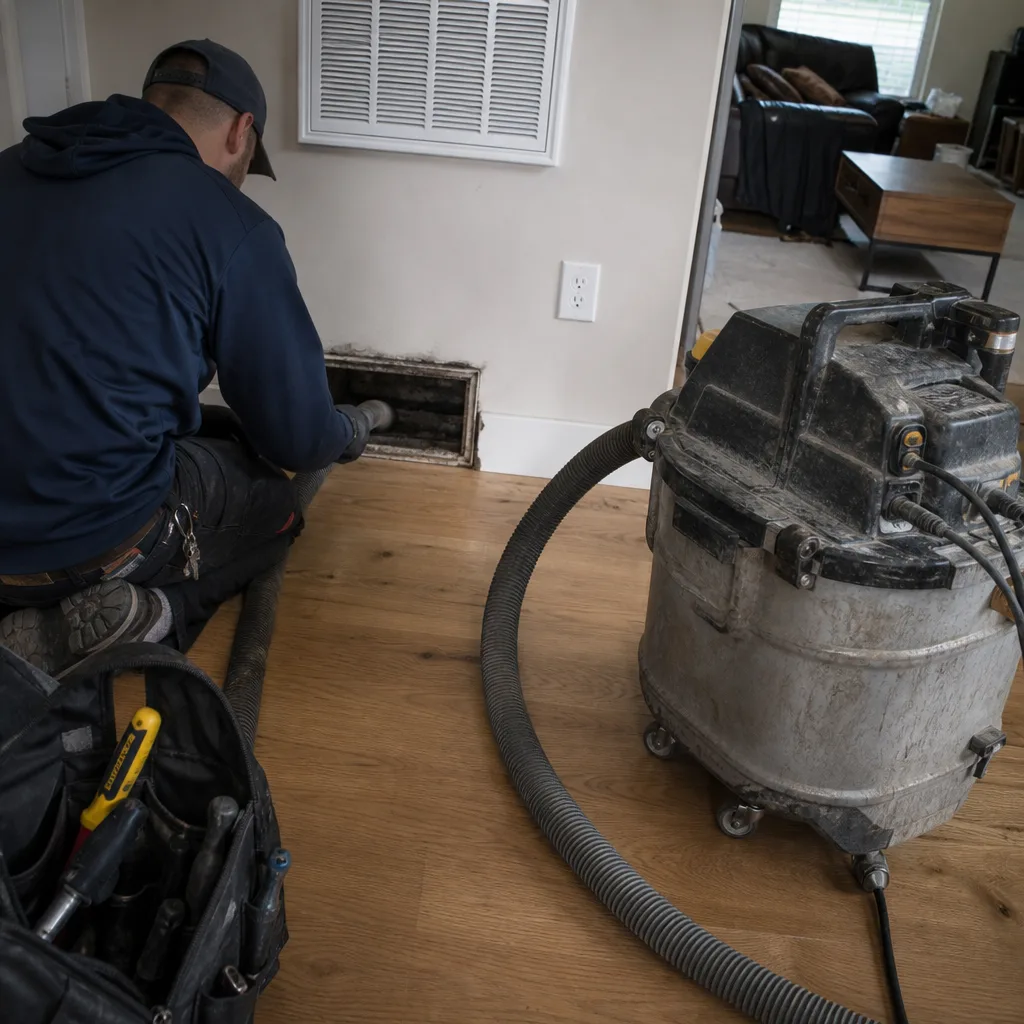 Before
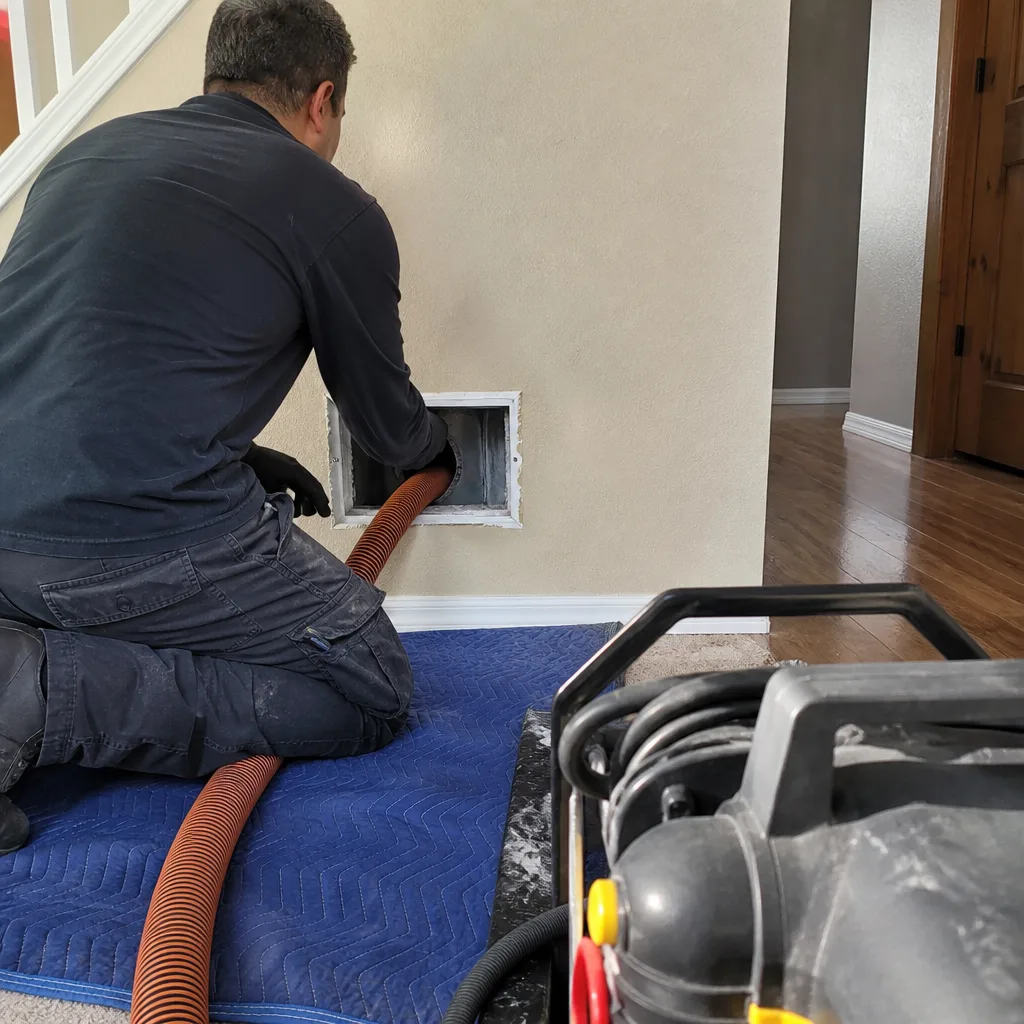 After
After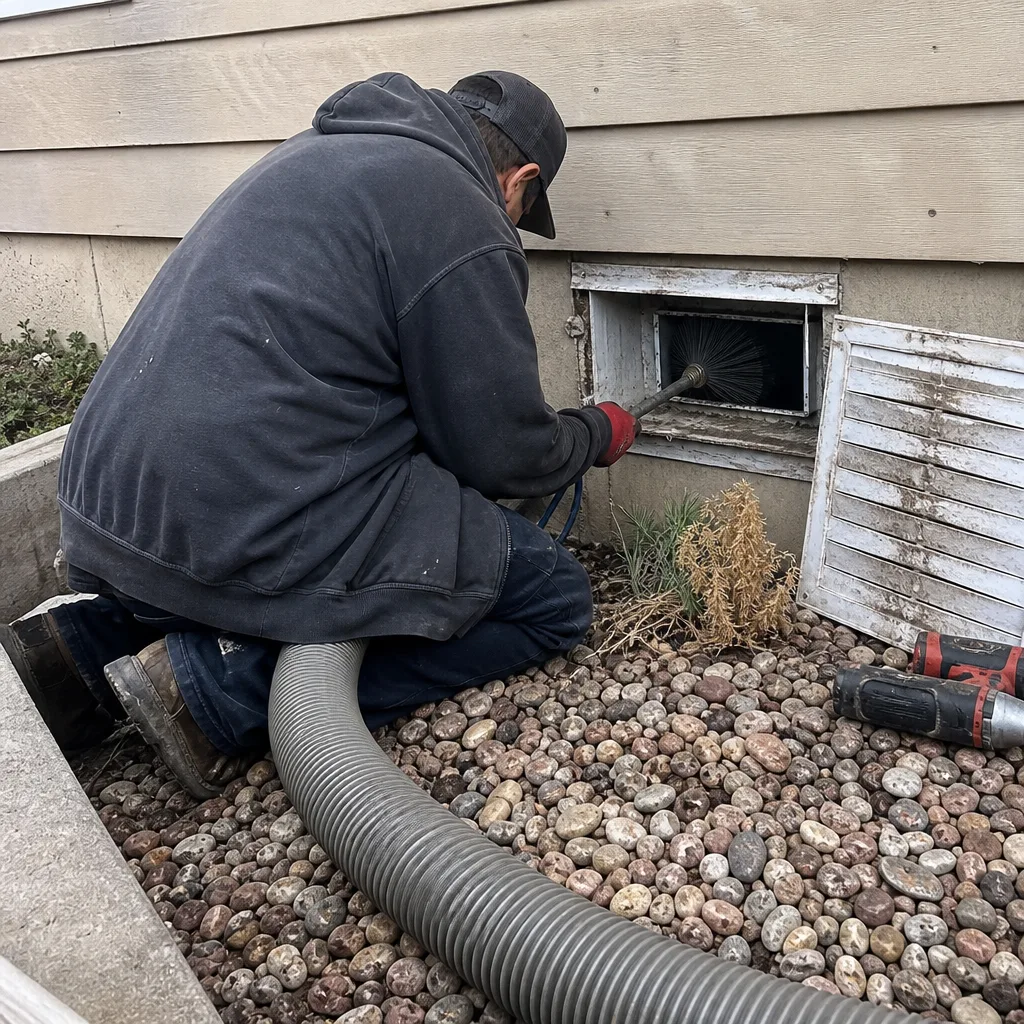 Before
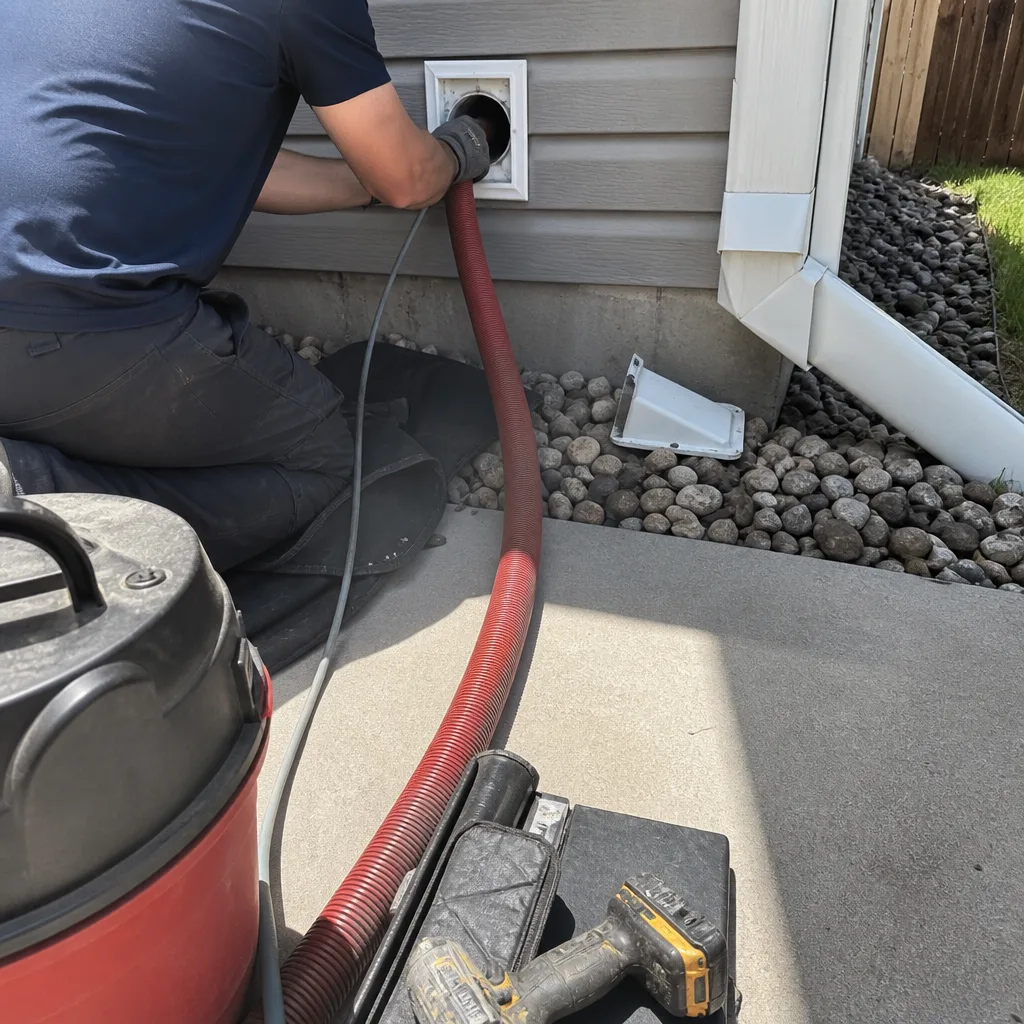 After
After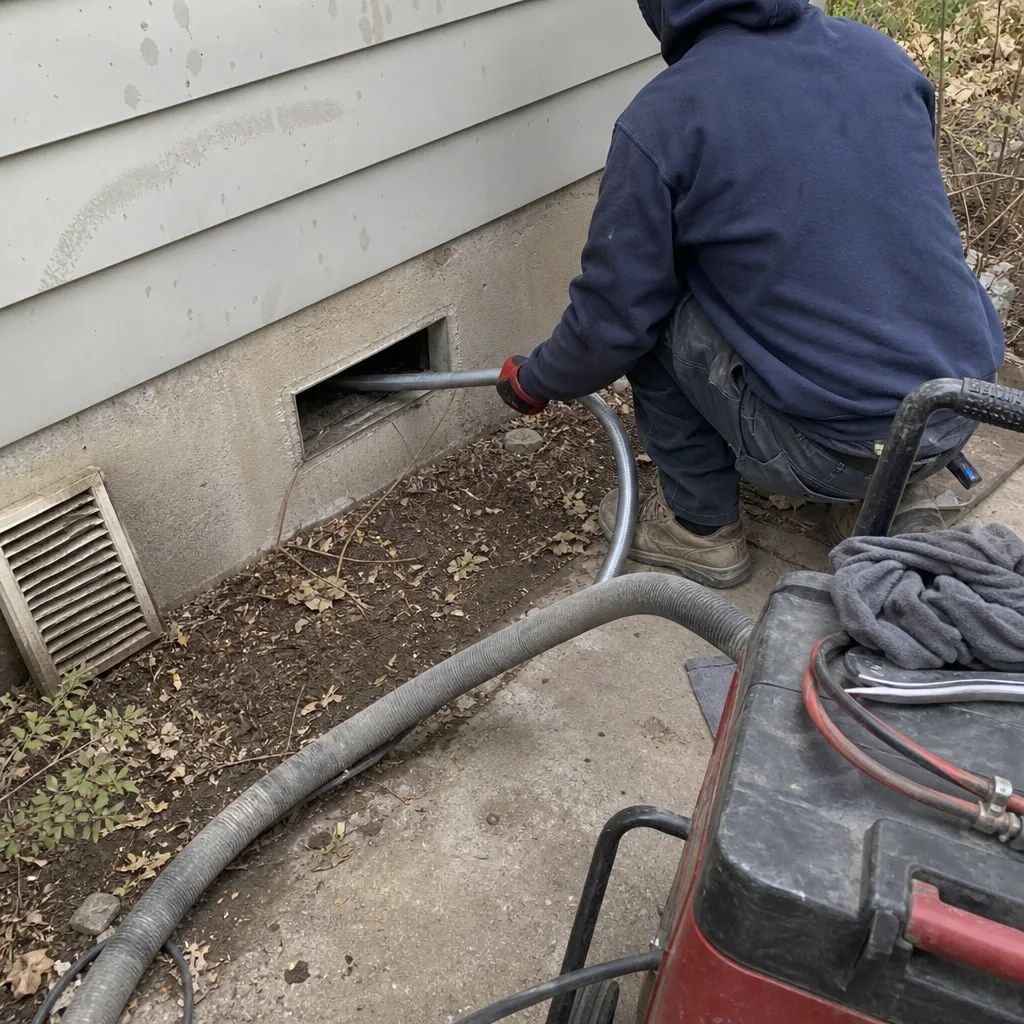 Before
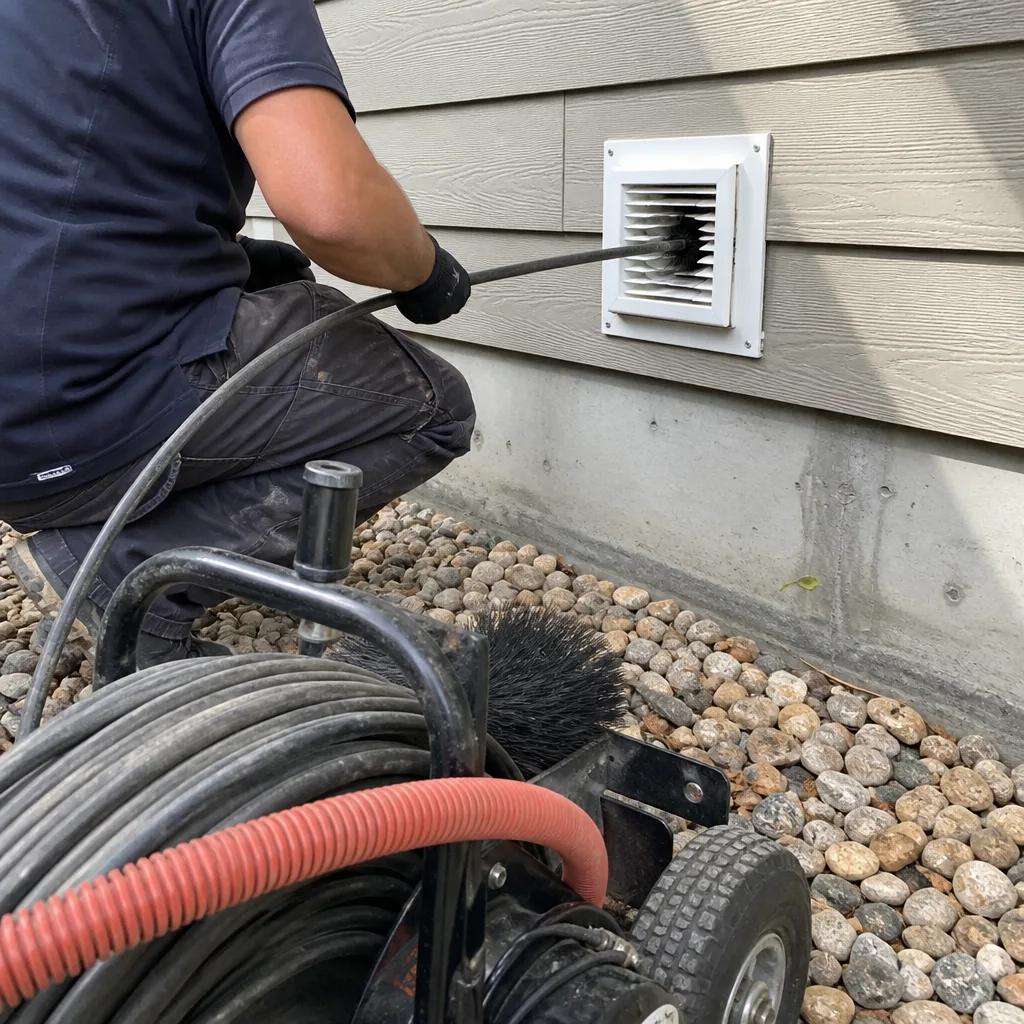 After
AfterDryer Vent Inspection in Aurora, CO
A dryer vent inspection in Aurora typically costs $79-$149 and takes 45 to 75 minutes, depending on vent length and access. The inspection uses a camera inserted directly into the duct to photograph what’s inside – lint accumulation, crushed flex duct, bird nests, disconnected joints – before any cleaning recommendation is made. If you’re noticing longer dry times, a hot laundry room, or a dryer that trips its thermal limiter repeatedly, the vent system is the first place to look.
Our Dryer Vent Cleaning in Aurora starts with this inspection, not after it. That sequence matters: you see the documented condition of the vent before we quote a single dollar of additional work. Tomas Reyes built CleanRun Air Duct Cleaning Aurora on that principle in 2013, and it hasn’t changed across 52,000+ jobs. Call (720) 513-5159 – a live person answers, every time – and we’ll put a written price in front of you before scheduling anything.
When You Need a Dryer Vent Inspection
Some of these signs are obvious. Others show up quietly, over months, until a dryer that worked fine starts costing twice as much to run. If any of the following apply, a camera inspection gives you a documented baseline rather than a guess.
- Drying cycles run longer than 45 minutes. A standard load of cotton should finish in 35 to 45 minutes. When it takes 60 or more, restricted airflow is the most common cause – not a failing heating element. In Aurora’s older subdivisions like Mission Viejo and Tollgate Crossing, original flex duct runs frequently sag or kink behind the dryer, cutting airflow before the vent even reaches the wall.
- The exterior vent flap doesn’t open when the dryer runs. Stand outside while the dryer is on. The flap should open visibly and stay open. If it barely moves, the duct is either blocked, crushed, or improperly routed – all findings a camera will confirm in minutes.
- The laundry room feels noticeably warmer than the rest of the house. Dryers exhaust heat. When that exhaust can’t exit, it backs up into the room. In Aurora’s hot July afternoons, a blocked vent turns a laundry room into a genuinely uncomfortable space and puts extra load on your HVAC system.
- You’re seeing lint accumulate around the dryer or on the floor nearby. Lint that belongs in the duct is finding another exit point. That typically means a disconnected joint somewhere in the run or a blockage forcing air back the wrong direction.
- It’s been more than a year since the last inspection or cleaning. The National Fire Protection Association recommends annual dryer vent inspection and cleaning. In Aurora specifically, cottonwood season (late May through June) pushes significant debris into exterior flaps, which is why we see more blocked termination points in summer than any other time of year.
- Your dryer has a brushless motor or a newer heat-pump model. Heat-pump dryers run at lower exhaust temperatures and push less force through the duct. They’re more sensitive to partial blockages than a traditional resistance-coil dryer, and the inspection camera will catch partial restrictions that wouldn’t show up on a simple airflow test.
A dryer vent fire doesn’t start at the drum. It starts in the duct, where accumulated lint meets restricted airflow and heat. That’s not a scare tactic – it’s the documented mechanism behind roughly 14,900 residential dryer fires reported annually in the U.S. (U.S. Fire Administration, 2023). We’d rather show you a before photo of a clean vent than a clean-up estimate after one.
Our Dryer Vent Inspection Process
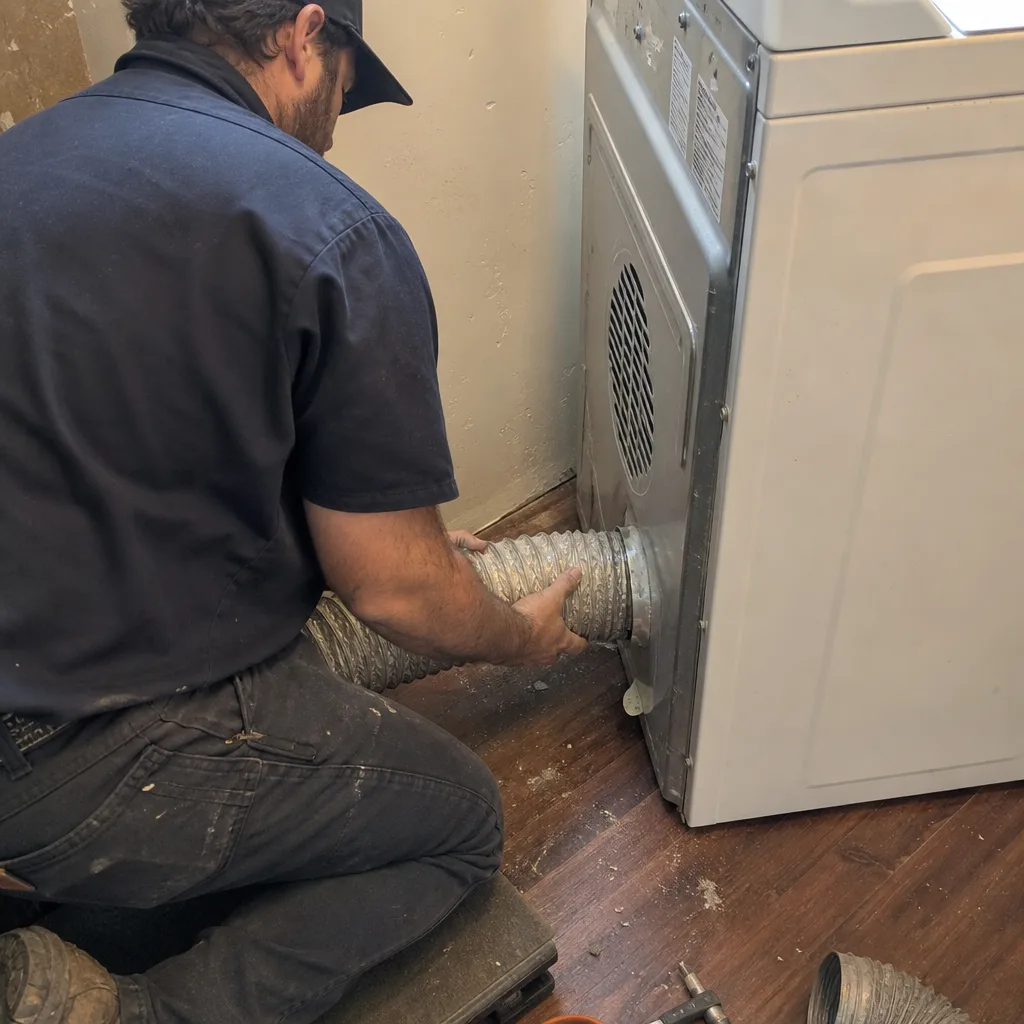
Every inspection follows the same sequence. It’s not a visual check from the outside and a nod. It’s a documented evaluation of the full duct run from the dryer connection to the termination point, with photographs at each stage delivered to you as part of the standard job record.
- Written price before the panel comes off. Haven Standard Clause 1 – no work starts without a written price in your hand. The inspection price is stated before we schedule. If cleaning is warranted, that quote follows the inspection findings, not the other way around. You’ll never hear “we’ll tell you the price once we’re inside.”
- Dryer disconnection and duct access. The technician disconnects the dryer from the wall duct and inspects the transition hose – the short flexible section between the machine and the rigid duct in the wall. This section collapses more often than homeowners expect, especially in laundry closets where there’s minimal clearance. We photograph it before touching anything.
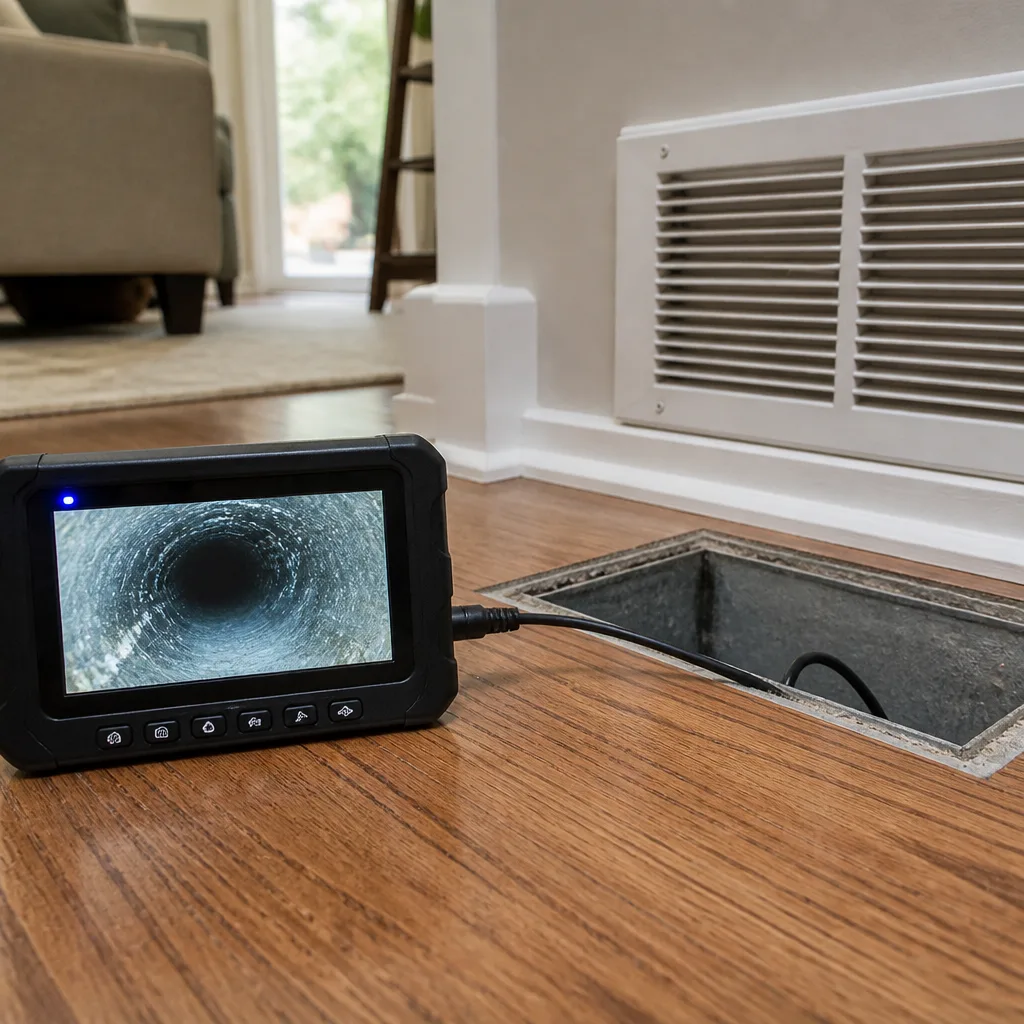
- Camera inspection of the full duct run. A flexible inspection camera travels the entire duct run – from the wall connection through every elbow and straight section to the exterior termination point. The camera documents debris depth (measured in inches, not “a lot” or “a little”), duct material condition (rigid metal, semi-rigid aluminum, or white vinyl plastic, which no longer meets code in most Colorado jurisdictions), joint integrity, and any signs of animal intrusion. In Aurora’s newer construction east of E-470, we regularly find bird nests in termination flaps because the plastic louvres on standard builder-grade caps are light enough for house sparrows to push open.
- Airflow measurement at the termination point. A handheld anemometer reads airflow velocity at the exterior cap while the dryer runs. NFPA 96 and most dryer manufacturers specify a minimum exhaust velocity for safe operation. We record the reading and compare it against manufacturer specs for your dryer model. A number below spec confirms a restriction; a number at or above spec on a visually dirty duct tells us the blockage is partial and gives us a cleaning priority score.
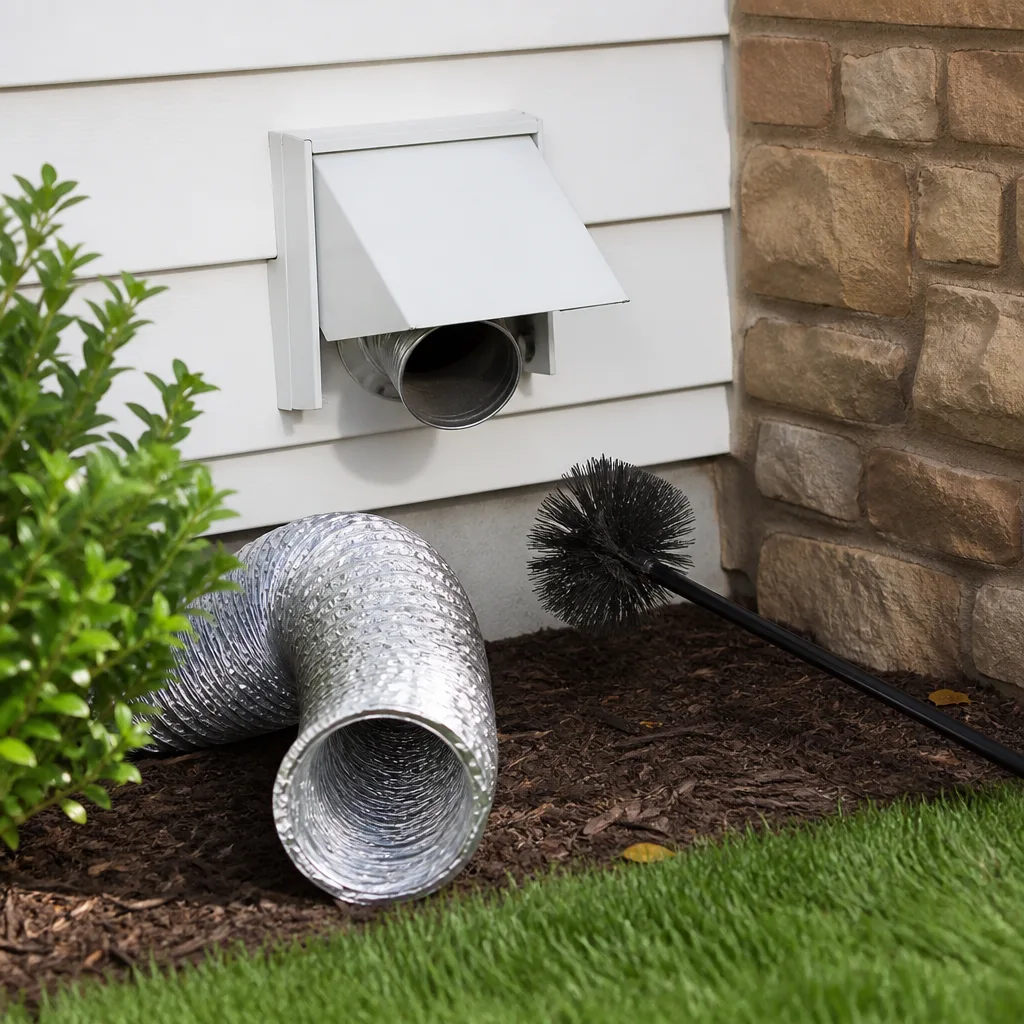
- Termination cap and exterior wall evaluation. The exterior cap is inspected for debris blockage, damaged or missing louvers, improper cap type (recessed “magic” box caps trap lint and are not code-compliant in Colorado), and clearance from grade, vegetation, and adjacent structures. In Aurora’s Saddle Rock and Tallyn’s Reach areas, we’ve found caps buried behind overgrown shrubs that homeowners didn’t know existed – the builder-installed location wasn’t visible from the ground.
- Written findings report and photo record delivered to you. The inspection closes with a printed or emailed summary: duct material, measured length, elbow count, documented obstructions with photos, airflow reading, and any code or clearance issues found. If cleaning is recommended, the written quote for that work is attached. If the duct is clear and performing within spec, that’s what the report says – no upsell pressure, no invented problems. Haven Standard Clause 1 means the report is the record.
BeforeAfterDryer Vent Inspection Pricing in Aurora
A dryer vent inspection in Aurora runs $79 to $149 in most residential situations. The written price is confirmed before scheduling – there are no “diagnostic fees” added after the fact. Here’s what moves the number within that range:
| Factor | Typical Scenario | Price Effect |
|---|---|---|
| Duct length | Standard run under 25 feet (most single-story homes) | Base price |
| Duct length – extended | 25 to 50 feet (some two-story Aurora builds with laundry on second floor) | +$20-$30 |
| Elbow count | More than 4 elbows (common in townhomes) | +$15-$25 |
| Rooftop termination | Vent exits through the roof rather than a side wall | +$25-$40 |
| Inspection-only (no cleaning) | Duct is clean; written findings report issued | Full inspection fee applies |
| Inspection + cleaning same visit | Cleaning quote issued after inspection; inspection fee applied toward cleaning total | Inspection fee credited |
If you have a written estimate from another company, bring it. CleanRun puts its own number next to it in writing – that’s a free second opinion with no obligation. Call (720) 513-5159 for a written price on your specific duct configuration before we schedule anything.
What the 365-Day Done Right Promise Covers
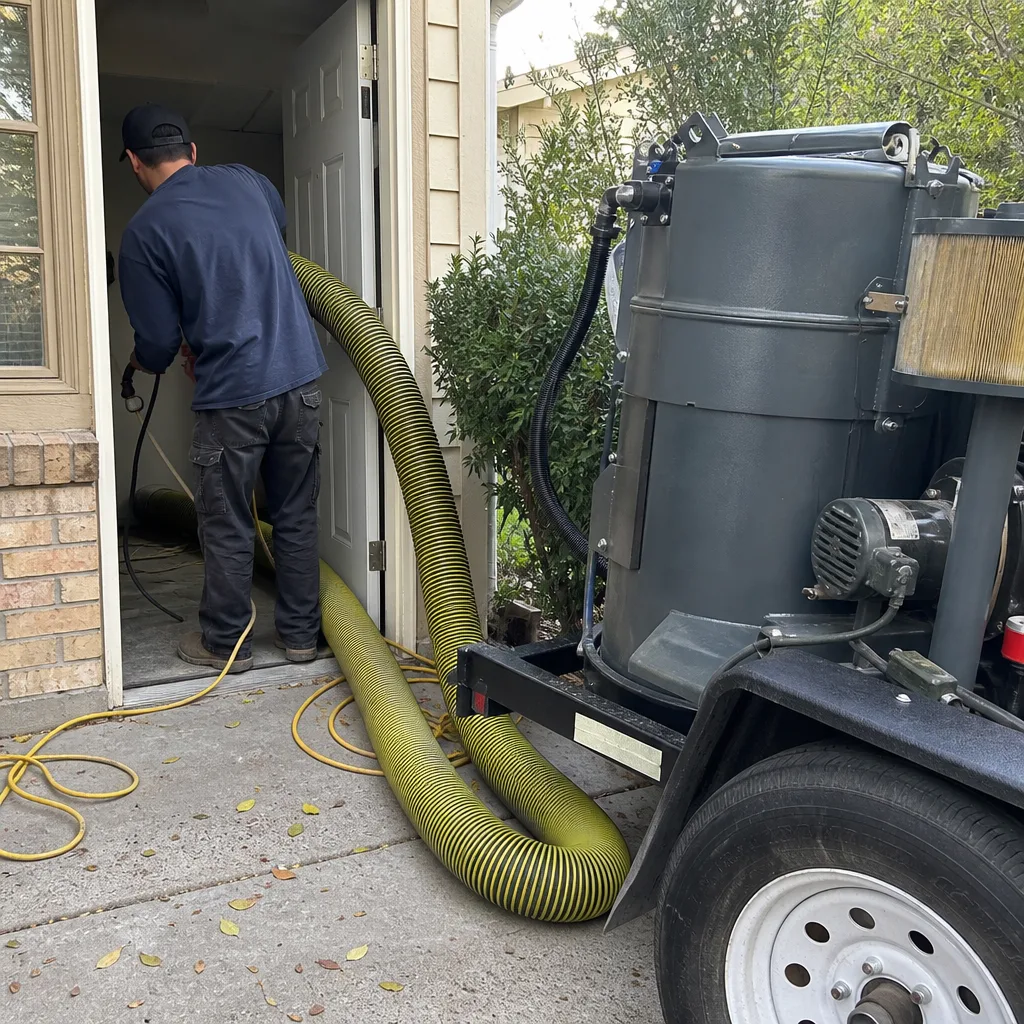
Every inspection is backed by the CleanRun 365-Day Done Right Promise. If the inspection missed something that should have been caught – a disconnected joint we photographed but didn’t note, a cap deficiency we documented but omitted from the report – we return and correct the record at no cost. This isn’t a customer service policy subject to a manager’s mood. It’s a written commitment included with every job record.
The photo documentation is part of that promise. Because every finding is photographed before we recommend anything, there’s no ambiguity about what was there and what we said about it. That matters if you ever need to make an insurance claim or sell the home – the inspection record stands as a dated, documented baseline. Most competitors can offer you a verbal summary of what they saw. We hand you the photos.
Aurora-Specific Conditions That Affect Dryer Vent Performance
Aurora sits at roughly 5,400 feet. The lower air density at altitude measurably reduces the exhaust velocity a dryer can push through a duct run. That means a vent configuration that would perform within spec at sea level may fall below manufacturer-specified airflow at Aurora’s elevation. We adjust our airflow baseline calculations accordingly – a flat-land inspection standard doesn’t apply here.
Aurora’s Front Range wind patterns create a secondary issue: negative pressure at exterior walls during strong westerly gusts pulls duct termination flaps open, letting cold air, dust, and insects enter the duct from the outside. Homes in open areas like Beacon Point and the Southshore development near Reservoir are more exposed to this than homes in denser neighborhoods with windbreaks. A properly weighted termination cap solves the problem; the wrong cap type makes it worse.
Cottonwood debris, as mentioned above, is a seasonal factor that Aurora homeowners deal with more than residents of many other Front Range cities because of the mature tree canopy in older neighborhoods like Meadowood and the Del Mar Parkway corridor. Cottonwood fiber compacts inside termination screens and around louvered flaps in a way that standard lint doesn’t. A visual check from the outside won’t catch it; the camera does.
What Our Technicians Use During an Inspection
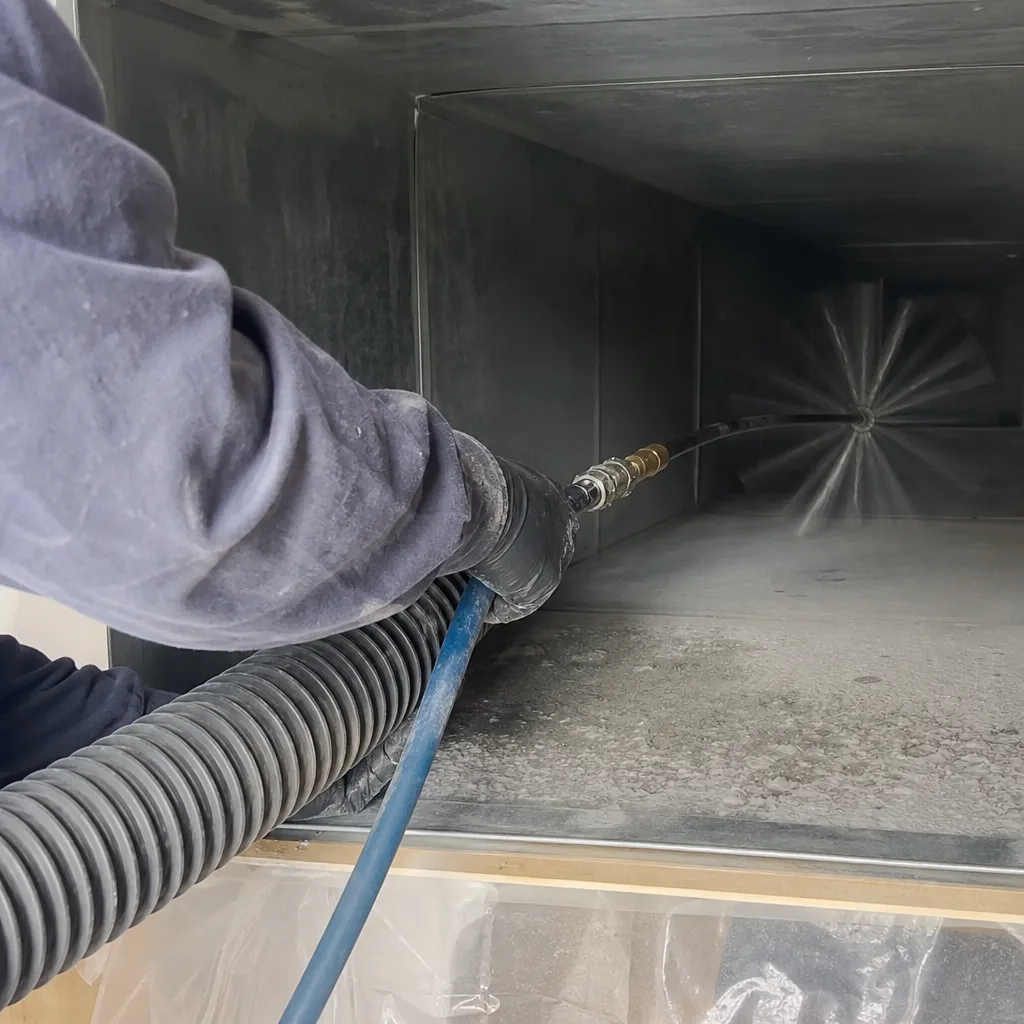
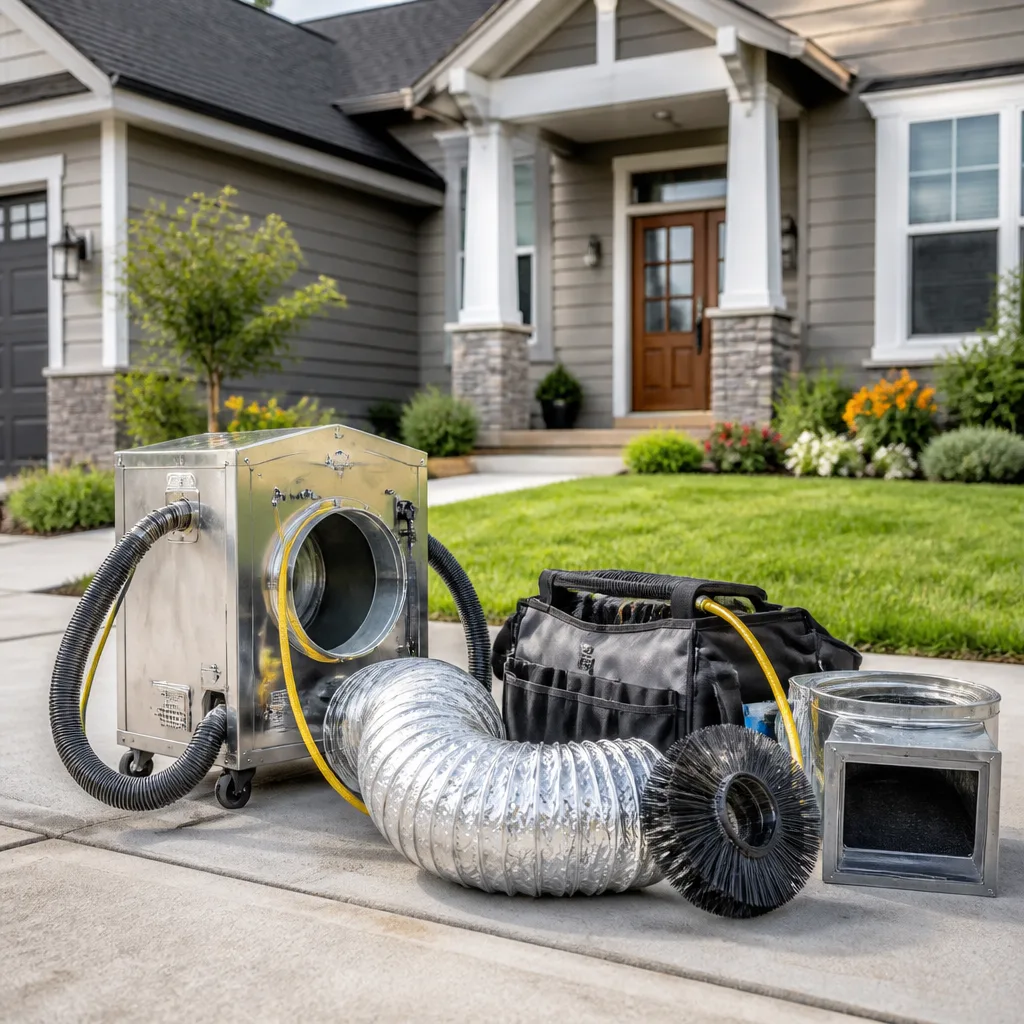
The inspection camera we use is a trade-grade flexible borescope system, not a cell phone on a stick. Rotobrush equipment – the same brand used in commercial Vent Cleaning and inspection work – is part of our standard tool set, and you can look up Rotobrush’s product specifications independently if you want to confirm what “trade-grade” means before agreeing to a price. We don’t expect you to take the word for it.
Airflow measurement uses a calibrated anemometer, not a “feels about right” hand-check. The readings are recorded numerically in the inspection report. For complex duct geometries or where duct material is in question, we may reference Nikro equipment diagnostics as part of the evaluation process.
Technicians arrive uniformed, identified by name before arrival, and background-checked under Haven Standard Clause 3: Verified Crews. This is on our home page and it isn’t decorative – it means you have the technician’s name before they’re at your door.
FAQs – Dryer Vent Inspection in Aurora
How long does a dryer vent inspection take in Aurora?
Most dryer vent inspections in Aurora take 45 to 75 minutes from arrival to the delivery of the written findings report. The range depends on duct length – a standard 15-foot run with two elbows in a ranch-style home takes closer to 45 minutes; a two-story townhome with a 35-foot run and rooftop termination takes closer to 75. We don’t cut the inspection short to hit a time target. The camera runs the full length of the duct on every job. Call (720) 513-5159 and we can give you a time estimate based on your home’s layout before you book.
Is a dryer vent inspection the same as dryer vent cleaning?
No. An inspection documents the condition of the duct – what’s inside it, how the duct is routed, whether the termination is code-compliant – and produces a written findings report with photographs. Cleaning is a separate Dryer Vent Cleaning services that removes the documented debris. At CleanRun, the inspection always precedes the cleaning quote; you’ll never be told the duct needs cleaning without seeing the camera footage that justifies it. If cleaning is needed, the inspection fee is credited toward the cleaning total when both happen on the same visit.
What happens if the inspection finds a serious problem with my dryer vent?
The findings go into the written report with photographs and a plain-language explanation of what was found and why it matters. If the duct has a disconnected joint, a crushed section, or non-compliant duct material (white vinyl plastic, for example, which is a fire code violation in most Colorado jurisdictions), we document it and provide a written quote for the repair before any work begins. Nothing gets repaired without your written approval of the price. If the issue is severe enough that we believe the dryer should not be operated until the repair is made, we say that in writing – not as pressure, but because it’s accurate and you deserve the documented assessment. Call (720) 513-5159 to schedule.
Does CleanRun inspect dryer vents in all Aurora neighborhoods?
Yes. We serve all Aurora ZIP codes, including 80010, 80011, 80012, 80013, 80014, 80015, 80016, 80017, 80018, and 80019. That covers everything from the older homes near Colfax Avenue and Havana Street to newer construction in Inspiration, Copperleaf, and the Southshore area near Aurora Reservoir. Duct configurations vary significantly between Aurora’s building eras – homes built before 1990 often have longer duct runs with more elbows and occasionally still use plastic duct material – so the inspection process is the same but the findings differ considerably depending on when and how the home was built.
Key Takeaways
- Dryer vent inspection in Aurora costs $79-$149, written price confirmed before scheduling.
- The inspection uses a flexible camera that photographs the full duct run – not a visual check from the dryer opening.
- Airflow is measured numerically at the termination point and compared against manufacturer specs adjusted for Aurora’s elevation.
- You receive a written findings report and photo record at the end of every inspection, whether cleaning is needed or not.
- If cleaning is recommended, the inspection fee is credited toward the cleaning total when done on the same visit.
- Every inspection is backed by the CleanRun 365-Day Done Right Promise – in writing.
- Tomas Reyes and the CleanRun team have been documenting duct conditions in Aurora since 2013, across 52,000+ homes.
Schedule Your Dryer Vent Inspection in Aurora
If you want to know the actual condition of your dryer vent – not an estimate based on how old the house is or how long the dryer has been running slow – call (720) 513-5159. A live person answers. We’ll confirm the written price for your inspection before anything is scheduled, and you’ll have the camera documentation and written findings report in hand before the truck leaves. That’s the standard on every job, and it has been since 2013.
Written by Tomas Reyes, Owner at CleanRun Air Duct Cleaning Aurora, serving Aurora.