
Last updated September 23, 2026
Whole-system duct and dryer vent check with before-and-after photos - you see exactly what came out of your vents
That "$99 whole-house special" is a bait ad - the real number appears once they are in your hallway, or the "clean" is a shop-vac at the register. We photograph the inside of your ducts before and after instead.
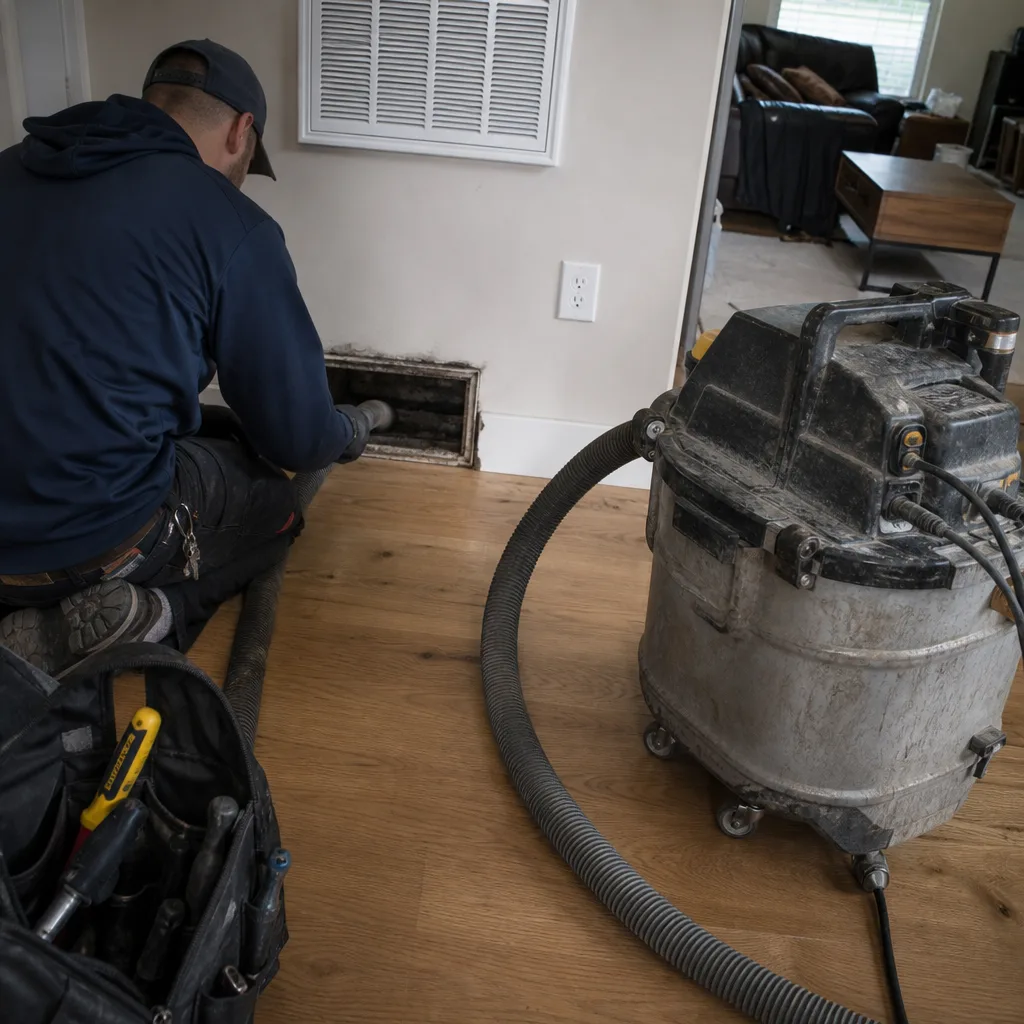 Before
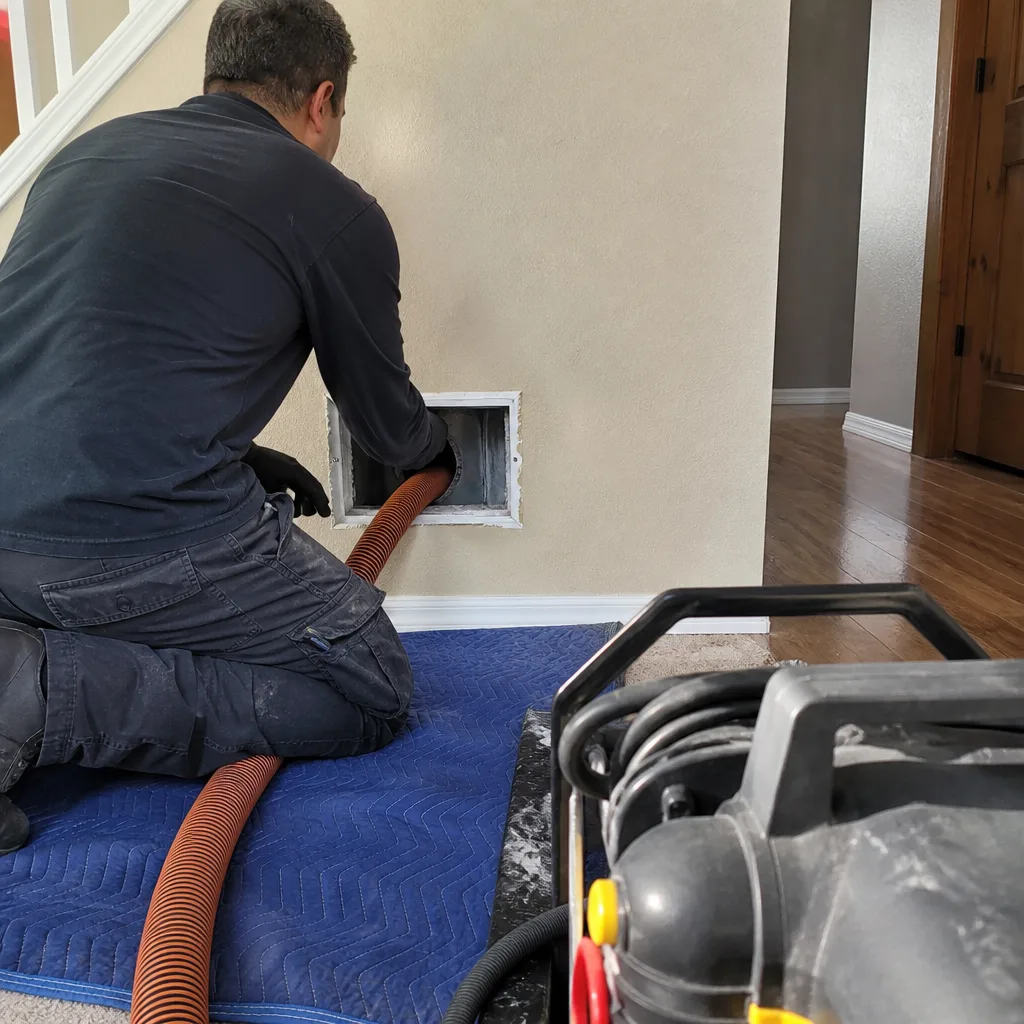 After
After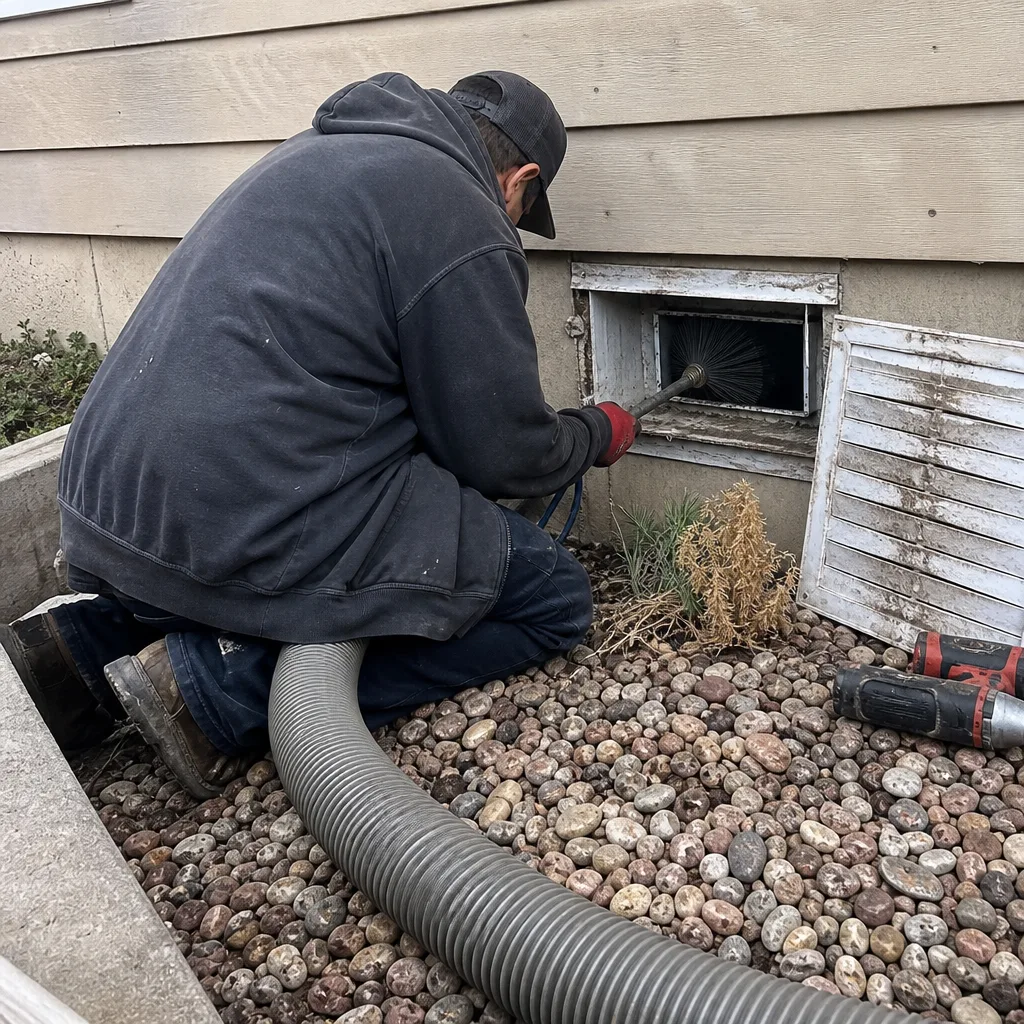 Before
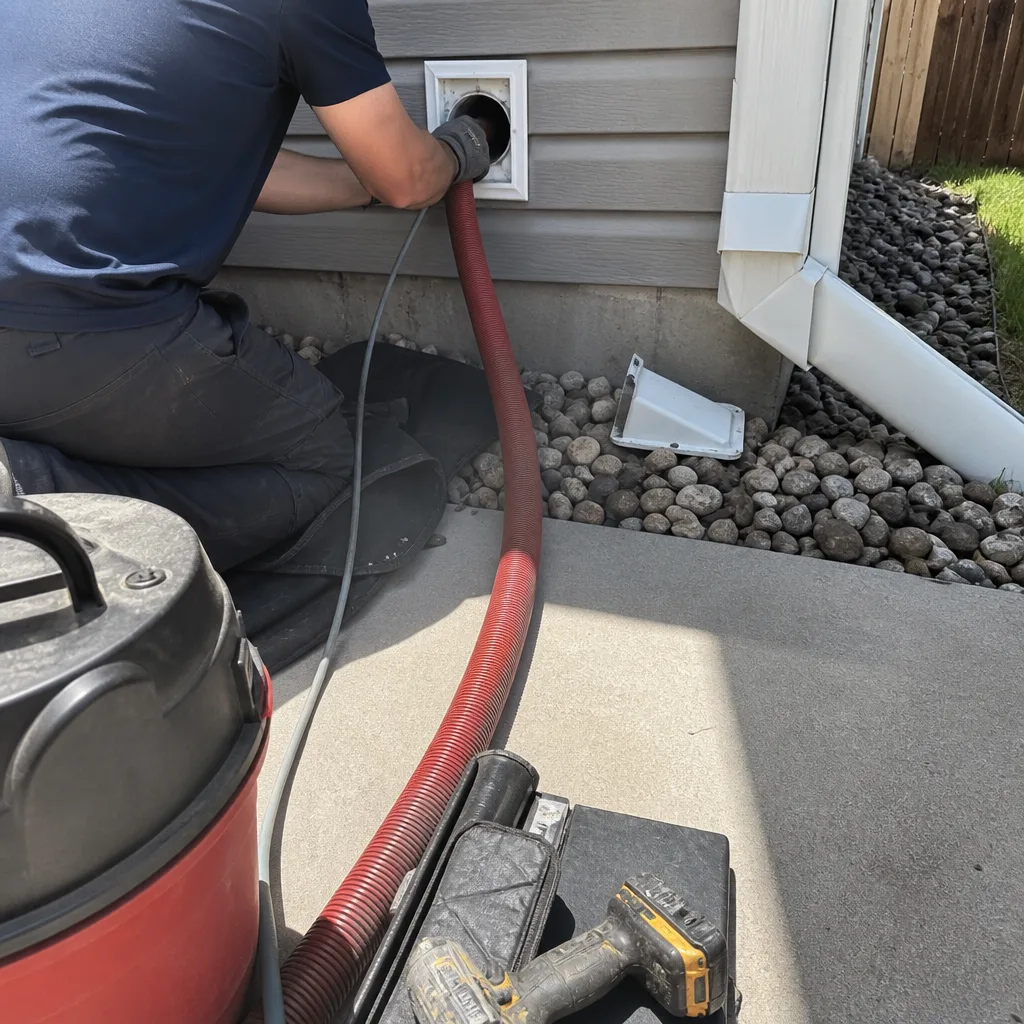 After
After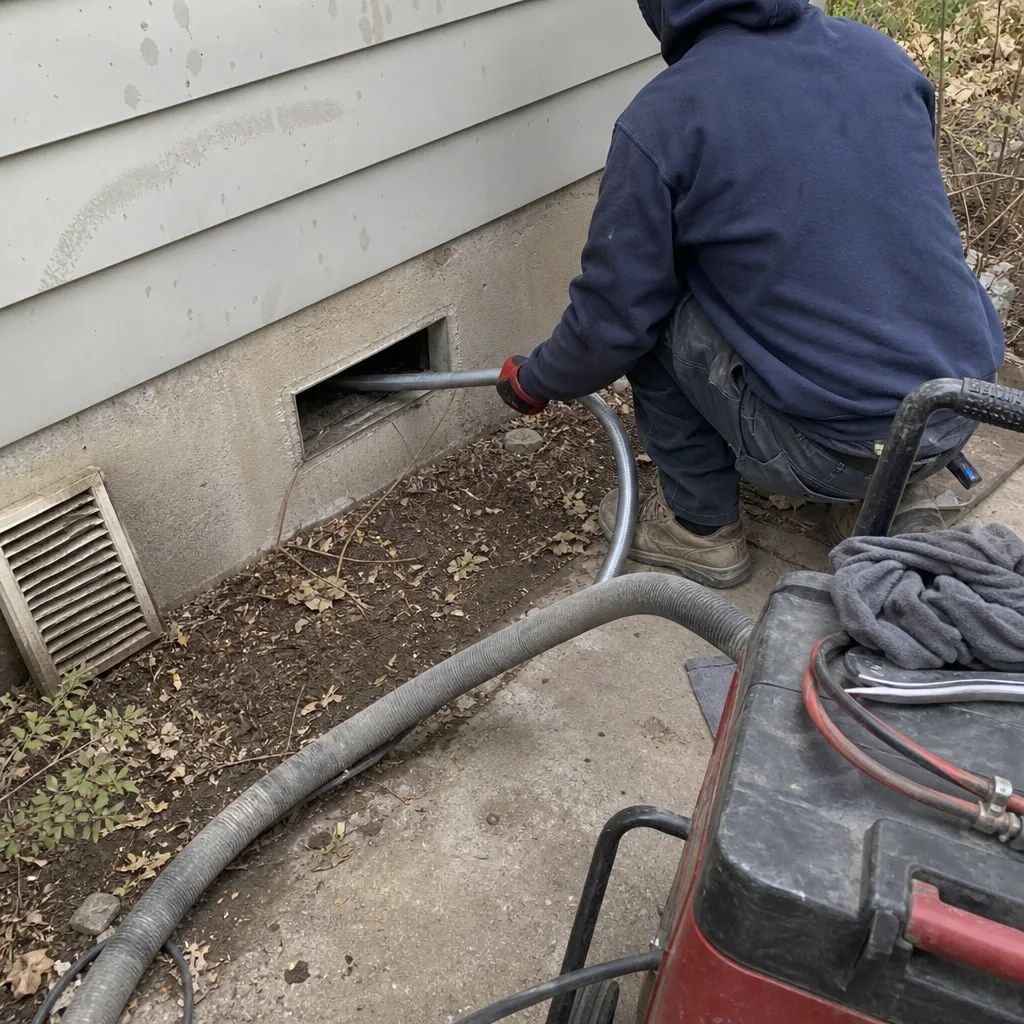 Before
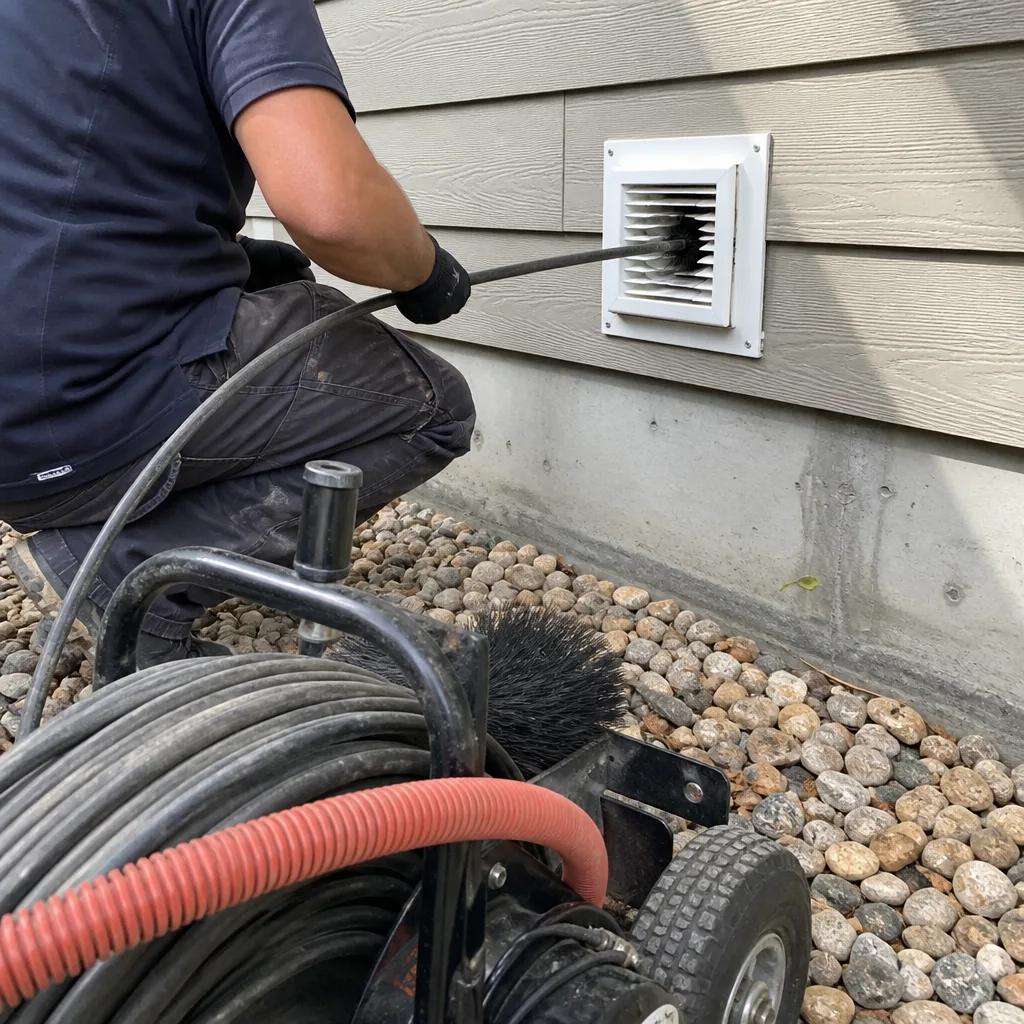 After
AfterDIY vs Professional Air Duct Cleaning: The Aurora Homeowner’s Decision Guide
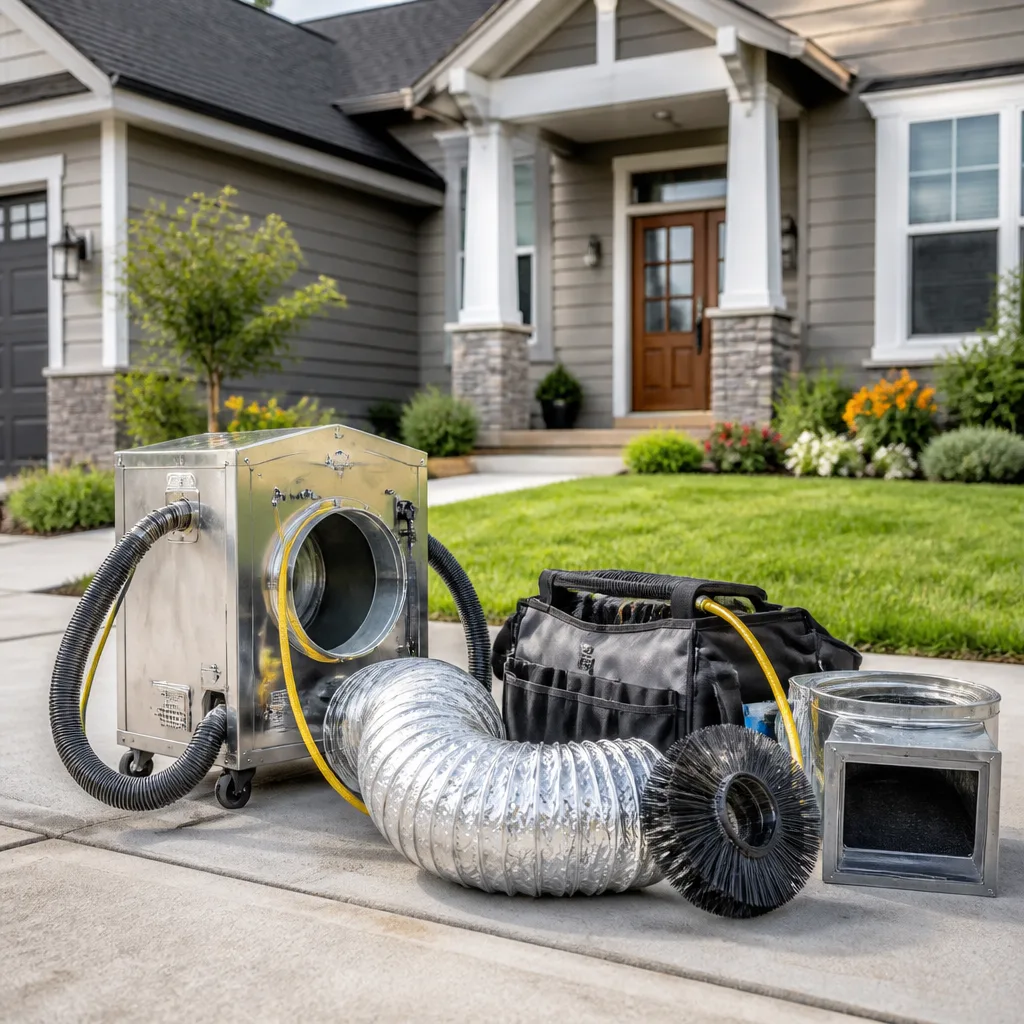
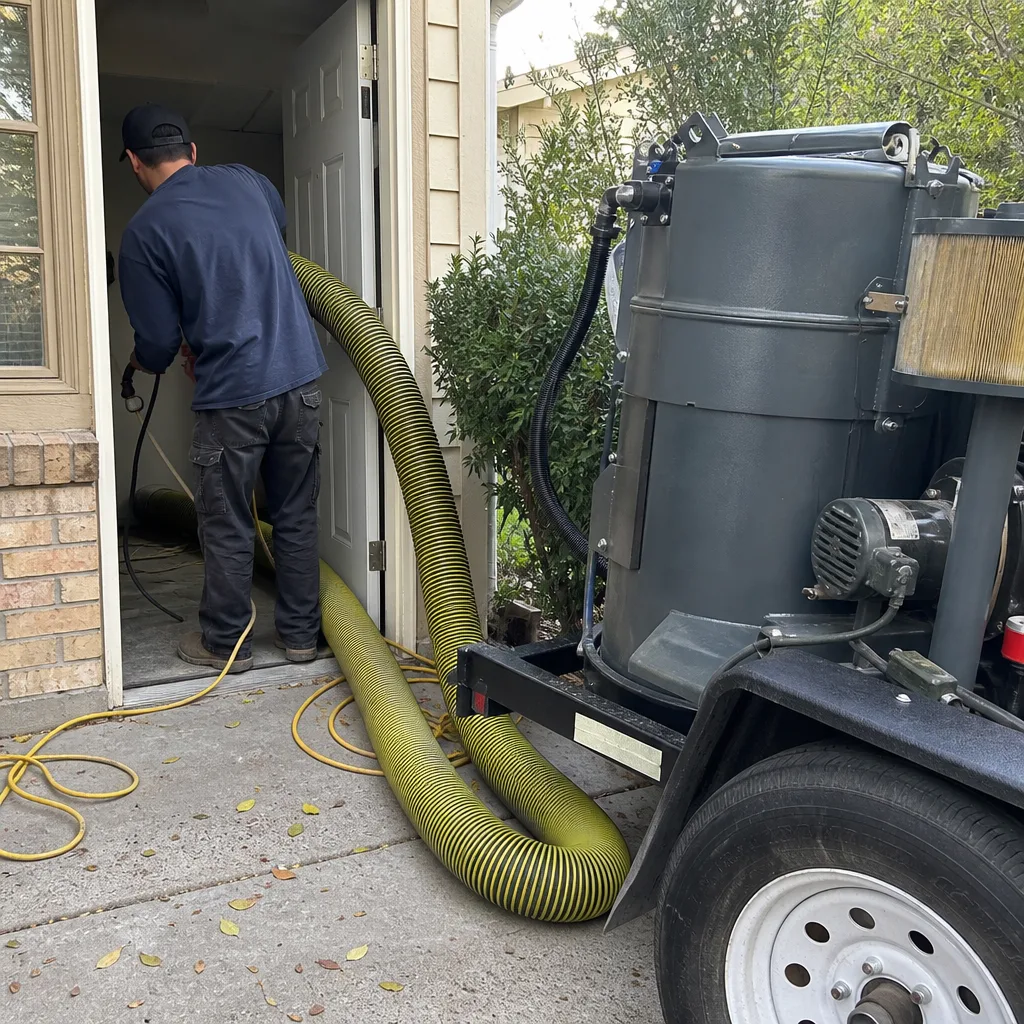
A rented negative-pressure vacuum from a home improvement store operates at roughly 150 CFM. A truck-mount system runs at 12,000-16,000 CFM. That gap is not a marketing claim; it is the physics of why debris in a main trunk 40 feet from the air handler does not move with consumer equipment. In Aurora, where high-altitude HVAC systems run longer heating and cooling cycles than sea-level equivalents, debris accumulates differently and deeper in the system. This guide draws the honest line between what a skilled homeowner can accomplish and what DIY physically cannot reach, so you spend money only when Air Duct Cleaning with professional equipment is actually necessary.
Quick Answer
A homeowner with basic tools can effectively clean register covers, vacuum the first 3-4 feet of accessible flex duct, and spot-treat visible mold on reachable surfaces. Beyond that point, professional negative-pressure extraction with contained agitation is required to remove debris from main trunk lines, plenums (the central distribution box connected to your air handler), and deep duct runs without redistributing contaminants into living spaces. In Aurora, where longer HVAC cycles push debris further into the system, most homes built between 2015 and 2025 need professional cleaning every 3-5 years if occupants have allergies, pets, or recent renovation history; see our Seasonal Air Duct Cleaning Care for Aurora: Year-Round Homeowner’s Guide for timing details.
Table of Contents
- What DIY Air Duct Cleaning Can Actually Accomplish
- DIY Tools and Costs: The Real Numbers
- The Physics Boundary: Why DIY Stops Working
- The Aurora Altitude Factor: How High Elevation Changes Debris Patterns
- DIY Inspection Methods: Build Your Evidence Before Spending
- When DIY Makes Sense vs. When Documentation Matters
- What Professional Cleaning Actually Does Differently
- Cost Comparison: DIY Investment vs. Professional Service in Aurora
BeforeAfterWhat DIY Air Duct Cleaning Can Actually Accomplish
DIY air duct cleaning is not a false choice. A methodical homeowner can achieve meaningful results in specific, accessible areas of the HVAC system. The key is knowing exactly where the boundary lies between effective surface cleaning and ineffective disturbance of deeper debris.
Here is what DIY can realistically accomplish:
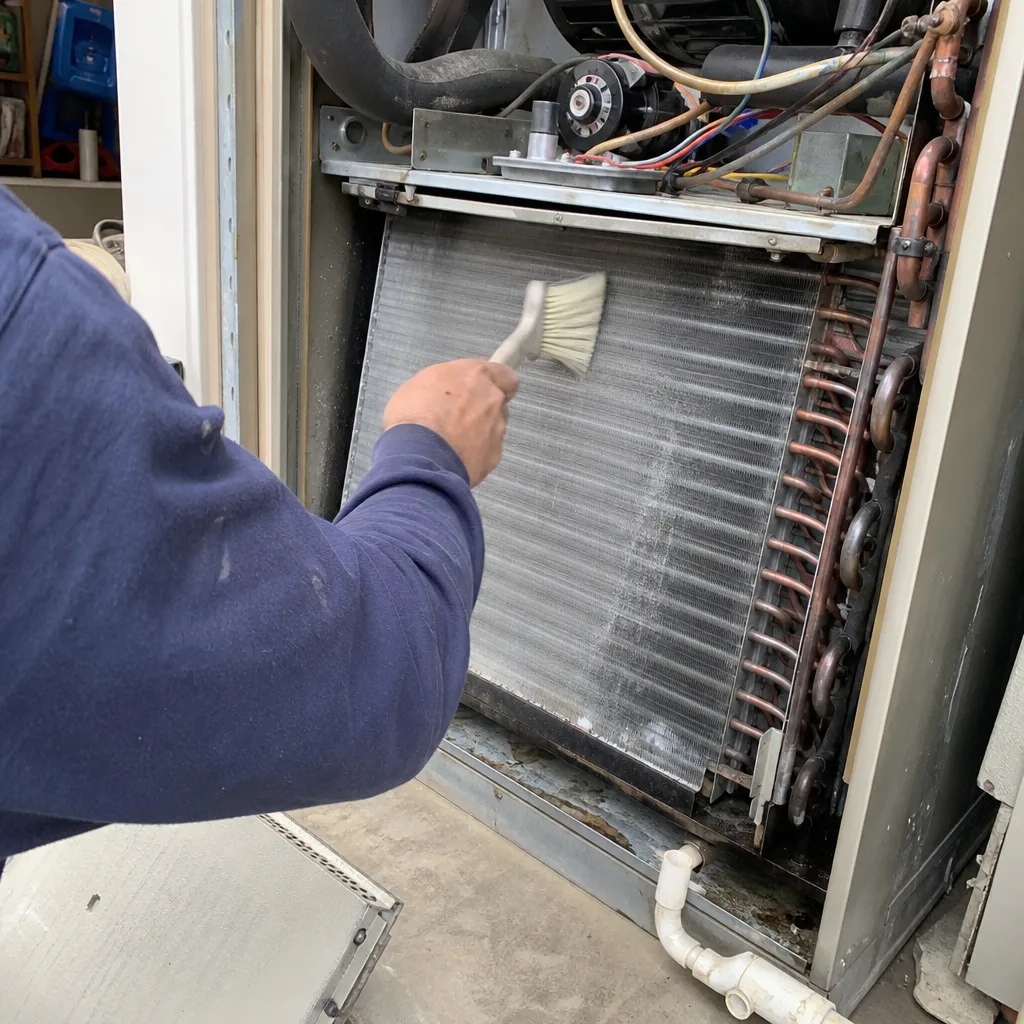
- Register and grille cleaning. Remove floor, wall, or ceiling registers, soak them in warm water with mild detergent, scrub with a stiff brush, and dry completely before reinstalling. This eliminates the dust and grime layer that recirculates every time the system cycles.
- Boot vacuuming. The boot is the sheet-metal transition piece between the register opening and the duct run. A standard household vacuum with a hose extension can remove loose debris and pet hair accumulated in this accessible chamber, typically 6-18 inches deep.
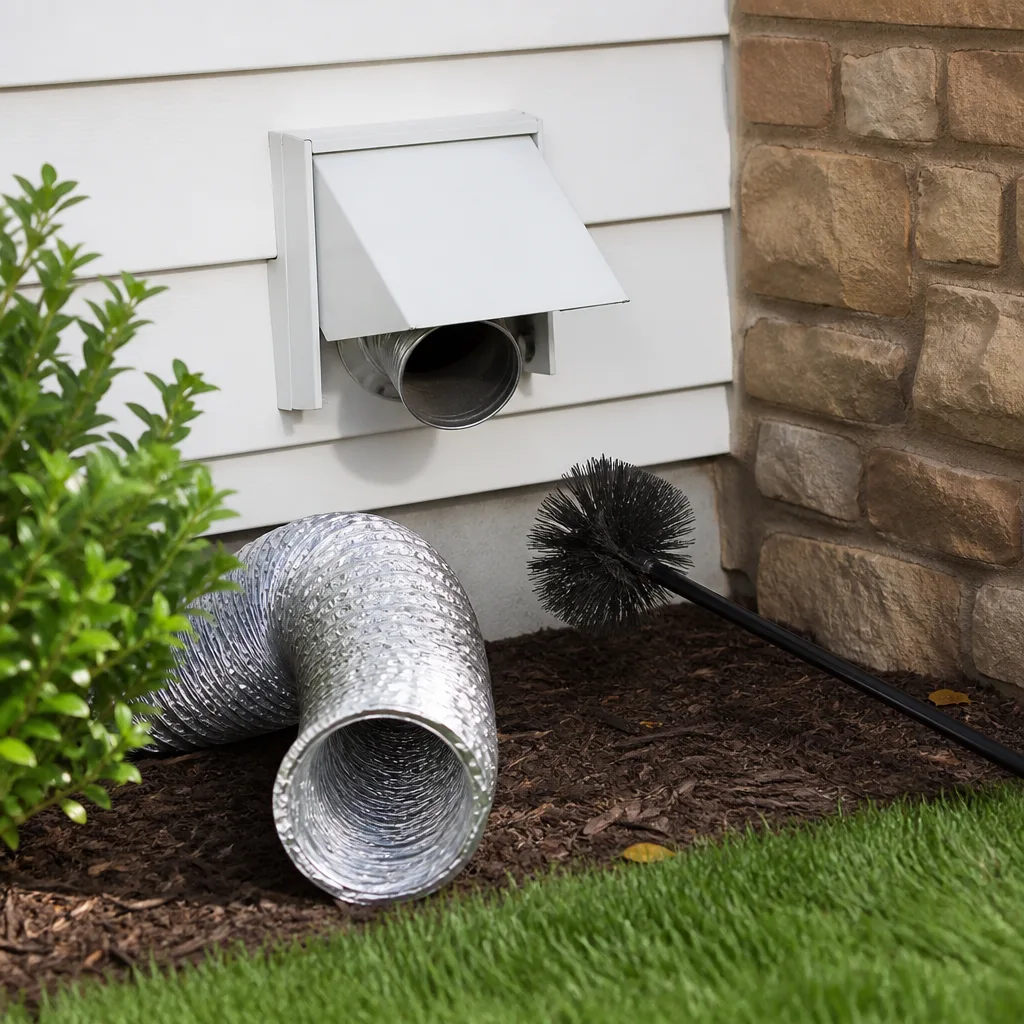
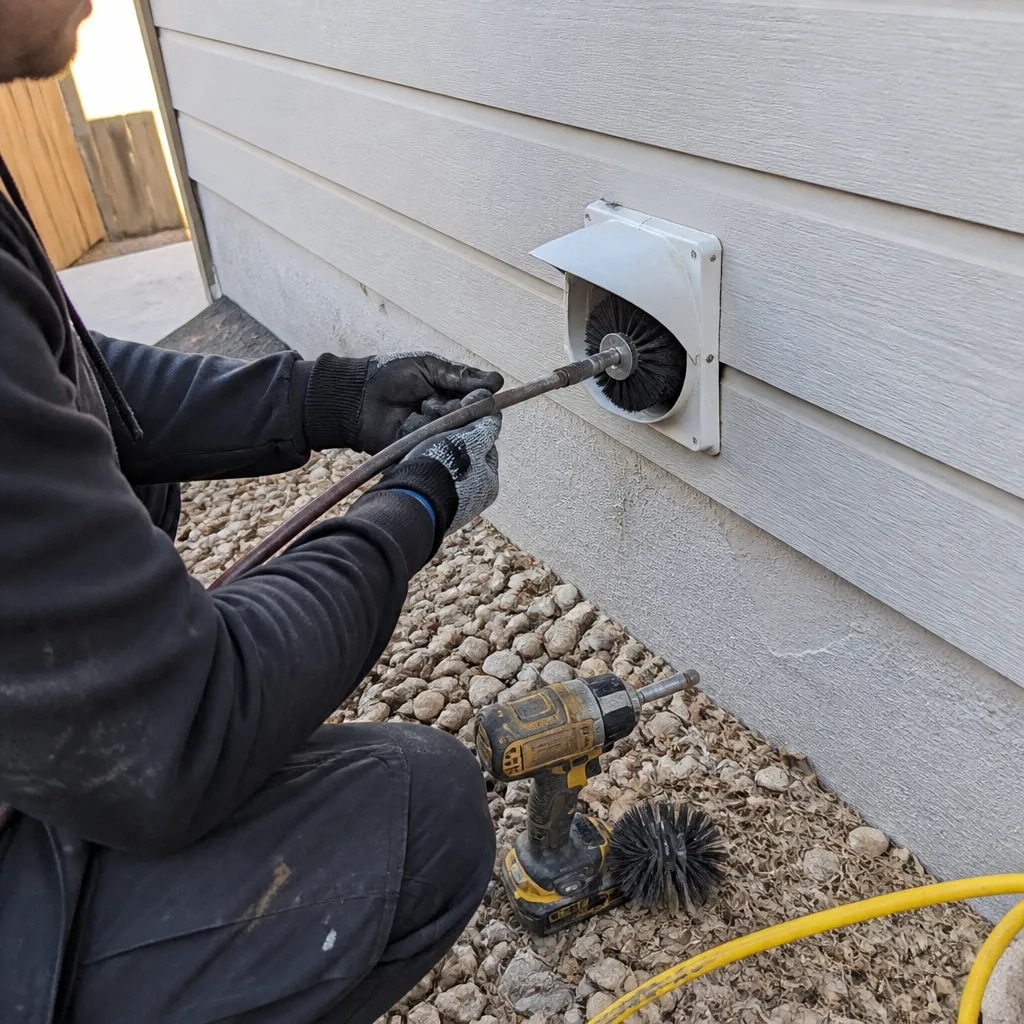
- First 3-4 feet of flex duct. Using a flexible dryer vent brush attached to a cordless drill, a homeowner can agitate and vacuum loose debris in the initial section of flexible ductwork common in Aurora’s newer subdivisions like Southshore and Tollgate Crossing.
- Visible mold spot treatment. On accessible metal surfaces within arm’s reach, a solution of 1:10 bleach-to-water applied with proper ventilation and dried thoroughly can address small, isolated patches. This applies only to non-porous surfaces; porous flex duct with mold penetration requires replacement, not cleaning.
- Return air filter maintenance. Monthly filter replacement or cleaning is the single most effective DIY action for system health. In Aurora’s dusty Front Range environment, MERV 8-11 pleated filters typically need replacement every 60-90 days.
These tasks address the areas where debris first enters the airstream and where homeowner access is physically possible without specialized equipment. They are worth doing, and they do improve air quality at the point of delivery. What they do not do is address the main trunk lines, the plenum, or the deep reaches of the duct network where the majority of accumulated debris resides.
We have inspected systems in Aurora’s Conservatory neighborhood where homeowners had diligently cleaned registers and boots for years, yet the camera showed a 2-inch debris layer at the first elbow in the main trunk, 12 feet from any opening. The DIY work was not wasted; it simply had a physical limit that no amount of homeowner effort could overcome.
DIY Tools and Costs: The Real Numbers
Honest accounting requires specific numbers. Here is what a homeowner actually spends to perform the DIY tasks described above, with tool quality that produces real results rather than theater.
| Tool or Supply | Purpose | Approximate Cost |
|---|---|---|
| HEPA household vacuum with extension hose | Boot and accessible duct vacuuming | $180-$320 (or owned) |
| Flexible dryer vent brush kit, 12-foot | Agitation in first 3-4 feet of flex duct | $25-$45 |
| Cordless drill with variable speed | Powering the brush | $80-$150 (or owned) |
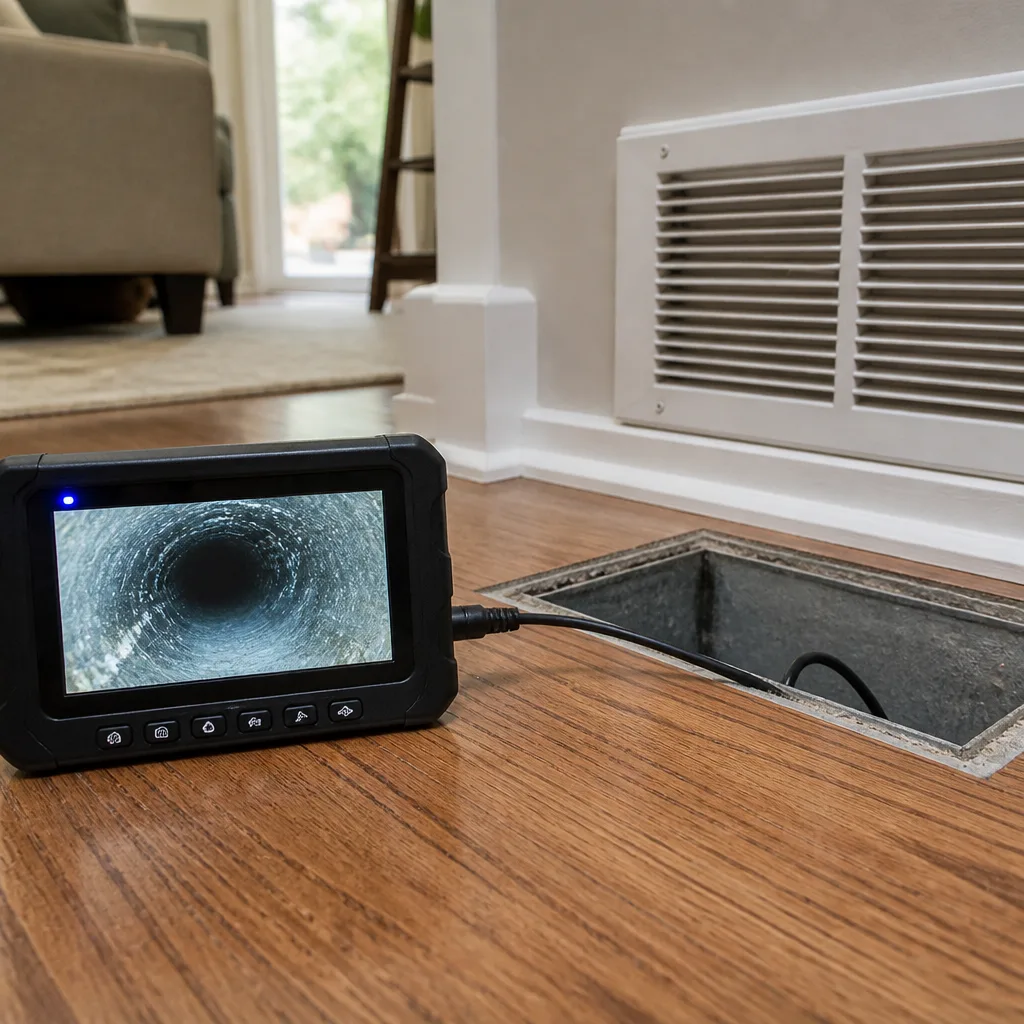
| Inspection camera, 3.9mm borescope | Visual assessment beyond arm’s reach | $35-$75 |
| Register removal tool set | Safe removal of painted-over or stuck registers | $12-$20 |
| Mild detergent, bleach, spray bottles | Surface cleaning and spot treatment | $15-$25 |
| MERV 8-11 pleated filters, 3-pack | Ongoing filtration maintenance | $30-$55 |
| Total initial investment | For tools not already owned | $280-$500 |
The inspection camera deserves particular attention. A $45 borescope with LED lighting and smartphone connectivity allows a homeowner to see past the boot into the duct run and document what is actually present. This single tool transforms DIY cleaning from guesswork into evidence-based decision making. We recommend every Aurora homeowner purchase one before deciding whether professional service is warranted.
One caution: the rotary brush systems marketed online for $80-$150, often with compressed-air “turbine” attachments, are not equivalent to professional agitation equipment. They can dislodge debris without adequate suction to remove it, creating a temporary dust storm that resettles throughout the system. If you use one, operate it with the system fan running and a fresh filter installed, and expect to replace that filter within 48 hours.
The Physics Boundary: Why DIY Stops Working
The critical difference between DIY and professional air duct cleaning is not effort or intention. It is negative pressure and contained extraction.
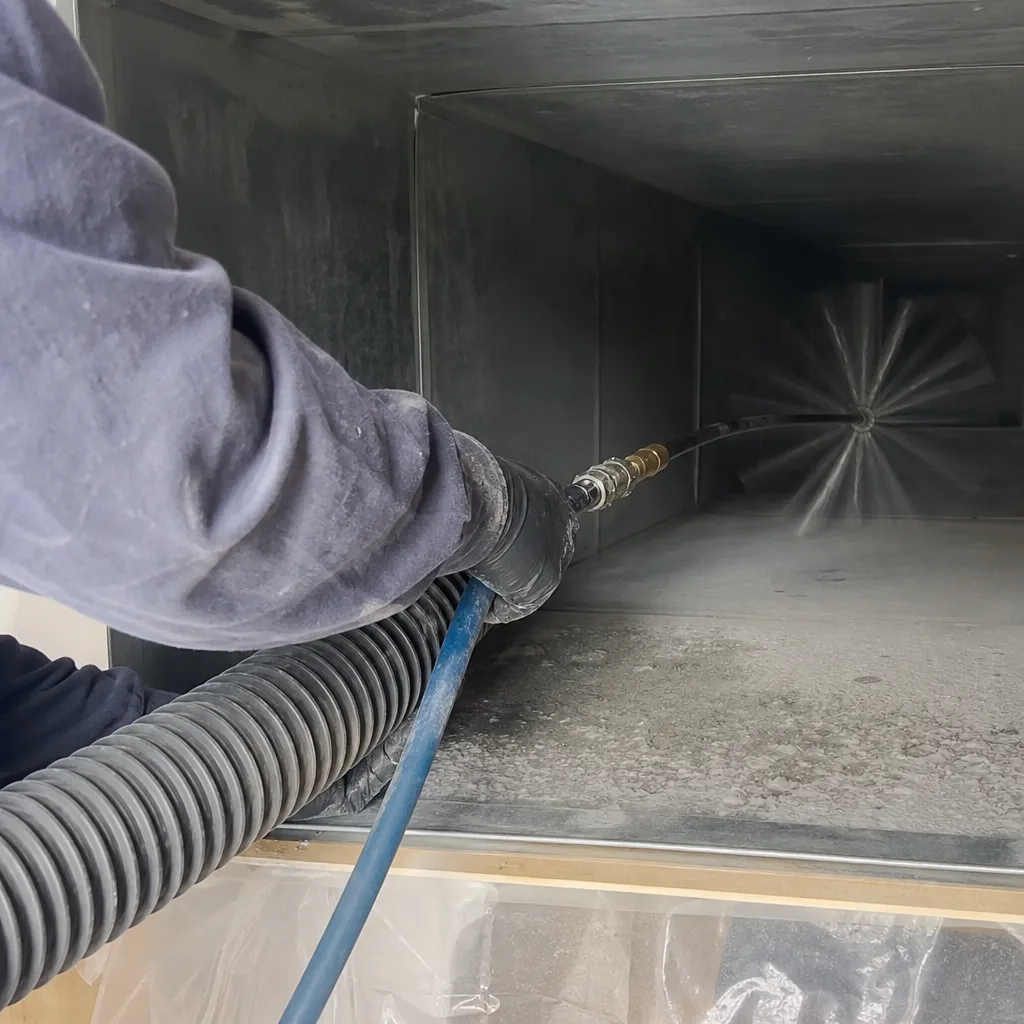
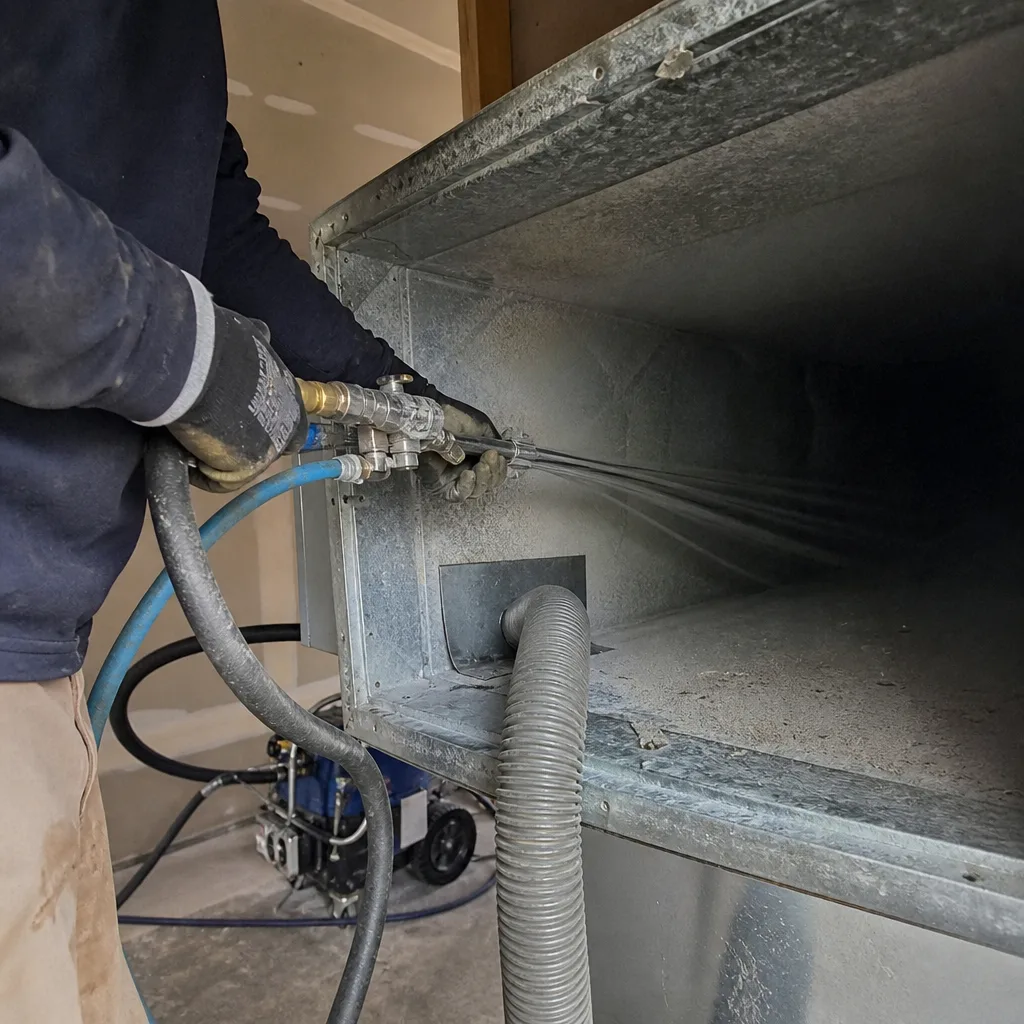
Negative-pressure extraction means the entire duct system is placed under vacuum before any agitation begins. A large-diameter suction hose connects to the main trunk line, creating airflow toward the collection point. Only then do technicians insert mechanical brushes, compressed-air whips, or pneumatic tools to dislodge debris. The dislodged material is immediately carried by the airflow stream into a sealed collection container, not into the living space.
A homeowner’s vacuum, even a high-end HEPA model, generates insufficient airflow to create this contained system. The mathematics are straightforward:
- Typical household vacuum: 50-150 CFM (cubic feet per minute) at the hose end
- Professional portable negative-pressure unit (Nikro, Abatement Technologies): 2,000-5,000 CFM
- Truck-mount system (common in Aurora professional work): 12,000-16,000 CFM
At 150 CFM, a vacuum hose placed at a register opening creates localized suction that diminishes exponentially with distance. At 15 feet into a duct run, the effective suction is negligible. Debris agitated beyond that point is not extracted; it is redistributed. The homeowner sees dust emerge from the register, assumes the cleaning is working, and does not realize that much of that debris has been pushed deeper into the system or into adjacent rooms.
Professional equipment also maintains this negative pressure across the entire system simultaneously. When CleanRun technicians clean a home in Aurora’s Tallyn’s Reach, the suction is applied at the plenum, pulling air through every branch line. This prevents cross-contamination between clean and dirty sections. A DIY approach, working register by register, has no such containment. Each register cleaned becomes a potential exhaust point for debris disturbed elsewhere.
The agitation tools matter equally. Professional-grade equipment from Rotobrush and Nikro uses brushes sized to the duct diameter, with torque and speed calibrated to dislodge adhered debris without damaging duct lining. A homeowner’s drill-powered brush, spun too fast in a tight flex duct, can tear the inner liner or detach connections at elbows.
The Aurora Altitude Factor: How High Elevation Changes Debris Patterns
Aurora sits at 5,471 feet above sea level. This elevation changes how HVAC systems operate, which in turn changes how debris accumulates in ductwork. Most DIY versus professional comparisons ignore this factor entirely; they are written for sea-level markets and applied indiscriminately.
At altitude, air density is approximately 15% lower than at sea level. For the same heating or cooling load, furnaces and air conditioners must move more cubic feet of air to deliver equivalent BTUs. The result is longer run times per degree of temperature change. A furnace in Aurora may cycle 20-30% longer than an identical unit in Chicago to maintain the same thermostat setting.
Longer cycles mean:
- More total air volume passes through the ductwork annually
- Debris is carried further into branch lines before the cycle ends and airflow stops
- Static pressure differentials across the filter and coils are sustained for longer periods, pulling more particulate past any gap in the filter seal
- Condensation patterns in cooling season differ, with evaporator coils running closer to the freezing threshold, potentially increasing biological growth in the plenum
In Aurora’s newer construction, particularly homes built 2015-2025 in areas like Highlands at Hilltop and Beacon Point, ductwork is often designed with tighter bends and smaller diameter flex duct to accommodate compact framing. These designs already increase static pressure; the altitude effect compounds it. Debris that might settle near the plenum in a sea-level home travels further into branch lines here.
For the DIY homeowner, this means two things. First, the inspection camera is essential; debris may be present far from any access point. Second, cleaning intervals should be shorter than generic national recommendations suggest. The EPA’s broad guidance of “as needed” assumes typical use patterns; in Aurora’s altitude and dust environment, “as needed” arrives sooner.
We have documented this in our work. A 2019-built home in Southshore, occupied by a single person with no pets, showed significant debris accumulation at the 25-foot mark in a bedroom branch line after just 3.5 years. At sea level, that same occupancy pattern might have produced minimal buildup in the same period. The altitude factor is real and measurable.
DIY Inspection Methods: Build Your Evidence Before Spending
Before investing in either DIY tools or professional service, a homeowner can gather meaningful evidence about their system’s condition. These methods cost little and provide objective data to guide spending decisions.
Method 1: Register Camera Inspection
Remove a floor or wall register. Insert a borescope camera (the $35-$75 smartphone-connected type) straight into the duct boot, then angle it upward into the duct run. Document what you see at 6 inches, 12 inches, and the furthest reachable point. Look for:
- Dust layer thickness on the duct floor (use the camera’s own shadow for scale)
- Debris type: fine dust, pet hair, construction debris, rodent droppings, or standing moisture
- Condition of duct lining: intact, torn, or delaminating
- Visible mold: patchy discoloration on metal, or fuzzy growth on organic debris
Repeat at three registers: one near the air handler, one at mid-system, and one at the furthest point. This sampling reveals whether debris is localized or systemic.
Method 2: Tissue Paper Airflow Test
With the system fan running on high, hold a single tissue against a closed register and release it. Note how firmly it adheres. Repeat at multiple registers. Significant variation, more than 30% difference between the strongest and weakest registers, suggests blockage or leakage in the weaker branch lines. This is not definitive, but it indicates where to prioritize inspection.
Method 3: Filter Inspection Timing
Install a new MERV 8 pleated filter and photograph it. Check weekly and photograph again at 30, 60, and 90 days. In Aurora’s environment, heavy loading before 60 days indicates high particulate load in the home, which correlates with faster duct accumulation. This costs nothing beyond the filter you already need.
Method 4: Supply vs. Return Comparison
Using the camera, compare a supply register (blowing air) with a return grille (pulling air). Return ducts typically accumulate debris faster because they are unfiltered pathways. If the return side shows heavy buildup while supplies are relatively clean, the system is working as designed, but the return network needs attention. DIY access to return ducts is often better, as they are frequently in basements or utility closets with removable panels.
Document everything with dated photos. This creates a baseline for comparison in 12-18 months and provides concrete evidence if you later request a professional quote. CleanRun’s CleanRun Air Duct Cleaning Aurora home page includes information on how we use similar documentation in our assessment process.
When DIY Makes Sense vs. When Documentation Matters
The decision between DIY and professional service is not always a choice between right and wrong. It is a choice appropriate to circumstance. Here is how we assess it based on 52,000 homes served since 2013; for additional perspective, read our How to Hire a Air Duct Cleaning Contractor in Aurora: A Step-by-Step Guide.
DIY Is the Right Call When:
- The system was professionally cleaned within 24 months and maintenance is the goal
- Occupancy is one or two people, no pets, no recent renovation
- All registers are readily accessible without ladder work or contortion
- The inspection camera shows debris limited to boots and first 2-3 feet of duct
- Budget is constrained and the goal is incremental improvement, not comprehensive restoration
- The homeowner has time for methodical work and accepts that deeper ducts remain unaddressed
Professional Service With Documentation Is Worth the Cost When:
- The home is being prepared for sale; buyers and inspectors increasingly request duct cleaning documentation
- Post-renovation: construction dust contains drywall compound, insulation fragments, and VOC-adsorbed particles that DIY methods cannot adequately remove
- Allergy, asthma, or immunocompromised occupants require verified reduction in airborne particulate
- The inspection camera shows debris beyond 5 feet, visible mold, or rodent evidence
- The home has never been professionally cleaned and was built before 2015, when duct construction standards were less stringent
- An insurance claim, warranty dispute, or landlord-tenant agreement requires documented service
The pre-sale scenario deserves emphasis in Aurora’s market. Homes in Pradera, Saddle Rock, or the Cherry Creek School District catchment frequently sell above $700,000. Buyers at this level conduct thorough due diligence. A documented photo record of duct cleaning, with before-and-after images of every run, is a transferable asset that distinguishes a listing. DIY cleaning, even when well-executed, produces no such documentation.
Similarly, post-renovation cleaning is not a maintenance task; it is restoration. Drywall dust is fine enough to penetrate deep into ductwork and abrasive enough to damage blower motors and bearings if not removed. Professional negative-pressure extraction with HEPA filtration is designed for this specific challenge.
What Professional Cleaning Actually Does Differently
Understanding the professional process helps homeowners evaluate whether quoted services are substantive or theatrical. Not all “professional” duct cleaning is equal; the industry has a well-documented bait-and-switch problem that Air Duct Cleaning in Aurora addresses directly.
Here is what a documented, accountable professional service includes:
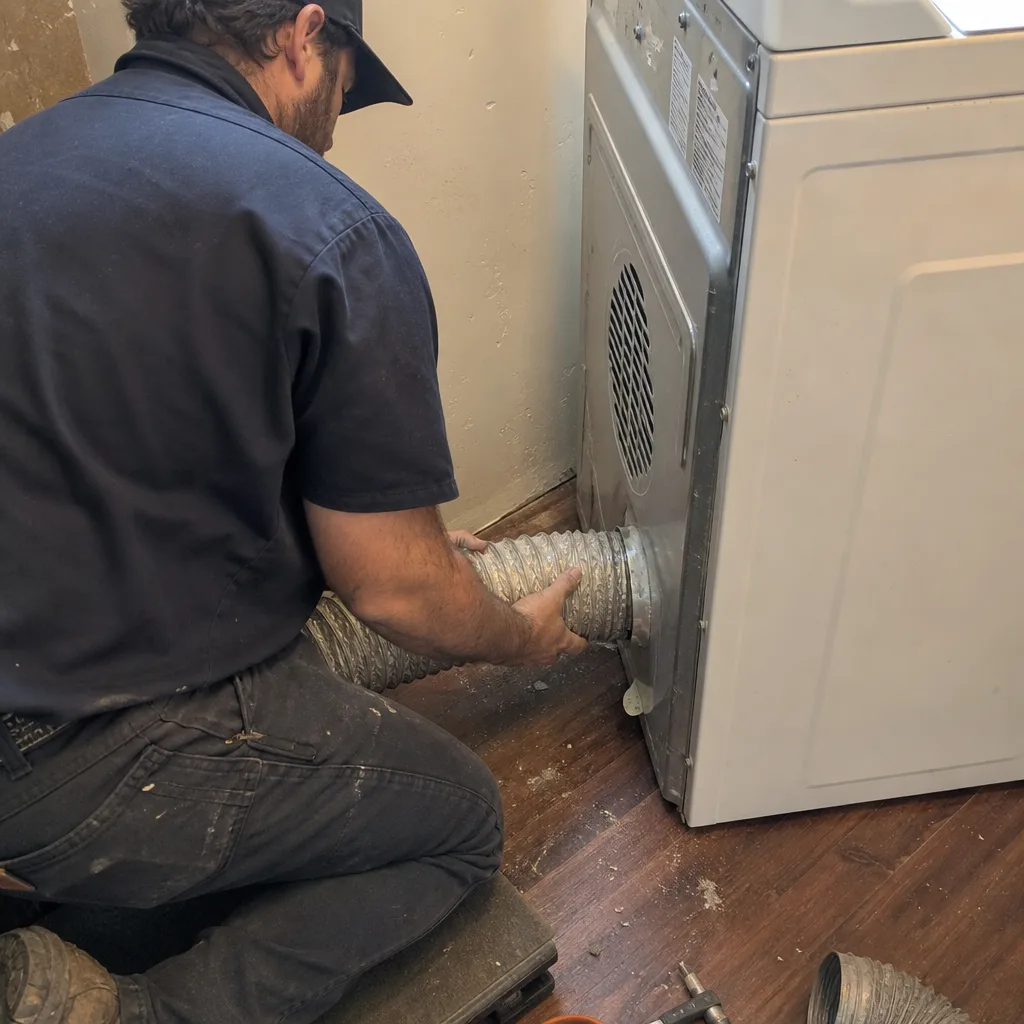
- Pre-inspection with photo documentation. Before any equipment is activated, every duct run is photographed from the register and, where accessible, from the plenum. This establishes baseline condition and protects both parties from dispute.
- System isolation and negative-pressure setup. The collection equipment is connected to create suction through the entire network. In a typical Aurora home, this involves sealing all but one register at a time, forcing airflow through the branch being cleaned.
- Mechanical agitation per duct type. Metal trunk lines receive rotary brushing or pneumatic whip tools. Flex duct receives lower-torque, diameter-matched brushing to prevent liner damage. The plenum is hand-cleaned and vacuumed directly.
- HEPA-contained extraction. All dislodged debris passes through filtration rated at 99.97% efficiency at 0.3 microns before exhaust. This is not standard on all equipment; it is standard on professional units from Nikro and Abatement Technologies.
- Post-cleaning photo documentation. Every run is photographed again, with images delivered to the customer as part of the job record. This is the documented photo record CleanRun has included on every visit since 2013.
- Written scope and price verification. The work performed is compared to the written price agreed before work began. Any deviation is explained and documented.
The equipment matters and should be verifiable. CleanRun’s roster includes Rotobrush for residential branch-line agitation, Nikro and Abatement Technologies for negative-pressure containment, and Honeywell and Aprilaire air quality accessories where installation is appropriate. These are trade-recognized brands with published specifications; customers can verify performance claims independently.
What professional service does not include, at least not from accountable providers, is the $79 coupon special that becomes a $600 invoice once the technician is in the home. Haven Standard Clause 1 requires a written price before any work starts, every time. If a provider cannot or will not specify the complete cost in writing before equipment enters the home, that is information in itself.
Cost Comparison: DIY Investment vs. Professional Service in Aurora
Cost transparency is central to this decision. Here are the actual numbers for Aurora homeowners in 2024-2025.
| Approach | Initial Cost | Ongoing Cost | What Is Achieved | What Is Not Achieved |
|---|---|---|---|---|
| DIY register and boot cleaning only | $0 (existing vacuum) | $30-$55/year (filters) | Surface debris removal, improved register appearance | Main trunk, plenum, deep branch lines, documentation |
| DIY with inspection camera and brush kit | $280-$500 | $30-$55/year (filters) | Boot to 4-foot cleaning, evidence-based assessment | Main trunk, plenum, contained extraction, documentation |
| Professional cleaning, small home (under 2,000 sq ft) | $450-$650 | Every 3-5 years | Full system cleaning, photo documentation, written record | Nothing, if properly scoped |
| Professional cleaning, average home (2,000-3,500 sq ft) | $650-$950 | Every 3-5 years | Full system cleaning, photo documentation, written record | Nothing, if properly scoped |
| Professional cleaning with repair/sealing | $950-$1,800+ | As needed | Cleaning plus duct repair, sealing, or sanitizing as scoped | Unscoped items (requires written amendment) |
The DIY investment is not wasted if it leads to informed professional service; explore our more guides & resources for further homeowner guidance. A homeowner who spends $400 on tools, uses them for two years of maintenance, and then calls a professional with inspection evidence has made a rational sequence. The error is spending that $400, achieving partial results, and assuming the deeper system is clean because the visible parts improved.
In Aurora’s market, professional pricing varies with home size, duct accessibility, and contamination level. The ranges above reflect what we observe from accountable providers operating under similar standards. Quotes significantly below these ranges should be scrutinized for scope reduction or bait-and-switch risk. Quotes significantly above without clear justification for additional services should be similarly questioned. CleanRun provides free second opinions on any written estimate for this reason.
Common Mistakes to Avoid
- Using a shop vacuum without HEPA filtration. Standard shop vacuums exhaust fine particulate through the motor housing. In an enclosed basement or utility room, this redistributes the smallest, most respirable particles into the breathing zone. Only HEPA-sealed vacuums belong near ductwork.
- Agitating without extraction. A rotary brush in a duct without simultaneous suction dislodges debris that resettles over hours or days. Homeowners report “dust everywhere for a week” after this mistake. The brush is not the cleaning; the contained extraction is.
- Ignoring the return side. Supply ducts blow conditioned air; return ducts pull unfiltered air from the home. Returns accumulate debris faster and are often more accessible. Cleaning supplies alone addresses less than half the system.
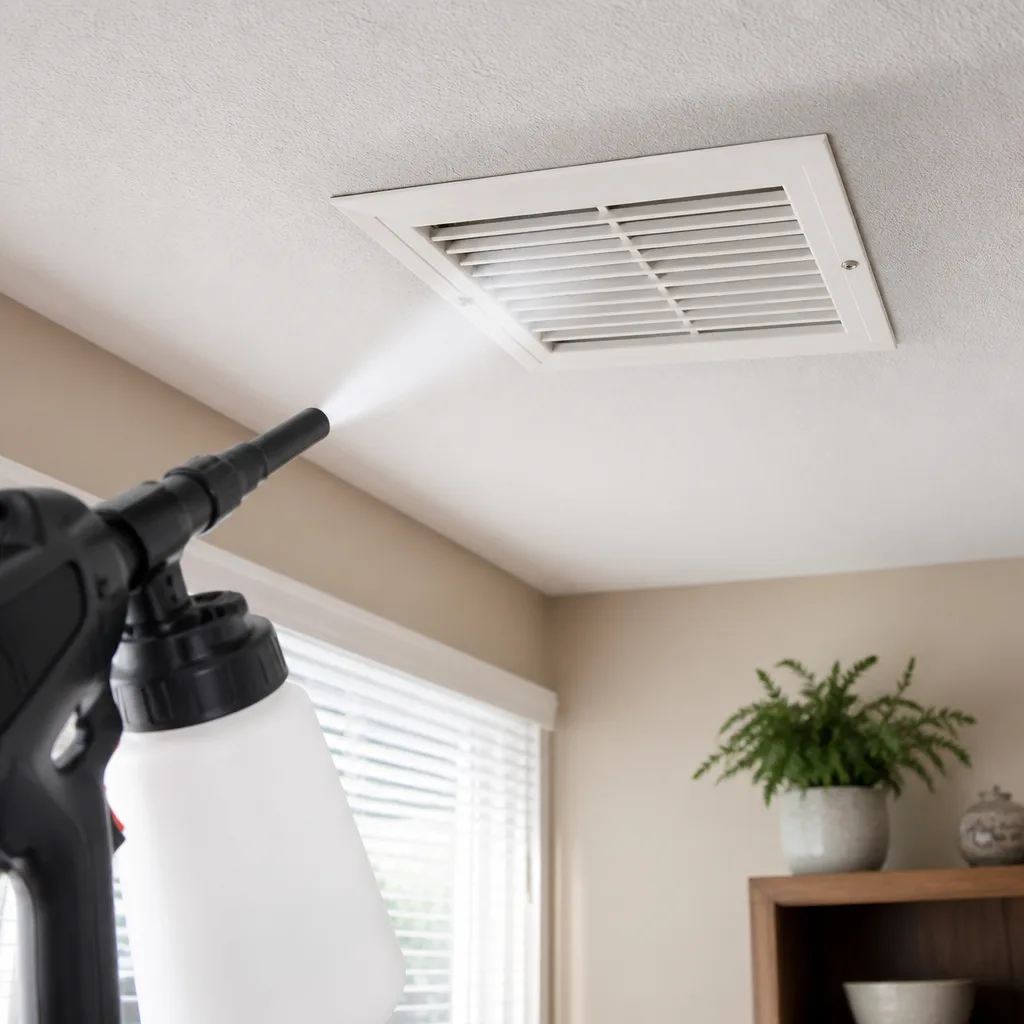
- Applying sealants or sanitizers without cleaning first. Encapsulating debris with spray products traps organic material against duct surfaces, potentially accelerating degradation. Professional sanitizing, when appropriate, follows mechanical removal, never replaces it.
- Assuming new construction means clean ducts. Aurora’s building boom 2015-2025 produced many homes with construction debris in ductwork from day one. We have found drywall screws, insulation fragments, and sawdust in systems never occupied. “It’s a new house” is not evidence of clean ducts.
- Trusting register appearance as system condition. A clean register cover reveals nothing about the trunk line 20 feet away. The inspection camera is essential; visual access at the point of air delivery is not representative.
When to Call a Professional
Call a professional when your inspection evidence shows debris beyond DIY reach, when documentation is required for sale or health reasons, or when you need accountability for results. In Aurora, where altitude extends HVAC run times and pushes debris deeper, the physical limits of homeowner equipment are reached sooner than national averages suggest.
CleanRun Air Duct Cleaning Aurora offers free estimates in Aurora. Every estimate includes a written price before any work starts, under Haven Standard Clause 1. Every completed job includes a documented photo record of every duct run, before and after, delivered as part of the standard job record. The 365-Day Done Right Promise means if the work is not right, we make it right, backed in writing, not subject to manager discretion. Call (720) 513-5159 to schedule an assessment or request a free second opinion on any written estimate.
Frequently Asked Questions
Professional air duct cleaning in Aurora typically ranges from $450 for homes under 2,000 square feet to $650-$950 for average homes between 2,000 and 3,500 square feet. Larger homes or those requiring duct repair, sealing, or sanitizing may range from $950 to $1,800 or more depending on scope. CleanRun provides a written price before any work starts on every job, with no per-vent pricing or post-arrival add-ons. Call (720) 513-5159 for an exact quote; estimates are free.
Low quotes typically indicate scope reduction or bait-and-switch tactics. A $79-$149 coupon special often covers only register vacuuming or uses inadequate portable equipment, with the technician presenting additional charges once on-site. Reputable providers use truck-mount or high-CFM portable negative-pressure systems, HEPA containment, and mechanical agitation tools that cost significantly more to operate. The difference is not markup; it is equipment, labor time, and accountability. Always request a written scope specifying what ducts are included, what equipment will be used, and whether photo documentation is provided.
Demand a documented photo record of every duct run, before and after, as a standard deliverable. This has been CleanRun’s practice since 2013. Without photographic evidence, you have only the technician’s word. With it, you have verifiable documentation of what was in your system and what condition it was left in. Review the images before final payment; they are your proof of service.
For typical Aurora homes at altitude with standard occupancy, every 4-5 years is reasonable if the system is well-maintained and filters are changed regularly. Homes with pets, allergy-sensitive occupants, recent renovation, or located in dust-exposed areas like eastern Aurora near open prairie may need cleaning every 2-3 years. New construction should be inspected after the first year of occupancy. The inspection methods described in this guide let homeowners determine their specific interval rather than following a generic schedule.
No. A leaf blower forces debris into the living space without containment. A shop vacuum without HEPA filtration exhausts fine particulate. Neither creates the negative-pressure environment required to remove debris from deep ductwork. These methods make the system appear cleaner temporarily while redistributing contaminants. They are not effective substitutes for contained extraction.
DIY cleaning that damages duct lining, dislodges connections, or introduces moisture can void component warranties. Most manufacturer warranties cover defects, not damage from improper maintenance. Professional service from a licensed provider carries insurance and workmanship guarantees that protect against this risk. If warranty preservation is a concern, request that any service provider document their methods in writing and verify compatibility with your equipment manufacturer’s requirements.
The Bottom Line
DIY air duct cleaning has a legitimate role: register maintenance, boot vacuuming, limited flex duct reach, and evidence gathering through inspection. It fails at the physics boundary where negative pressure and contained extraction become necessary. In Aurora, altitude-driven HVAC cycles push debris further into systems than sea-level comparisons suggest, shortening the interval before professional equipment is required. The rational homeowner invests in basic DIY tools for maintenance and inspection, uses them to build evidence, and calls a professional when that evidence shows limits reached. The irrational homeowner assumes visible cleanliness equals system cleanliness, or spends on professional service without first determining whether it is needed. This guide exists to prevent both errors.
Written by Tomas Reyes, Owner at CleanRun Air Duct Cleaning Aurora, serving Aurora since 2013.