
Last updated September 23, 2026
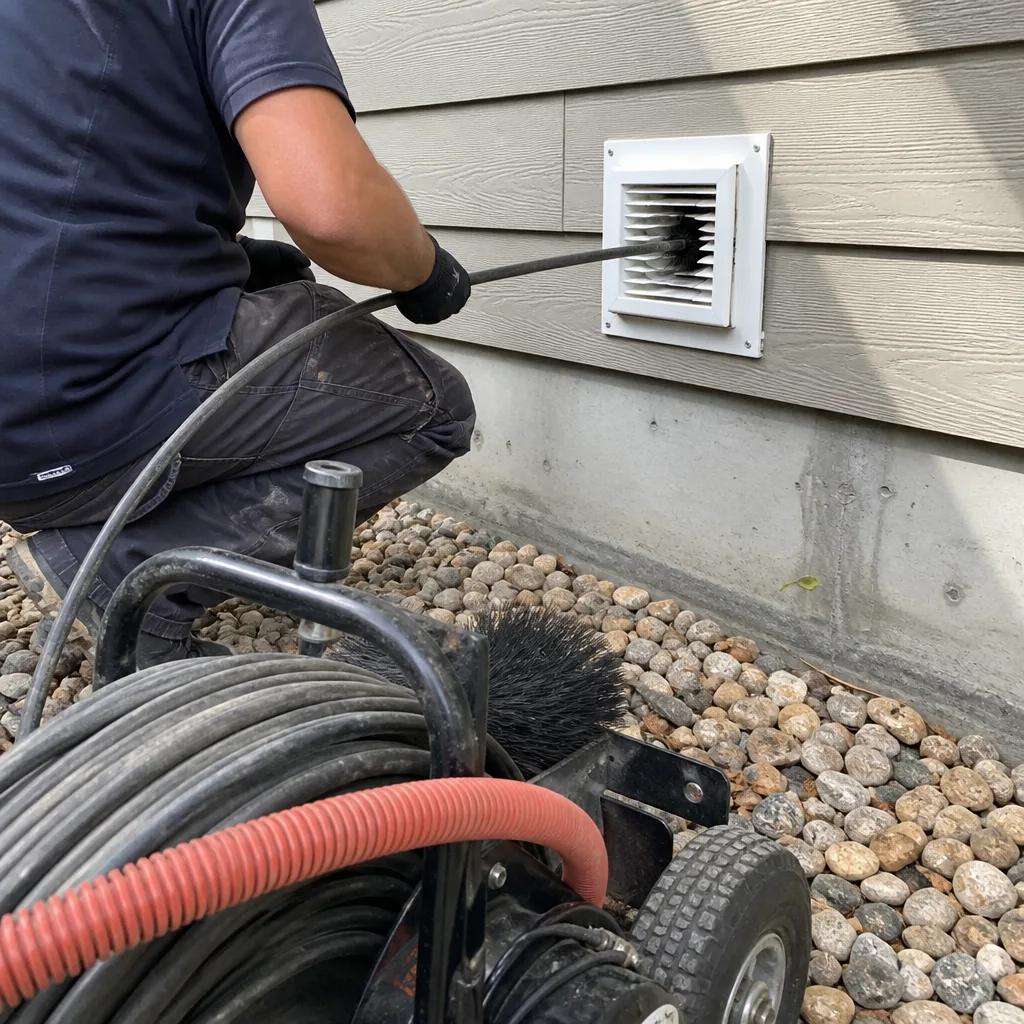
Whole-system duct and dryer vent check with before-and-after photos - you see exactly what came out of your vents
That "$99 whole-house special" is a bait ad - the real number appears once they are in your hallway, or the "clean" is a shop-vac at the register. We photograph the inside of your ducts before and after instead.
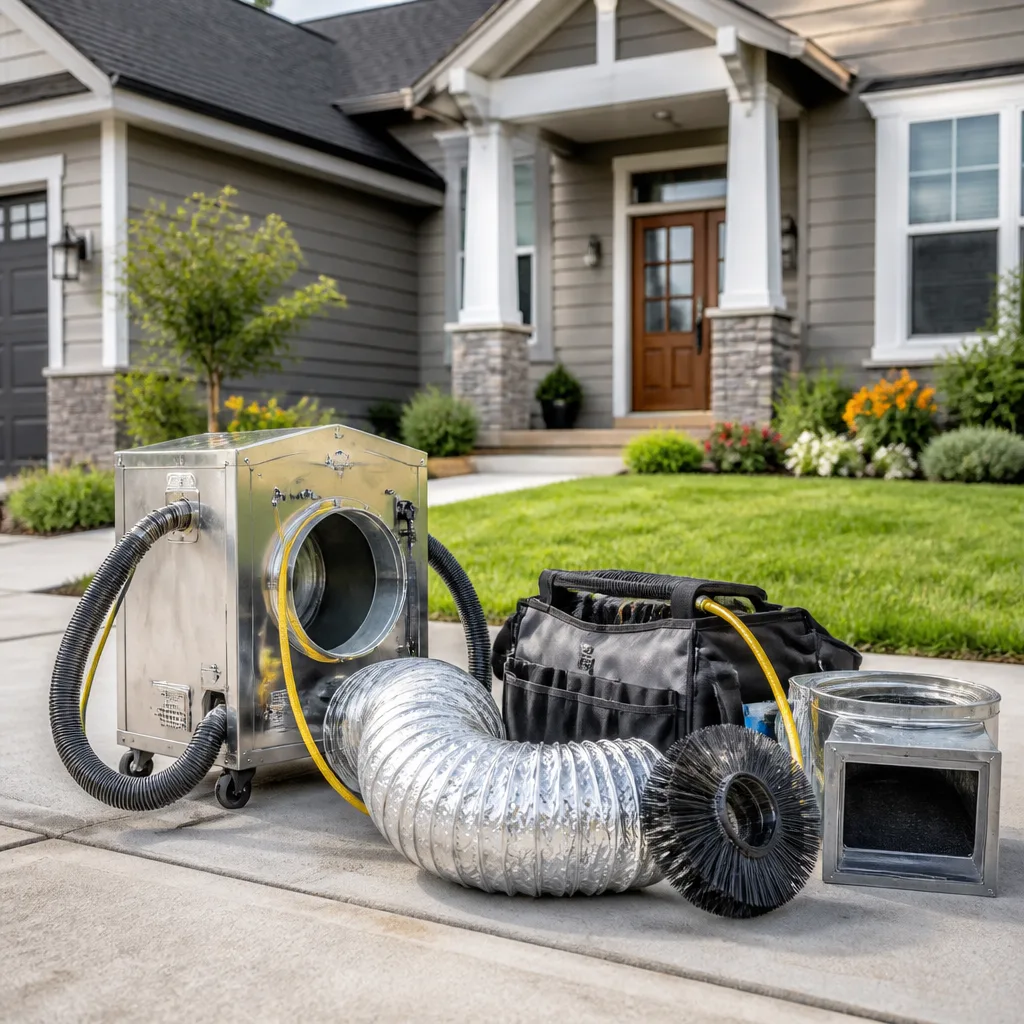
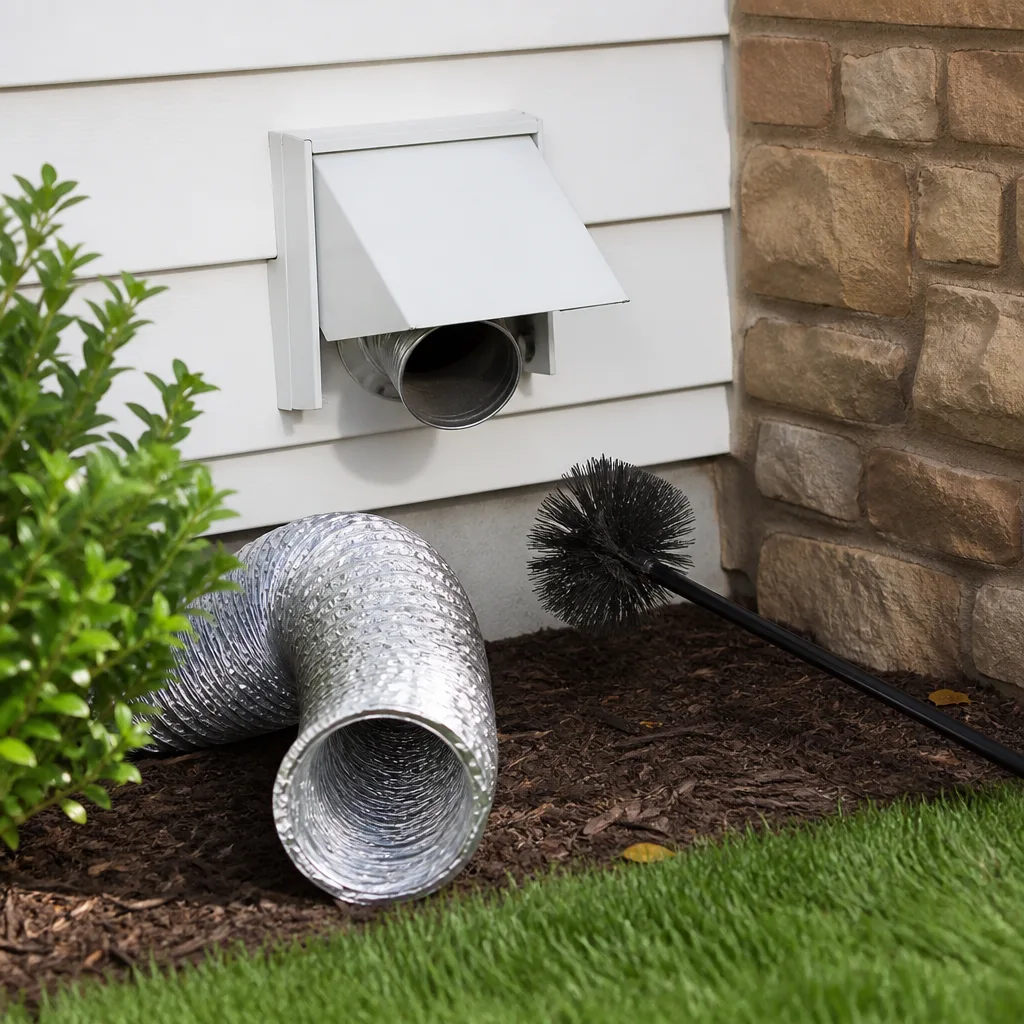
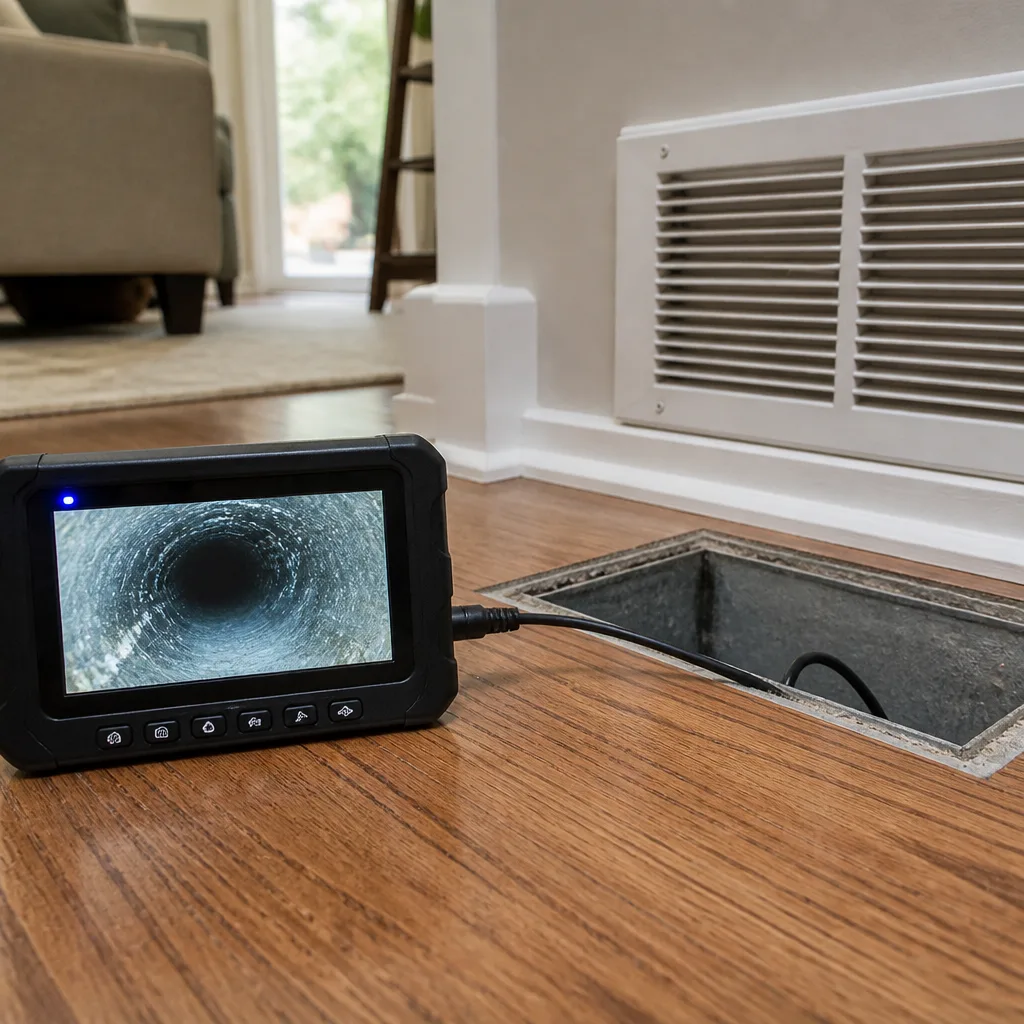
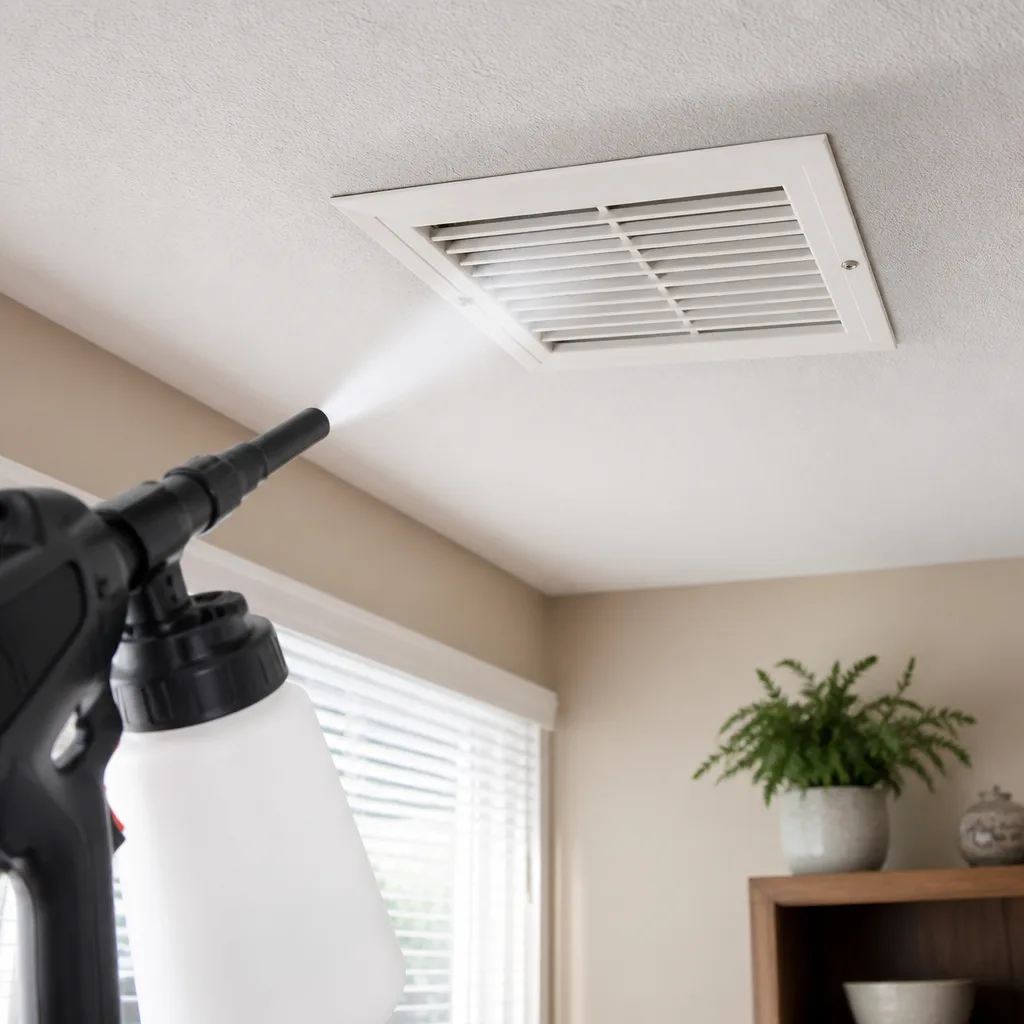
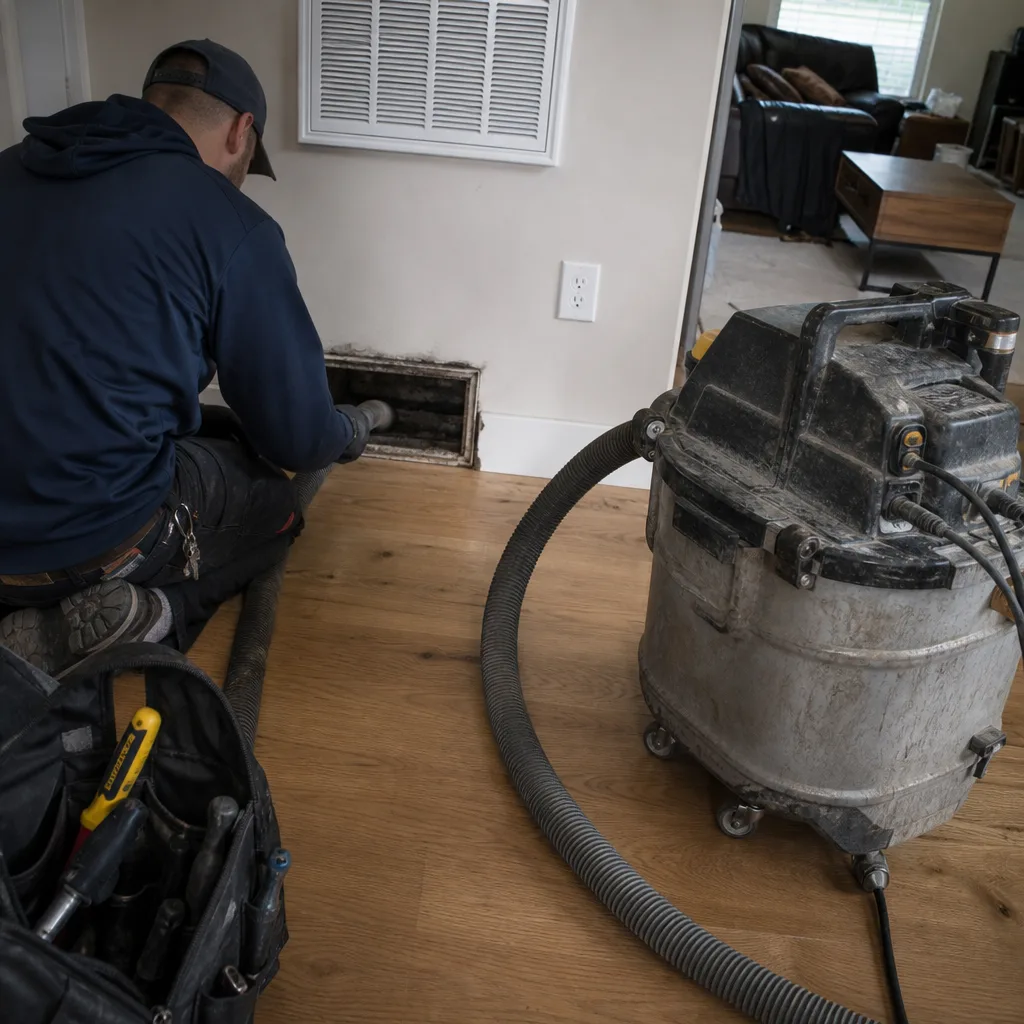 Before
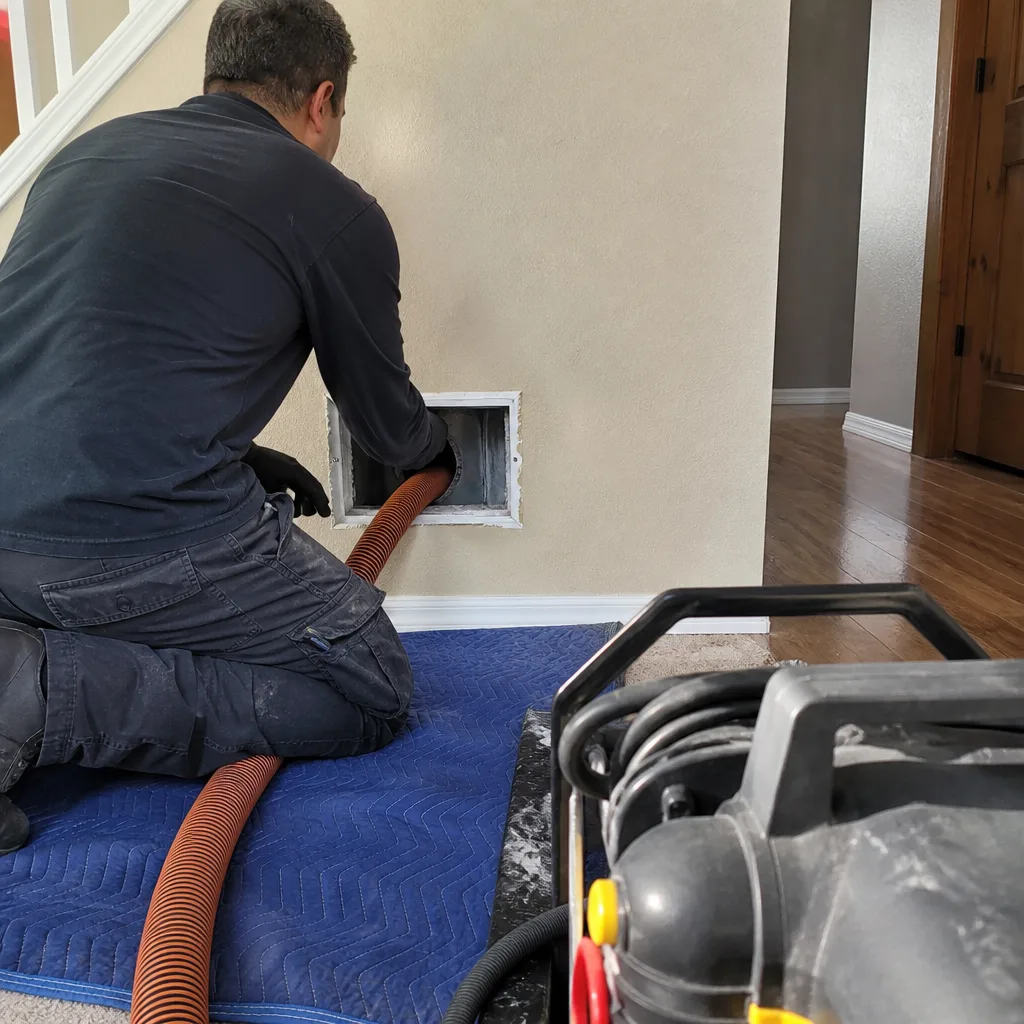 After
After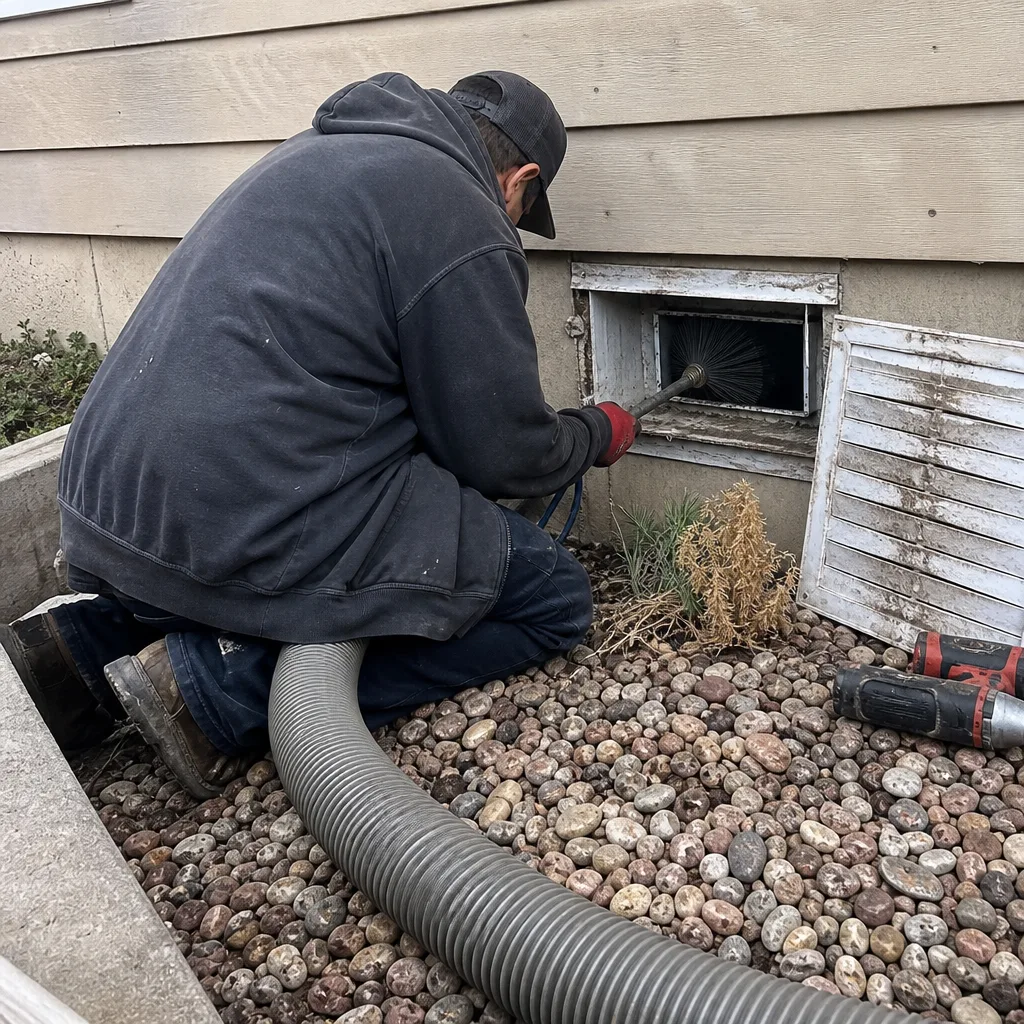 Before
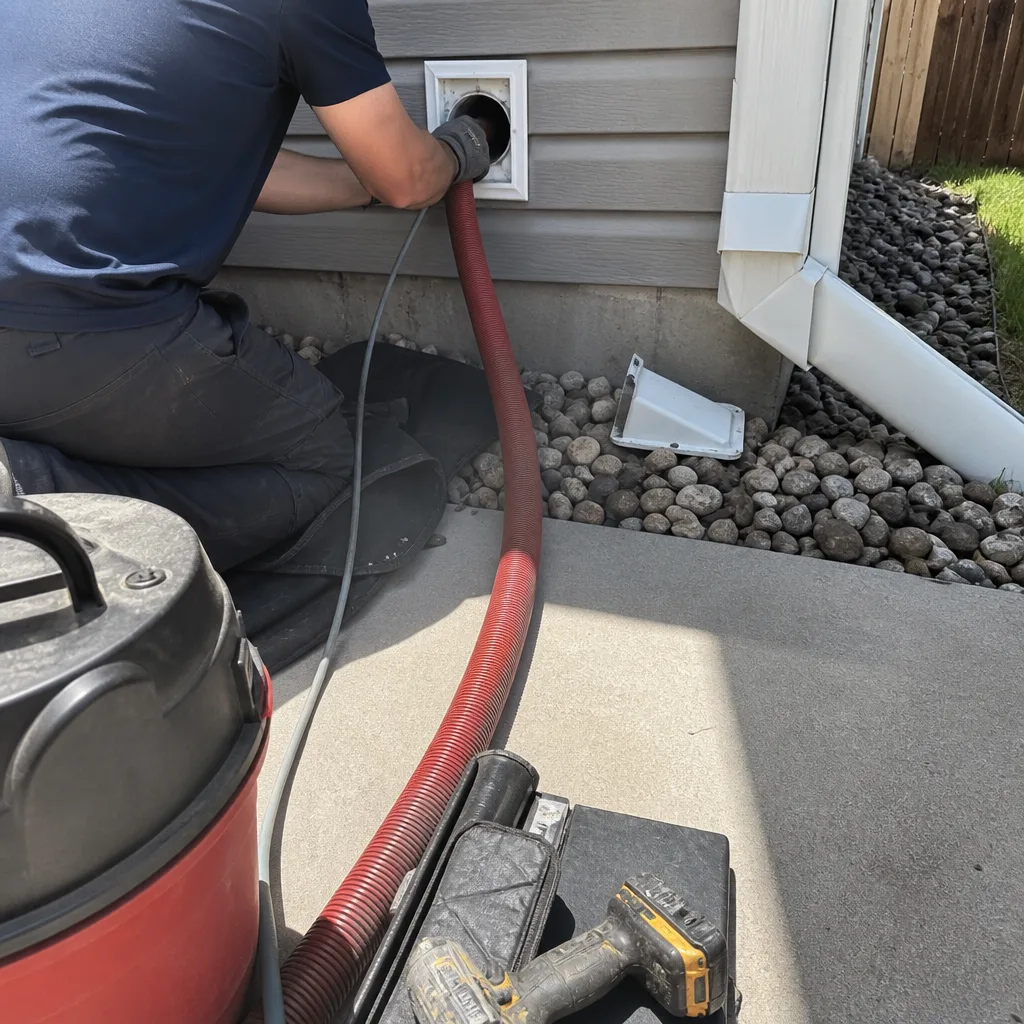 After
After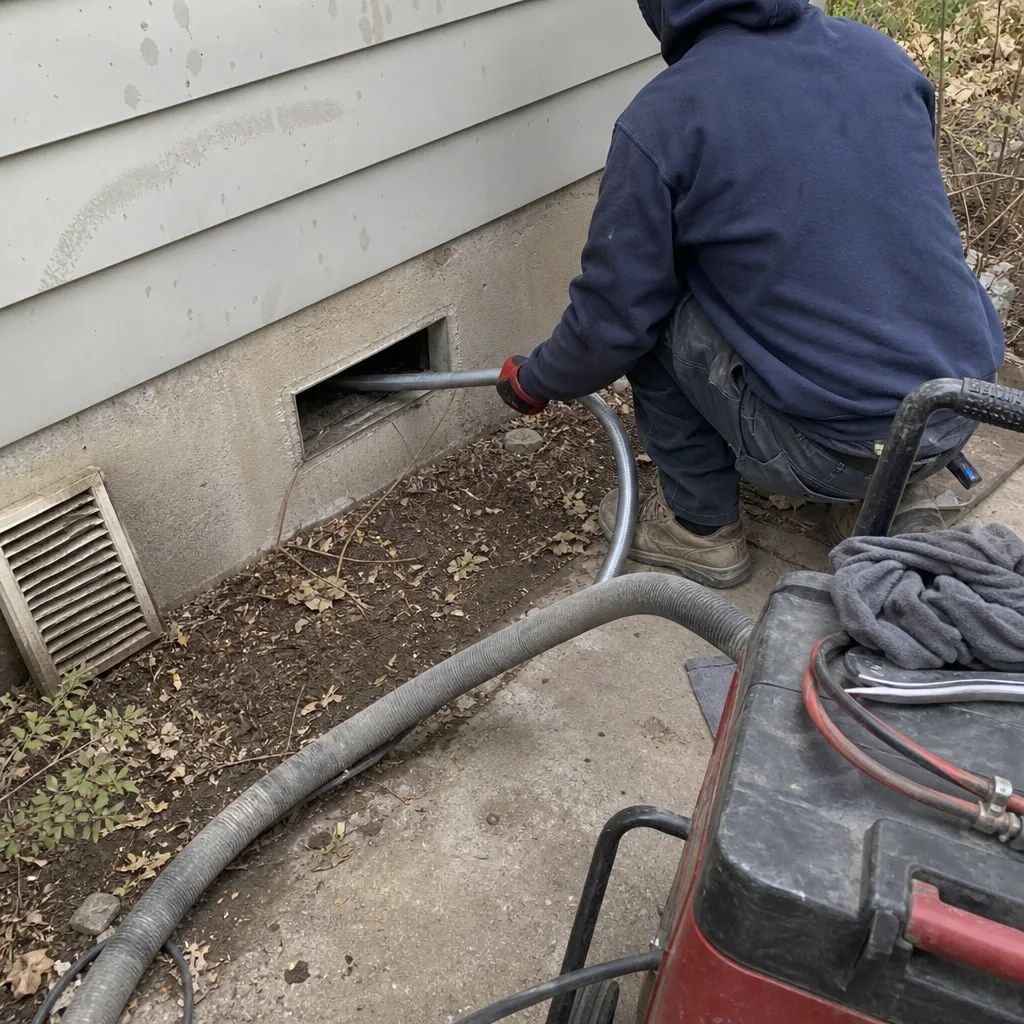 Before
 After
AfterAir Duct Cleaning Permits, Codes & Inspections in CO: What You Need to Know
Here’s something most duct cleaning companies in Aurora won’t tell you: the vacuuming itself is unregulated, but the repairs we photograph inside your plenum often trigger permit requirements under Colorado’s adopted International Mechanical Code. In 2019, an Aurora homeowner in Tallyn’s Reach learned this the hard way when a buyer’s inspector flagged an unpermitted duct reconnection performed during a “cleaning” visit three years prior, nearly derailing a $685,000 resale. That distinction between cleaning and repair isn’t semantic. It’s the difference between a documented job record you can show an inspector and a hidden liability that surfaces at the worst possible moment. Our Complete Guide to Air Duct Cleaning in Aurora explains exactly where Colorado law draws that line, what permits cost in Aurora, how to verify your contractor actually pulls them, and what paperwork belongs in your permanent home file.
Quick Answer
Air duct cleaning alone does not require a permit in Colorado or Aurora. However, duct repair, reconnection, or modification discovered during cleaning - including mastic sealing of disconnected joints, flex duct replacement, or plenum repairs - typically requires a mechanical permit under the International Mechanical Code (IMC) as adopted by Aurora. Mold remediation inside ductwork falls under separate Colorado indoor air quality guidance, not standard mechanical code. Homeowners should retain all documentation, including photo records and any permit copies, for future inspection and insurance purposes.
Table of Contents
- Cleaning vs. Repair: Where the Permit Line Actually Sits
- Which Duct Repairs Trigger Permits in Aurora
- What Aurora’s Inspection Process Looks Like
- Mold Remediation: Why Colorado Treats It Differently
- How to Verify a Contractor’s License and Permit History
- Documentation to Keep for Home Inspections and Insurance
- Permit Costs and Timeline in Aurora
- Common Mistakes to Avoid
- When to Call a Professional
- Frequently Asked Questions
- The Bottom Line
BeforeAfterCleaning vs. Repair: Where the Permit Line Actually Sits
The International Mechanical Code, which Aurora adopted with local amendments in 2018, distinguishes between maintenance and alteration. This distinction matters because it determines whether your technician can proceed with a written price or must stop work and file paperwork.
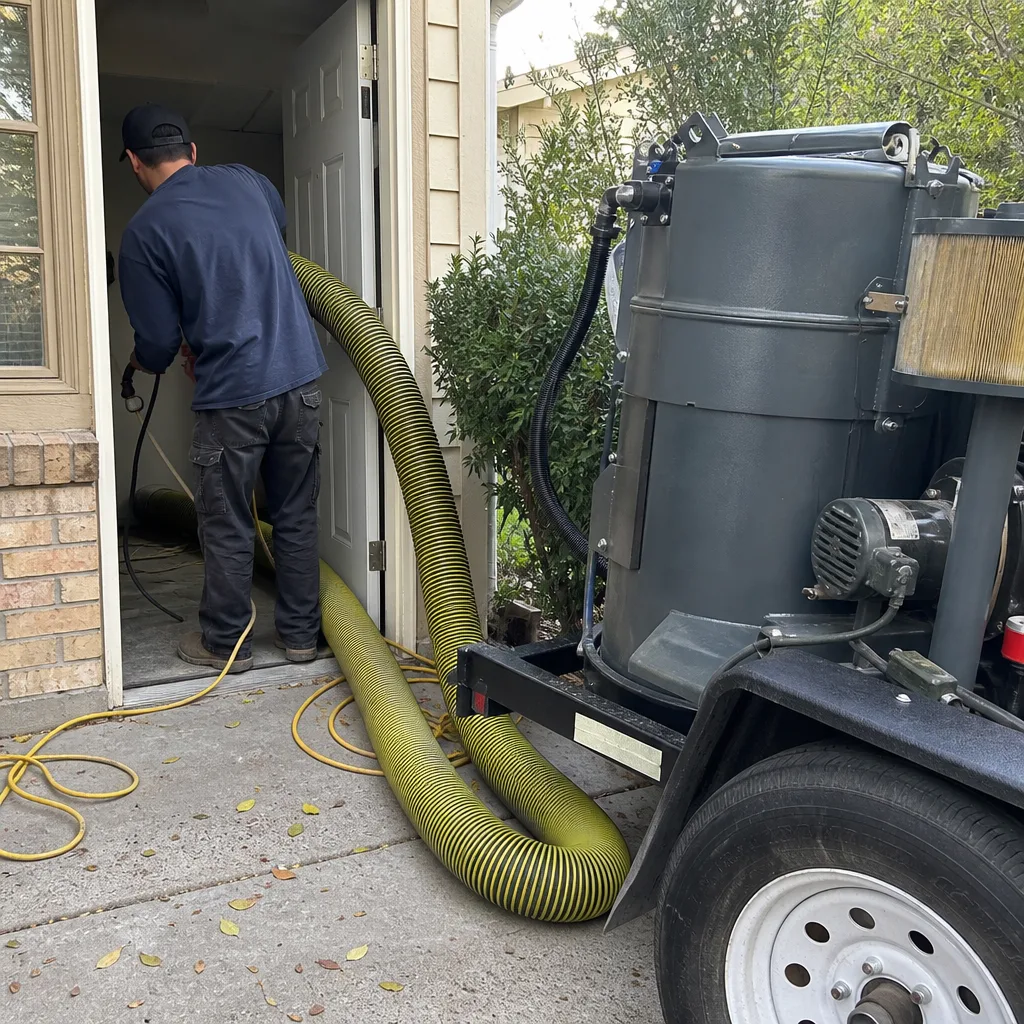
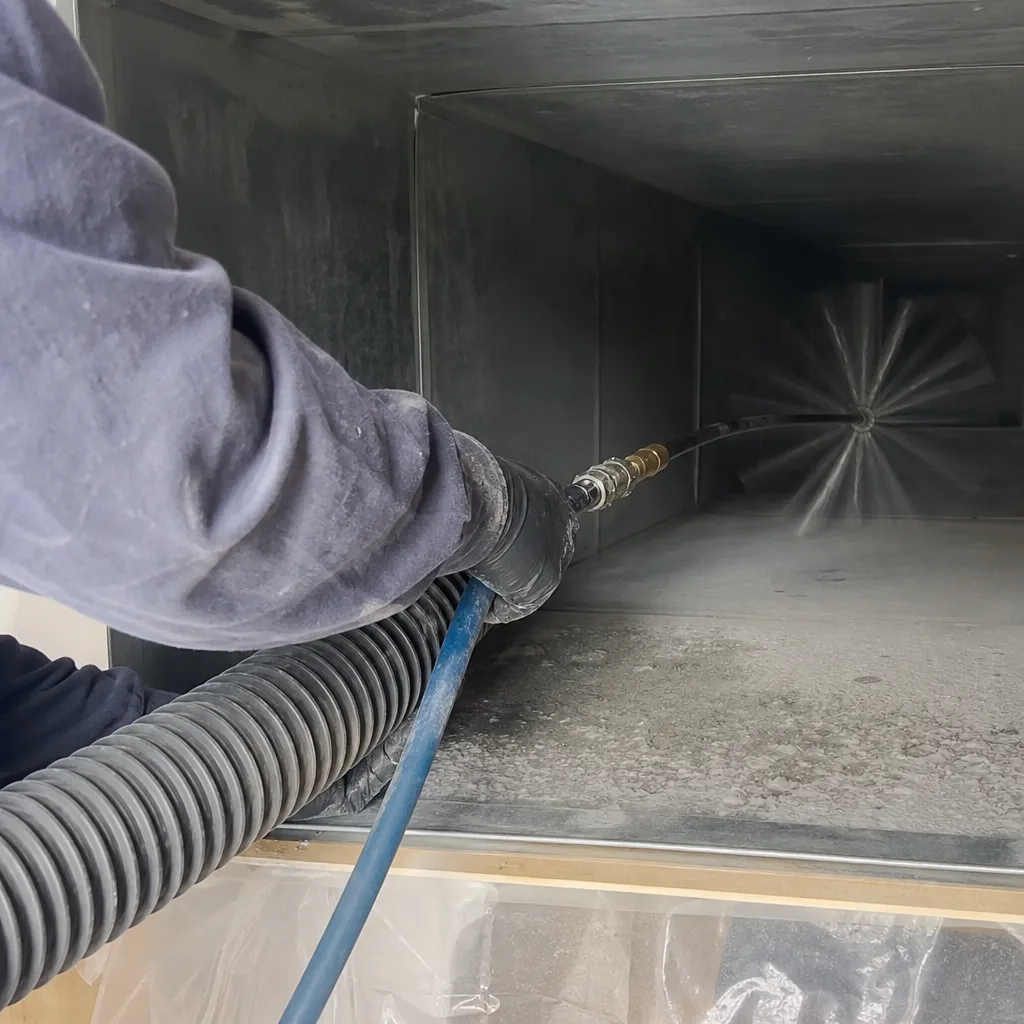
Cleaning (no permit required): Negative-pressure extraction of debris from existing duct runs, register and grille removal for access, and mechanical brushing of interior surfaces. This describes the majority of what air duct cleaning in Aurora entails. The system remains intact; nothing is cut, reconnected, or sealed beyond replacing a register cover.
Repair or modification (permit typically required): Reconnecting a separated flex duct at a plenum junction. Replacing a collapsed or rodent-damaged duct run. Applying mastic sealant to joints that have separated due to thermal cycling - common in Aurora’s clay-heavy soils, which shift seasonally and stress duct connections in slab-on-grade homes. Installing a new return air drop. Modifying duct sizing to accommodate a furnace upgrade.
We’ve documented this distinction on hundreds of jobs since 2013. The camera shows a 3-inch debris build-up at the first elbow; we price the cleaning. But when that same camera reveals a fully separated duct pumping conditioned air into a crawl space, we’re no longer quoting a cleaning. We’re looking at repair work that Aurora’s Building Division classifies as mechanical alteration.
The homeowner rarely sees this coming. The $79 coupon didn’t mention permits. The technician, working for a commission shop, may reconnect the duct and move on rather than stop the job, explain the code requirement, and risk losing the sale. At CleanRun, Haven Standard Clause 1 requires a written price before any work starts - and if that written scope includes repair work that triggers permitting, the price includes the permit cost or a clear notation that the homeowner must obtain it.
Colorado does not license HVAC or duct contractors at the state level. Regulation happens at the municipal level, which means Aurora’s requirements differ from Denver’s, Centennial’s, or Littleton’s. A technician licensed to clean ducts in unincorporated Arapahoe County may not be authorized to pull mechanical permits in Aurora proper. This patchwork confuses homeowners and creates compliance gaps that surface during resale.
Which Duct Repairs Trigger Permits in Aurora
Aurora’s Building Division operates under the 2018 IMC with local amendments. After reviewing permit records and speaking with plan reviewers, we’ve identified the specific repair scenarios that require a mechanical permit.
Permit-required work:
- Duct reconnection or replacement beyond simple register reattachment
- Any modification to the plenum, including patching holes or replacing sections
- Installation of new duct runs, even if connecting to existing trunk lines
- Conversion from flex duct to rigid metal ductwork
- Sealing of joints with mastic when the joint has separated or failed (not routine maintenance sealing)
- Repair or replacement of fire/smoke dampers inside ductwork
- Any duct work associated with a furnace or air handler replacement
Work that typically does not require a permit:
- Negative-pressure extraction cleaning of existing ducts using equipment like Rotobrush or Nikro systems
- Register and grille removal and replacement for cleaning access
- Application of internal sealant products for minor leak reduction, provided no disassembly occurs
- Dryer vent cleaning from the exterior termination point (though dryer vent cleaning in Aurora has its own safety considerations under NFPA 211)
The gray zone causes problems. A technician finds a disconnected return duct in a Stapleton row home built in 2016. The soil settlement common in that development has pulled the flex duct from the plenum. Reconnecting it takes twenty minutes. Is this maintenance or repair? Aurora’s interpretation, confirmed by plan review staff, is that any reconnection of a separated component constitutes repair work requiring permit and inspection. The technician who skips this step has performed unpermitted mechanical work.
We’ve seen this scenario repeatedly in Aurora neighborhoods with newer construction on expansive soils: Conservatory, Southshore, and the eastern edge of Tallyn’s Reach. The thermal expansion and contraction of duct materials, combined with soil movement, separates joints that were never designed for that stress. The cleaning visit becomes a repair discovery, and the homeowner deserves to know the regulatory implications before anyone touches a connection.
What Aurora’s Inspection Process Looks Like
If your duct repair requires a permit, the process follows a predictable sequence. Understanding it helps you evaluate whether a contractor is handling compliance properly or cutting corners.
- Application submission. The contractor or homeowner submits a mechanical permit application to Aurora’s Building Division, either online through the city’s portal or in person at 15151 E. Alameda Parkway. The application requires scope description, contractor license information, and property details.
- Plan review (if required). Simple duct repairs often qualify for over-the-counter permits without full plan review. More extensive modifications, or work in commercial or multi-family buildings, may require plan submission and review timeline of 5-10 business days.
- Permit issuance and fee payment. Once approved, the permit is issued and must be posted at the work site. Fees vary by scope; see the costs section below.
- Work execution. The contractor performs the repair. For duct work, this typically occurs during the same visit as the cleaning if the contractor planned appropriately.
- Inspection scheduling. The contractor or homeowner schedules a rough inspection if required, and a final inspection after work completion. Aurora’s inspectors verify proper materials, secure connections, and code-compliant clearances.
- Final approval and certificate. Upon passing inspection, Aurora issues a Certificate of Completion or final approval documentation. This belongs in your permanent home file.
The inspection itself is straightforward for typical residential duct repair. The inspector checks that flex duct is properly supported (maximum 4-foot intervals per IMC), that mastic applications cover the full joint circumference, that rigid duct connections use approved fasteners and sealant, and that any penetrations through fire-rated assemblies are properly protected. In Aurora’s townhome developments, where shared walls complicate fire separation, this last point receives particular attention.
What the inspector does not verify: whether the duct was actually cleaned. Cleaning quality is outside the mechanical code’s scope. That’s why a separate photo record matters. At CleanRun, the documented photo record of every duct run, before and after, serves a purpose no permit inspection duplicates. It proves the cleaning occurred, not just that the ducts were reconnected to code.
Mold Remediation: Why Colorado Treats It Differently
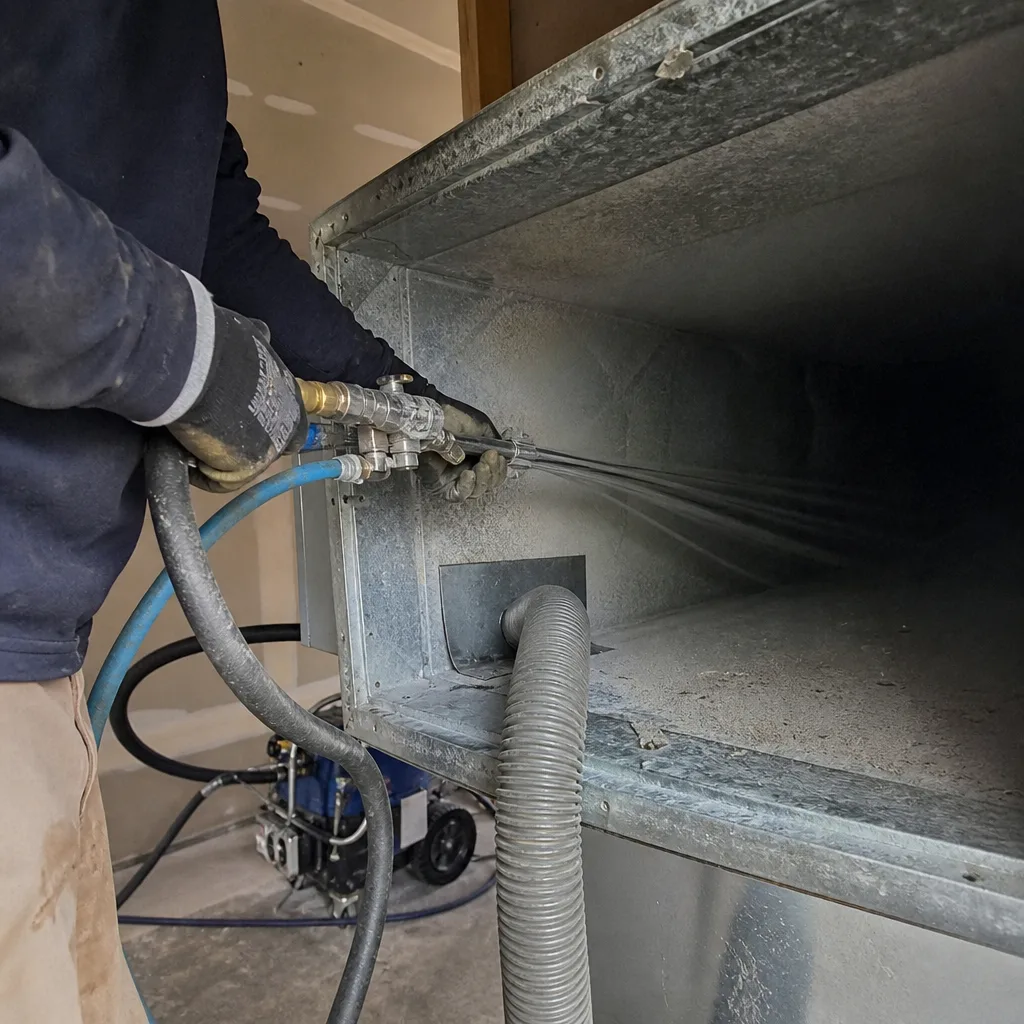
Here’s where Colorado’s regulatory framework diverges from standard mechanical code in ways that surprise homeowners. If our camera shows microbial growth inside a duct run - not just dust and debris, but active colonization - the response isn’t governed by the IMC permit process at all.
Colorado has no standalone mold licensing statute. Instead, mold remediation falls under the Colorado Department of Public Health and Environment’s indoor air quality guidance documents and general contractor licensing at the municipal level. This creates a significant qualification gap. A technician with a mechanical permit can legally reconnect your duct. That same technician may have no specific training in microbial assessment, containment protocols, or remediation standards.
The industry reference standard is the ANSI/IICRC S520 Standard for Professional Mold Remediation. Compliance with S520 is voluntary in Colorado, not statutory. This means contractors can - and do - apply antimicrobial products inside ductwork without following containment, negative air, or post-remediation verification protocols that S520 would require.
We’ve documented this gap on jobs across Aurora, particularly in older homes near Hoffman Heights and in basements throughout the Original Aurora neighborhood where humidity control is inconsistent. The camera shows what appears to be mold. The technician sprays a product. No sampling occurs. No independent verification follows. The homeowner receives no documentation of what was found, what was applied, or whether the underlying moisture condition was addressed.
This matters for three reasons. First, misapplied antimicrobial products in ductwork can leave residues that become respiratory irritants. Second, without moisture source correction, mold returns. Third, insurance claims and future home inspections increasingly ask for documentation of mold remediation methodology. “We sprayed something” doesn’t satisfy that request.
At CleanRun, when our inspection identifies potential microbial growth, we document it photographically and recommend appropriate next steps, which may include independent air quality assessment before any treatment. Haven Standard Clause 2, Transparent Scope, requires that we distinguish between cleaning, repair, and remediation in our written price - we don’t lump them together as a single line item.
For homeowners, the practical implication is this: if a contractor proposes mold treatment inside your ducts, ask specifically what standard they follow, whether they performed moisture mapping, and what post-treatment verification they provide. In Colorado’s current regulatory environment, the burden of verification falls entirely on you.
How to Verify a Contractor’s License and Permit History
Colorado’s lack of state-level HVAC licensing means you must verify credentials at the municipal level. For Aurora work, this is straightforward if you know where to look.
Step 1: Verify Aurora business license.
All contractors performing work in Aurora must hold a current City of Aurora business license. Verify this through Aurora’s online business license lookup or by calling the Business License Division at (720) 513-5159. The license should match the company name on your written estimate exactly. Subcontracting arrangements should be disclosed in writing; if the company that sold you the job plans to send another firm’s technicians, both should be licensed.
Step 2: Check contractor registration with the Building Division.
Aurora maintains a separate contractor registration list for mechanical, electrical, and plumbing work. A business license alone does not authorize mechanical work. Ask for the contractor’s Aurora registration number and verify it with the Building Division.
Step 3: Request permit history for your address.
Aurora’s permit records are public. If a contractor claims they “handle all permits,” request the permit number and verify it was issued. You can search Aurora’s online permit portal by address. If work was performed but no permit appears, ask for explanation in writing. Unpermitted work discovered during a future home inspection becomes your disclosure obligation, not the contractor’s.
Step 4: Confirm insurance and bonding status.
While not a permit issue, insurance verification protects you if a technician is injured on your property or if damage occurs. Request a certificate of insurance naming you as additional insured for the project duration. CleanRun carries general liability and workers’ compensation coverage; our certificate is available on request, and Haven Standard Clause 4, Full Coverage, requires maintenance of both.
Step 5: Review equipment documentation.
Professional-grade equipment matters for both cleaning quality and safety. Contractors using consumer-grade shop vacuums with inadequate HEPA filtration can redistribute contaminants rather than remove them. Our equipment roster includes Rotobrush brush-and-vac systems for residential duct runs, Nikro negative air machines for larger systems, and Honeywell media filtration for post-cleaning air quality support. We name these brands so customers can verify specifications independently - not because the brand names persuade, but because verifiable equipment choices demonstrate professional practice.
The red flags we’ve observed in Aurora’s market: contractors who cannot produce a current business license, who resist putting permit responsibility in writing, who perform “minor” reconnections without mentioning code requirements, or who claim “everyone does it this way” when questioned about permits. These are the same operators who advertise prices that don’t cover compliance costs - and whose work surfaces as problems during resale.
Documentation to Keep for Home Inspections and Insurance
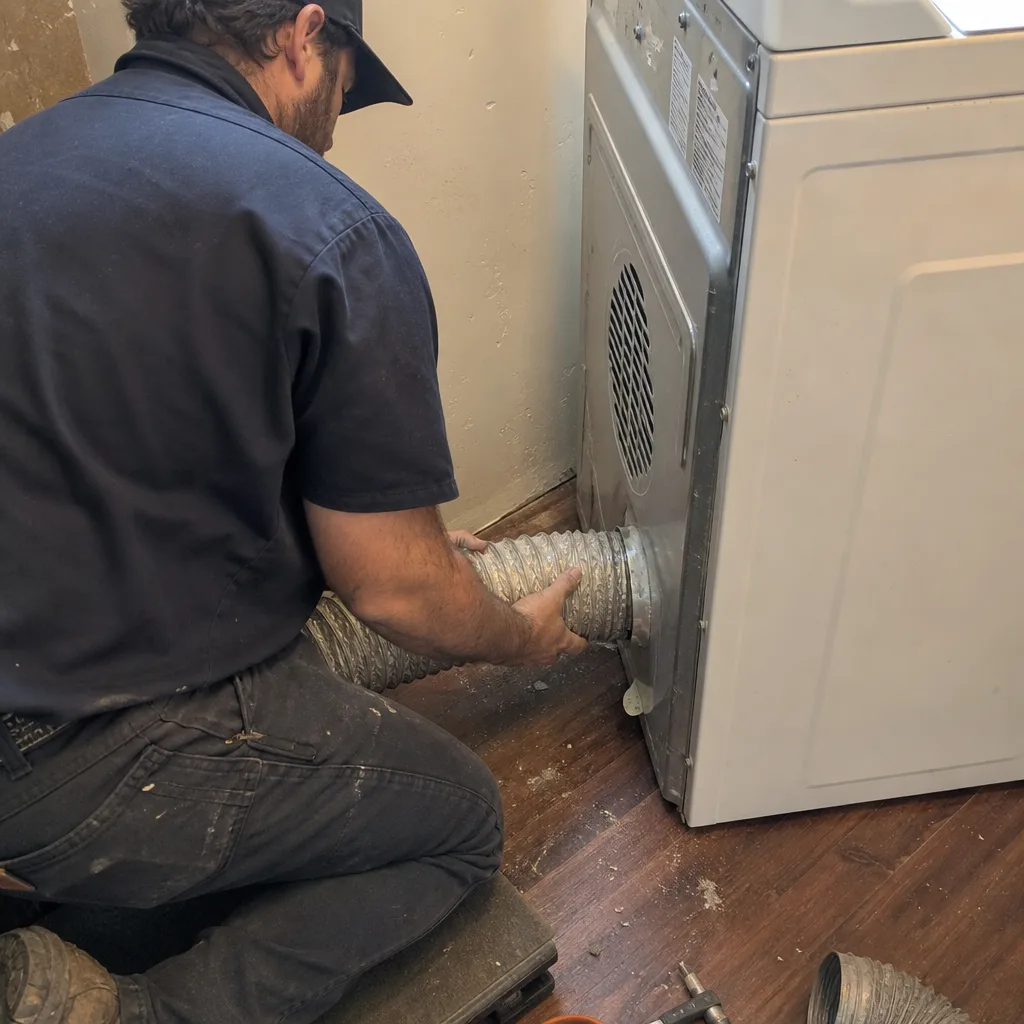
Whether your duct work required a permit or not, documentation determines whether that work helps or hurts you in future transactions. We’ve reviewed too many home files where the only record of duct work is a credit card charge and a vague memory.
Essential documents for every duct service:
- Written scope and price, signed by both parties before work begins
- Photo record of interior duct conditions, before and after
- Contractor’s business license and insurance certificate
- Permit application and final approval (if repair work was performed)
- Equipment and product specifications for any treatments applied
- Warranty or guarantee documentation, including scope and duration
Additional documents for repair or remediation work:
- Inspection reports with inspector name and date
- Moisture assessment or air quality testing results (if mold was suspected)
- Material safety data sheets for any chemical treatments
- Post-remediation verification, if performed
The resale scenario is where this documentation proves its value. Aurora’s housing market includes significant turnover in neighborhoods like Conservatory, Southshore, and the redeveloped Fitzsimons area. Buyer’s inspectors increasingly flag mechanical work without permit history. A documented photo record from 2019, paired with a permit certificate for the reconnection performed that same year, answers the inspector’s question before it’s asked. A verbal assurance that “someone cleaned the ducts once” does not.
Insurance claims follow similar logic. If a duct-related fire, water damage, or air quality claim arises, your insurer will request documentation of maintenance and repair history. The 365-Day Done Right Promise we provide in writing on every job - if it’s not done right, we make it right - is a transferable document. It specifies what was warranted, for how long, and under what conditions. Generic “satisfaction guaranteed” language doesn’t provide this clarity.
Our standard job record, delivered to every customer, includes: the written scope and price under Haven Standard Clause 1; the documented photo record of every duct run; technician identification under Haven Standard Clause 3, Verified Crews; and the 365-Day Done Right Promise. For work requiring permits, we add permit application copies and final inspection documentation. This is the record we would want if we were selling the home - so it’s the record we provide.
Permit Costs and Timeline in Aurora
Permit costs in Aurora scale with project value and complexity. For residential duct repair work discovered during cleaning, the typical range is straightforward enough to include in our written price when applicable.
| Work Type | Estimated Permit Fee | Timeline |
|---|---|---|
| Minor duct repair (reconnection, sealing) | $85 – $175 | Same day to 2 days |
| Duct replacement (partial system) | $175 – $350 | 2-5 days including inspection |
| New duct run installation | $250 – $500 | 5-10 days with plan review |
| Work associated with HVAC replacement | Included in mechanical permit | Varies with equipment |
These fees are current as of 2024; Aurora adjusts fee schedules periodically. The contractor should specify whether their written price includes permit fees or lists them as a separate homeowner responsibility. At CleanRun, when permit work is identified during our initial inspection, the written price includes all applicable fees or clearly notes the homeowner’s separate obligation - no surprises after work begins.
Timeline matters for scheduling. Over-the-counter permits for minor repair can often be obtained same-day, allowing work to proceed during the scheduled visit. More complex work may require return visits, which we schedule with the permit timeline in mind rather than rushing unpermitted work to complete in one trip.
The hidden cost of permit avoidance: when unpermitted work is discovered during resale, retroactive permitting may be required. Aurora’s Building Division charges additional fees for work performed without prior permit, and the inspection process is more invasive because the work is already concealed. The $85 permit avoided becomes a $400 retroactive process with potential rework requirements.
Common Mistakes to Avoid
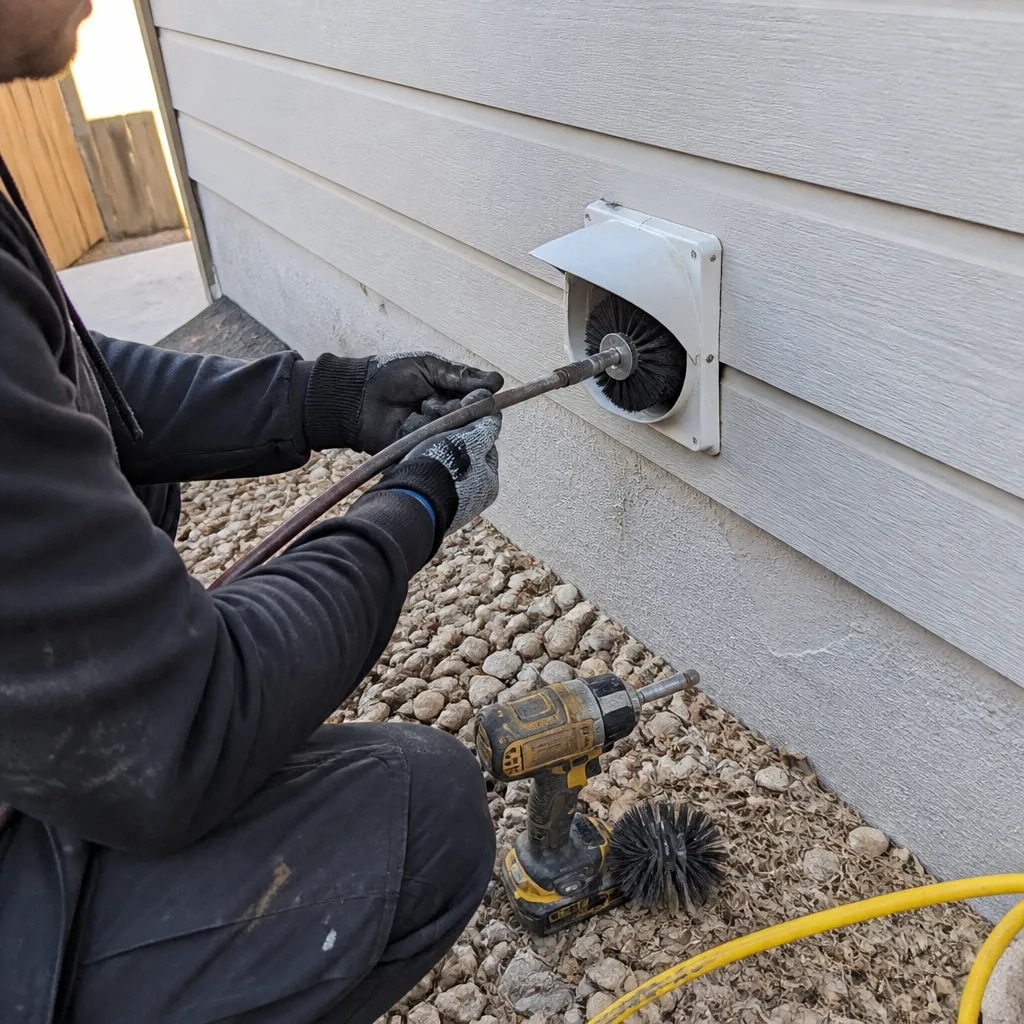
- Assuming “cleaning” covers everything the technician does inside your ducts. Ask specifically whether any reconnection, sealing, or repair is included in the scope. If it is, ask about permit requirements before work begins.
- Accepting verbal assurances about permits. A contractor who says “we’ll take care of it” but won’t put permit responsibility in the written scope is avoiding accountability. Request the permit number and verify it independently.
- Ignoring the distinction between cleaning and remediation. In Aurora’s variable climate, where summer monsoons and winter dry spells stress building envelopes, mold inside ducts signals a moisture problem. Cleaning alone doesn’t address it. Ask for moisture source identification, not just surface treatment.
- Discarding documentation after the “warranty period.” Keep all records permanently. Home inspections and insurance claims can reference work performed decades earlier. Digital storage costs nothing; lost documentation costs leverage.
- Hiring based on lowest price without verifying permit compliance. The $79 coupon operator isn’t building permit costs into their model. They’re either skipping required permits or adding them as surprise charges. Written upfront pricing, as required by Haven Standard Clause 1, includes all known costs before work starts.
- Failing to verify that “licensed and insured” means licensed in Aurora specifically. A valid license in Denver or unincorporated Arapahoe County does not authorize mechanical work in Aurora. Verify the specific jurisdiction.
- Neglecting to photograph conditions yourself before work begins. Even with a reputable contractor, your own photos of access points, surrounding structure, and visible conditions provide baseline documentation if disputes arise.
When to Call a Professional
Call a qualified contractor when your ducts haven’t been cleaned in 3-5 years, when you notice uneven heating or cooling between rooms, when registers show debris accumulation, or when a musty odor persists despite filter changes. These symptoms often indicate conditions that cross the cleaning-repair boundary - separated ducts, failed seals, or in some cases, moisture intrusion requiring assessment beyond standard maintenance. See our Air Duct Cleaning Warning Signs: A Aurora Homeowner’s Reference Guide for additional context.
CleanRun Air Duct Cleaning Aurora home offers free estimates in Aurora - call (720) 513-5159. Our inspection includes interior photography of accessible duct runs, a written scope and price before any work begins, and clear identification of any repair work that would trigger permit requirements. If you’ve received a written estimate from another contractor, our Free Second Opinion puts our number next to theirs, both in writing, so you can compare scope, equipment, and compliance approach directly.
Frequently Asked Questions
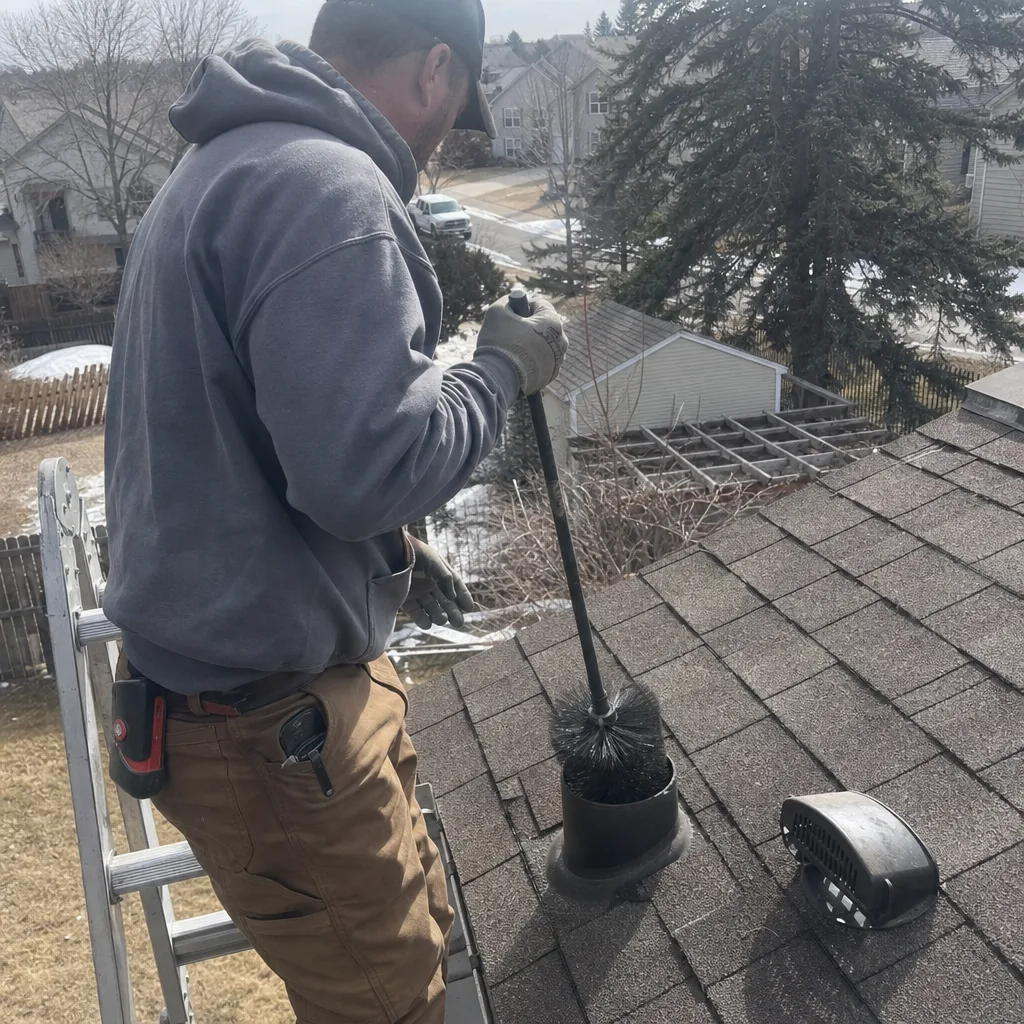
No. Standard air duct cleaning - negative-pressure extraction, mechanical brushing, and register cleaning - does not require a permit in Aurora or anywhere in Colorado. Permits become required when the work crosses into repair, reconnection, or modification of the duct system itself. If your contractor discovers separated ducts or failed seals during cleaning, they should stop and discuss permit requirements before proceeding with repairs.
Minor duct repair permits typically range from $85 to $175 in Aurora, with more extensive replacement work running $175 to $500 depending on scope. These fees are set by Aurora’s Building Division and are subject to periodic adjustment. A contractor performing permitted work should specify whether their written price includes these fees or whether they are your separate responsibility. Call (720) 513-5159 for an exact quote on your specific situation - estimates are free.
Low quotes often exclude costs that appear later: permit fees for discovered repairs, upcharges for “extra” vents, or equipment fees not mentioned in the initial offer. Some operators perform repair work without required permits, passing compliance risk to the homeowner. At CleanRun, our written price under Haven Standard Clause 1 includes all known scope before work begins - no per-vent pricing, no post-arrival surprises, and permit costs disclosed when applicable.
Require a documented photo record of interior duct conditions before and after work. Visual inspection of registers and exterior components doesn’t verify interior cleaning. Our standard deliverable includes photos from inside every duct run, showing debris conditions before and results after. This documentation belongs in your permanent home file and can be shown to inspectors, insurers, or future buyers.
For most Aurora homes, every 3 to 5 years is adequate under normal conditions. Homes with pets, recent renovation, or occupants with respiratory sensitivities may benefit from more frequent service. Newer construction in areas like Southshore or Tallyn’s Reach often shows accelerated debris accumulation from construction residue. The camera doesn’t lie - we show you what we find and let the evidence guide the recommendation rather than applying a universal schedule.
The finding becomes a disclosure issue that can delay closing, trigger buyer repair credits, or require retroactive permitting with additional fees and potential rework. In Aurora’s competitive market, this risk is material. The preventative step is simple: verify permits were obtained for any repair work, retain documentation, and request that your contractor provide permit copies as part of the job record. The cost of compliance is minor compared to the cost of discovery during resale.
The Bottom Line
Air duct cleaning in Aurora operates in a regulatory gap that favors informed homeowners. The cleaning itself is unpermitted and largely unregulated - which is why equipment quality, documentation practices, and technician accountability matter more than any license check. But the repairs commonly discovered during cleaning fall squarely under Aurora’s adopted mechanical code, and contractors who blur this distinction create hidden liabilities that surface during inspection, insurance claims, or resale.
The protections available to you are procedural, not mysterious: written scope and price before work begins, verified municipal licensing, permit documentation for repair work, and a permanent record of what was found and what was done. These are the practices we’ve maintained since 2013, documented across 52,000 homes, and encoded in the H.A.V.E.N. Standard that governs every job we perform. The industry built on $79 coupons relies on your not asking these questions. We answer them before you think to ask.
Written by Tomas Reyes, Owner at CleanRun Air Duct Cleaning Aurora, serving Aurora since 2013.