
Last updated September 23, 2026
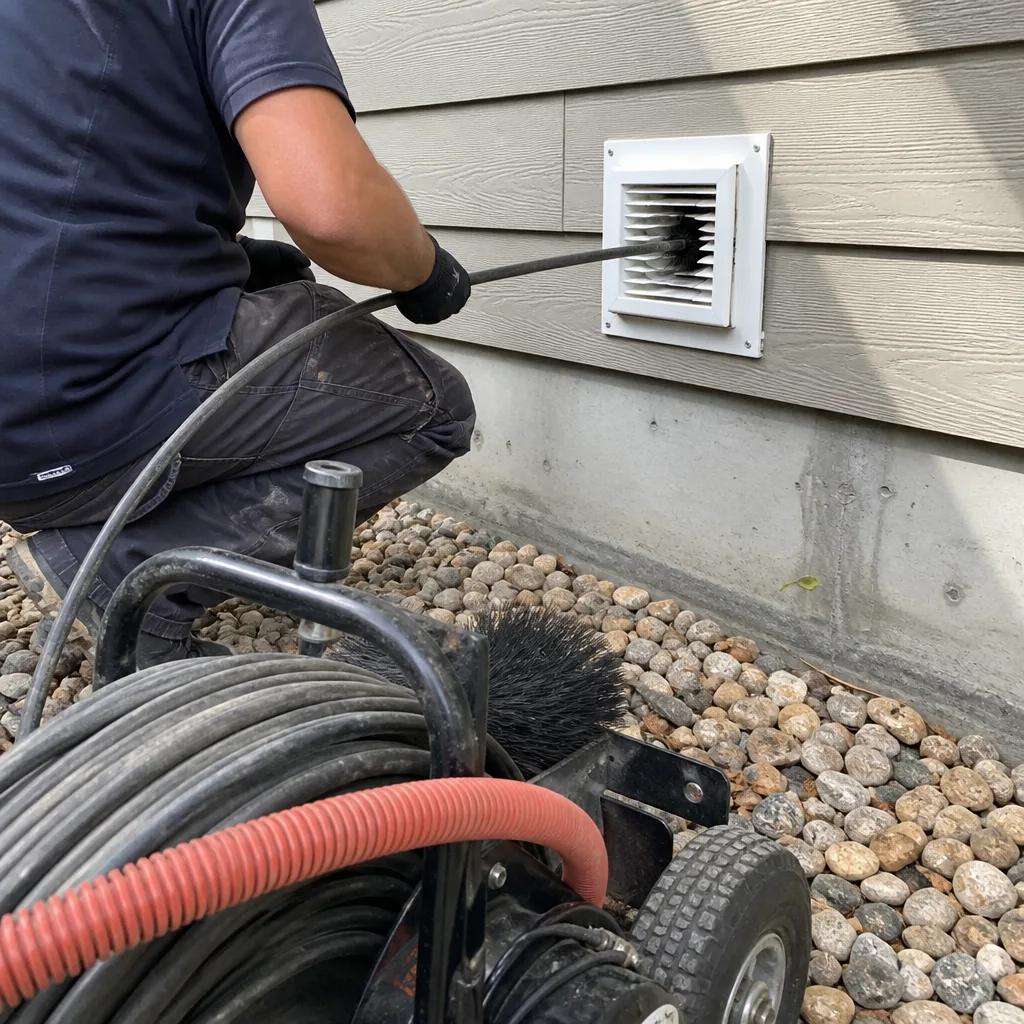
Whole-system duct and dryer vent check with before-and-after photos - you see exactly what came out of your vents
That "$99 whole-house special" is a bait ad - the real number appears once they are in your hallway, or the "clean" is a shop-vac at the register. We photograph the inside of your ducts before and after instead.
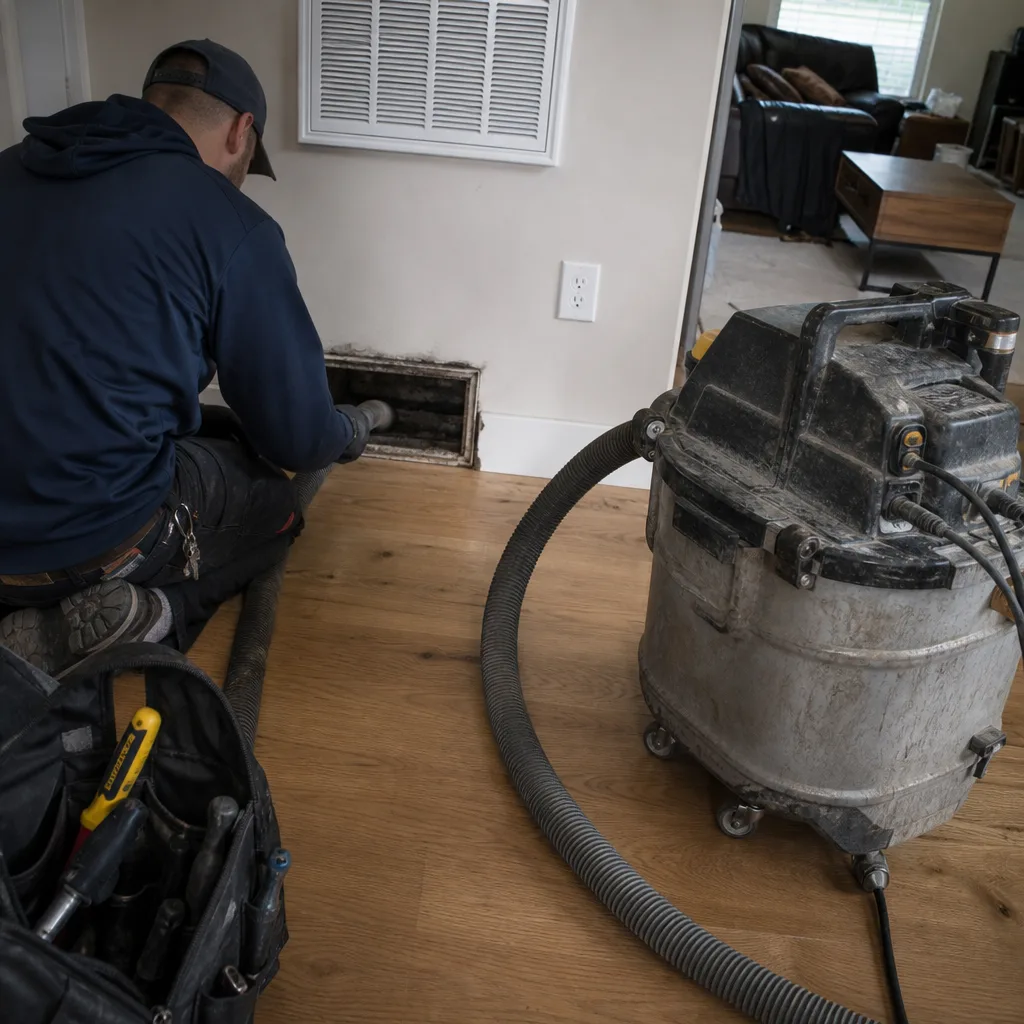 Before
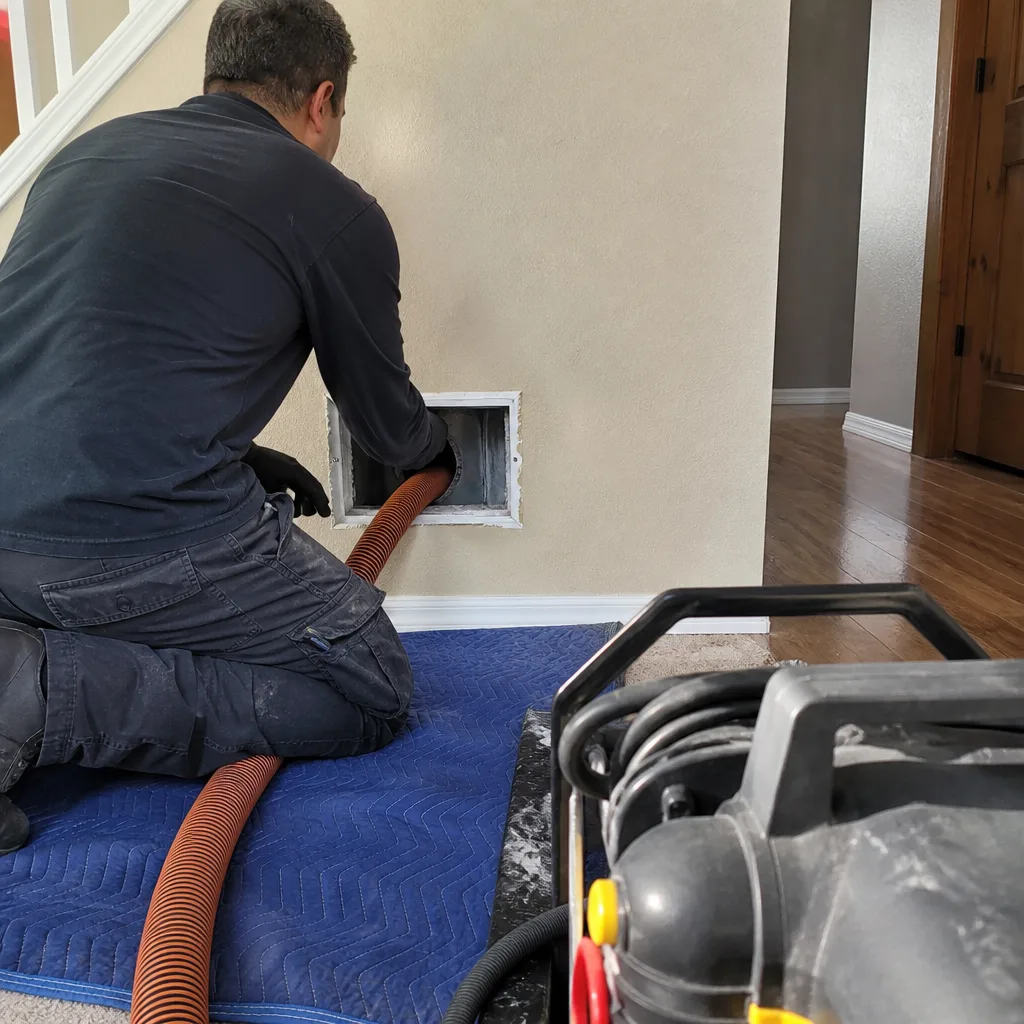 After
After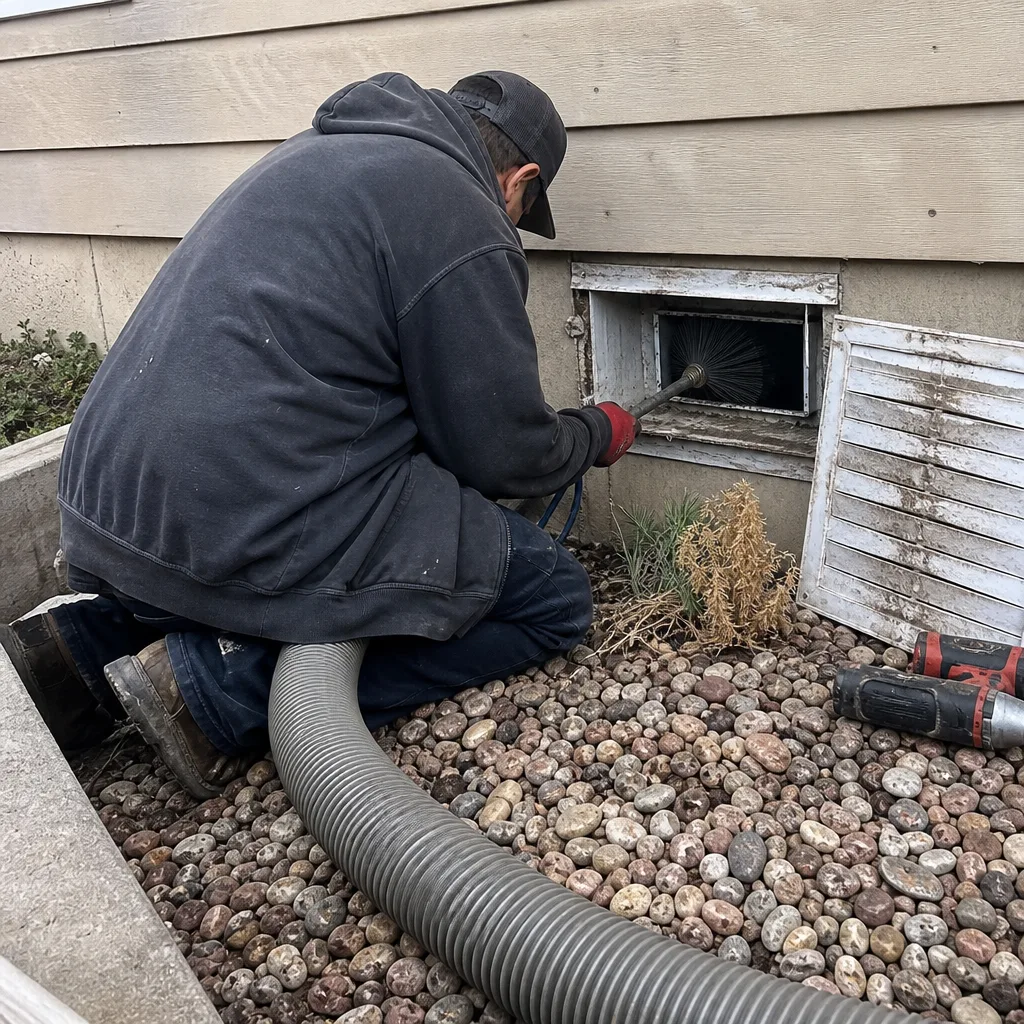 Before
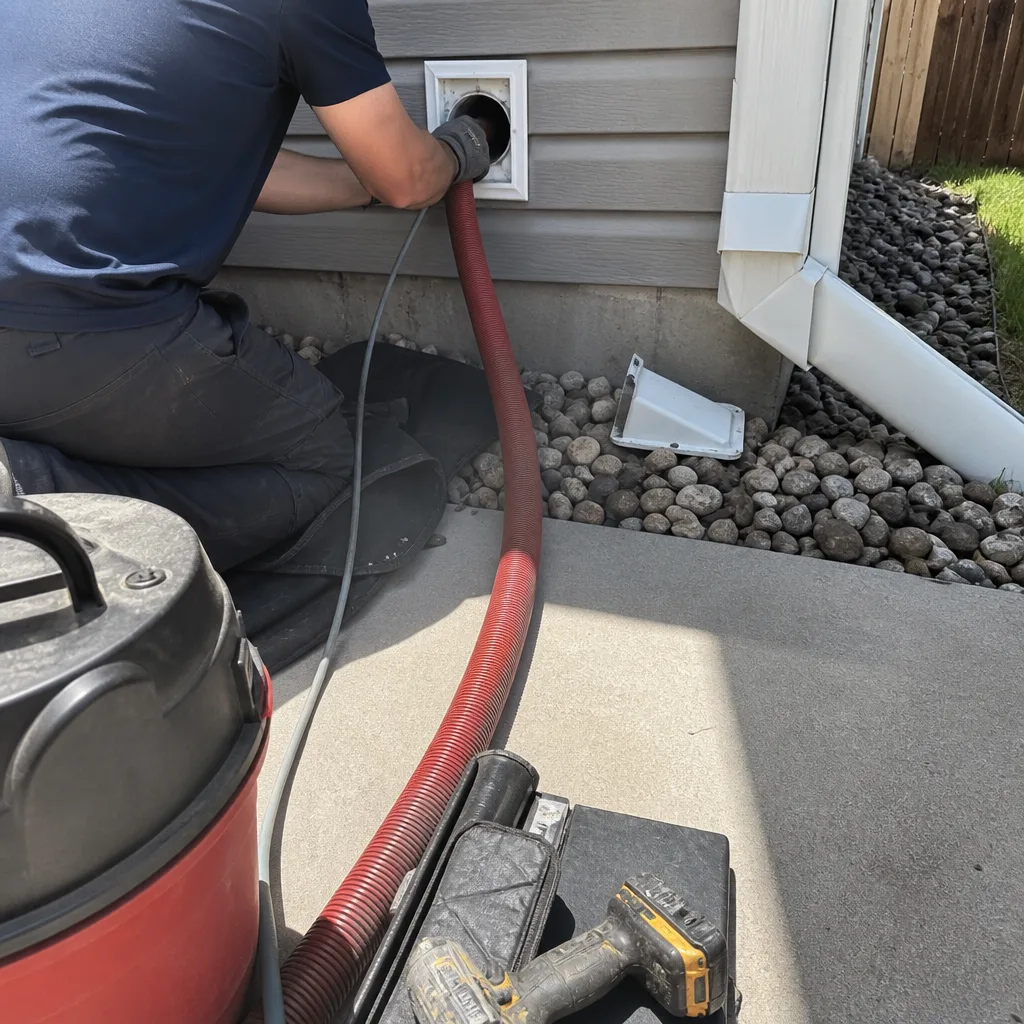 After
After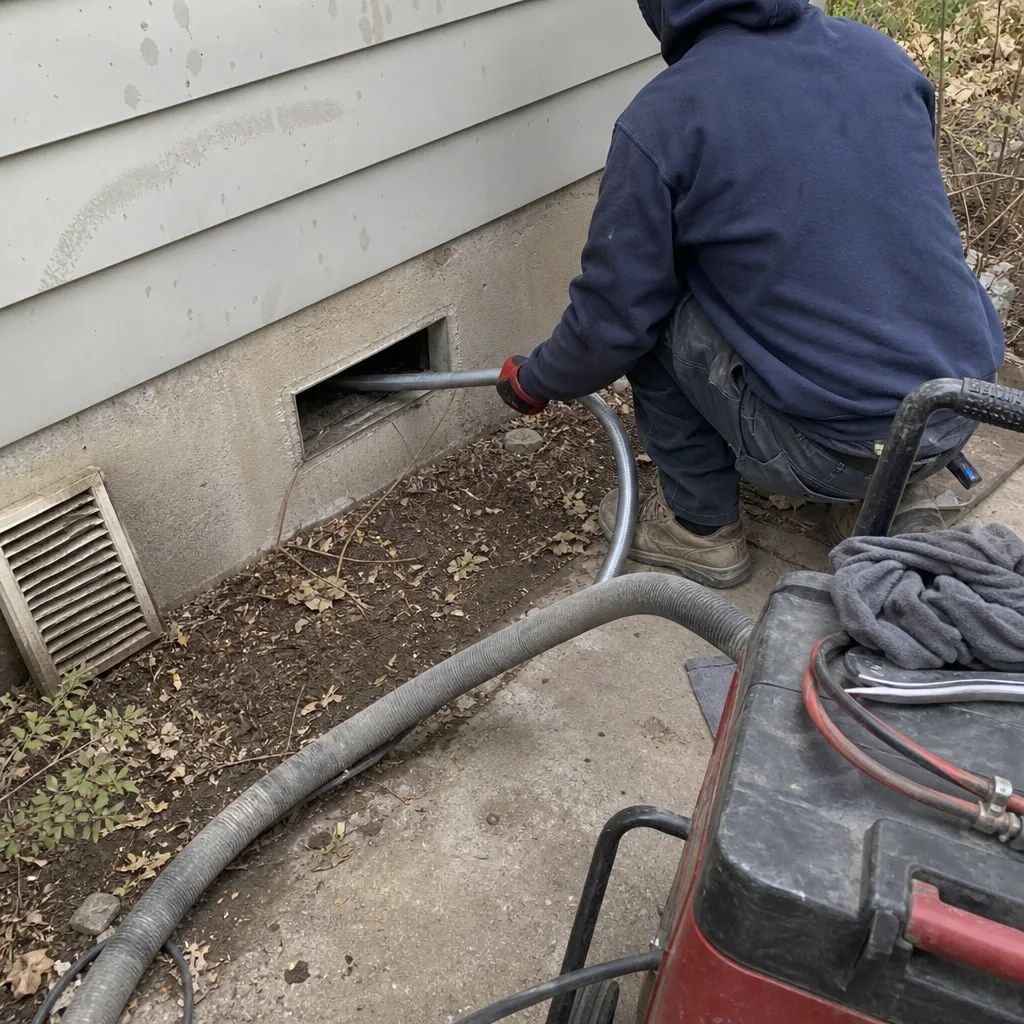 Before
 After
AfterSeasonal Air Duct Cleaning Care for Aurora: Year-Round Homeowner’s Guide
Aurora averages 300 days of sunshine and wind gusts that routinely exceed 40 mph. Those conditions push outdoor particulates into residential duct systems at rates that generic coastal climate guides simply don’t account for. Most homeowners in Aurora are told to clean their ducts in “spring or fall” - advice copied from humid-climate playbooks that ignore what actually happens inside ductwork along the Front Range. In this guide, you’ll learn how Aurora’s four distinct contamination windows map to specific contaminant types, what each season demands from your HVAC system, and how to keep a simple dated log that turns future Air Duct Cleaning services decisions from guesswork into documented fact.
Quick Answer
Air duct cleaning in Aurora should follow four seasonal triggers rather than a fixed calendar: winter checks for combustion byproduct buildup near gas furnace heat exchangers, spring addresses cottonwood fiber and pollen infiltration through attic bypasses, summer requires post-wildfire-smoke particle assessment, and fall targets silica-rich construction dust from Aurora’s expanding neighborhoods. A homeowner-maintained log connecting seasonal events to filter load rate and system performance replaces arbitrary “every 3-5 years” rules with evidence-based scheduling.
Table of Contents
- Winter: Combustion Byproducts and Carbon Inspection
- Spring: Cottonwood Fiber and Front Range Pollen Infiltration
- Summer: Wildfire Smoke Particle Assessment
- Fall: Silica Dust from Aurora’s Construction Activity
- Building Your Seasonal Duct Log: A Step-by-Step System
- What Equipment Actually Removes Seasonal Contaminants
- What Seasonal Duct Services Cost in Aurora
- Common Mistakes to Avoid
- When to Call a Professional
- Frequently Asked Questions
BeforeAfterWinter: Combustion Byproducts and Carbon Inspection
Gas furnaces in Aurora run hard from November through March. The combustion process produces carbon monoxide, nitrogen dioxide, and particulate matter that should exit through the flue. When heat exchangers crack or flue connections degrade, those byproducts can enter the supply plenum - the large central chamber that distributes heated air through each duct run (the individual pathways to your rooms).
We’ve documented this in Aurora homes where the camera showed a 3-inch debris build-up at the first elbow downstream of a compromised heat exchanger. The debris wasn’t ordinary dust. It carried a dark, oily residue consistent with incomplete combustion. The homeowner had noticed nothing except a faint “hot metal” smell on startup.
A winter carbon inspection checks three specific points:
- Heat exchanger integrity: Visual inspection for cracks or corrosion spots where combustion gases can leak into the airstream.
- Flue draft and connection: Verification that exhaust gases flow outward at correct pressure, not backward into conditioned space.
- First-duct-run contamination: Camera inspection of the initial duct sections immediately downstream of the furnace, where any leakage concentrates.
The photo record matters here more than in any other season. A before image showing clean metal at the plenum outlet and an after image showing the same view after repair documents whether the contamination source was active or historical. Haven Standard Clause 1 requires that written price and scope precede any panel removal, so the homeowner sees exactly what the inspection covers before a technician enters the home.
Aurora’s altitude - 5,471 feet at city center - affects combustion efficiency. Thinner air means incomplete burns are more common than at sea level, increasing byproduct production for the same gas input. This isn’t theoretical. In our work across Aurora since 2013, we’ve found heat-exchanger-adjacent contamination at roughly twice the rate we observe in lower-elevation markets.
Homeowner action for winter: Replace the furnace filter monthly during heating season. Note the filter’s MERV rating - the Minimum Efficiency Reporting Value that measures particle capture. A filter rated below MERV 8 won’t catch combustion particulates. But understand this clearly: filter upgrades address incoming air, not particles already deposited in ductwork past the filter plane.
Spring: Cottonwood Fiber and Front Range Pollen Infiltration
May and June in Aurora bring cottonwood seed release and peak pollen counts that regularly exceed 8,000 grains per cubic meter. The Front Range’s dry air and sustained winds carry these particles into attic spaces through soffit vents, ridge gaps, and recessed light penetrations. From the attic, they enter ductwork through two paths: leaks in the return plenum (the chamber that draws air back to the furnace) and gaps where flex duct connects to ceiling registers (the visible grilles in each room).
Filter upgrades are the standard advice. They’re necessary but insufficient. A MERV 11 or 13 pleated filter will catch most pollen at the intake grille. What it cannot do is remove particles already inside the duct system, particles that entered during filter changes, system-off periods, or through attic bypasses upstream of the filter location.
Cottonwood fiber presents a specific mechanical problem. The seeds carry fine hairs that mat together in humid conditions - even Aurora’s brief spring humidity spikes above 40% - forming dense clumps that resist standard vacuum extraction. We’ve photographed these clumps blocking dampers (the adjustable plates that control airflow to individual zones) and accumulating at register boots (the sheet-metal transitions between duct and ceiling).
The correct spring response:
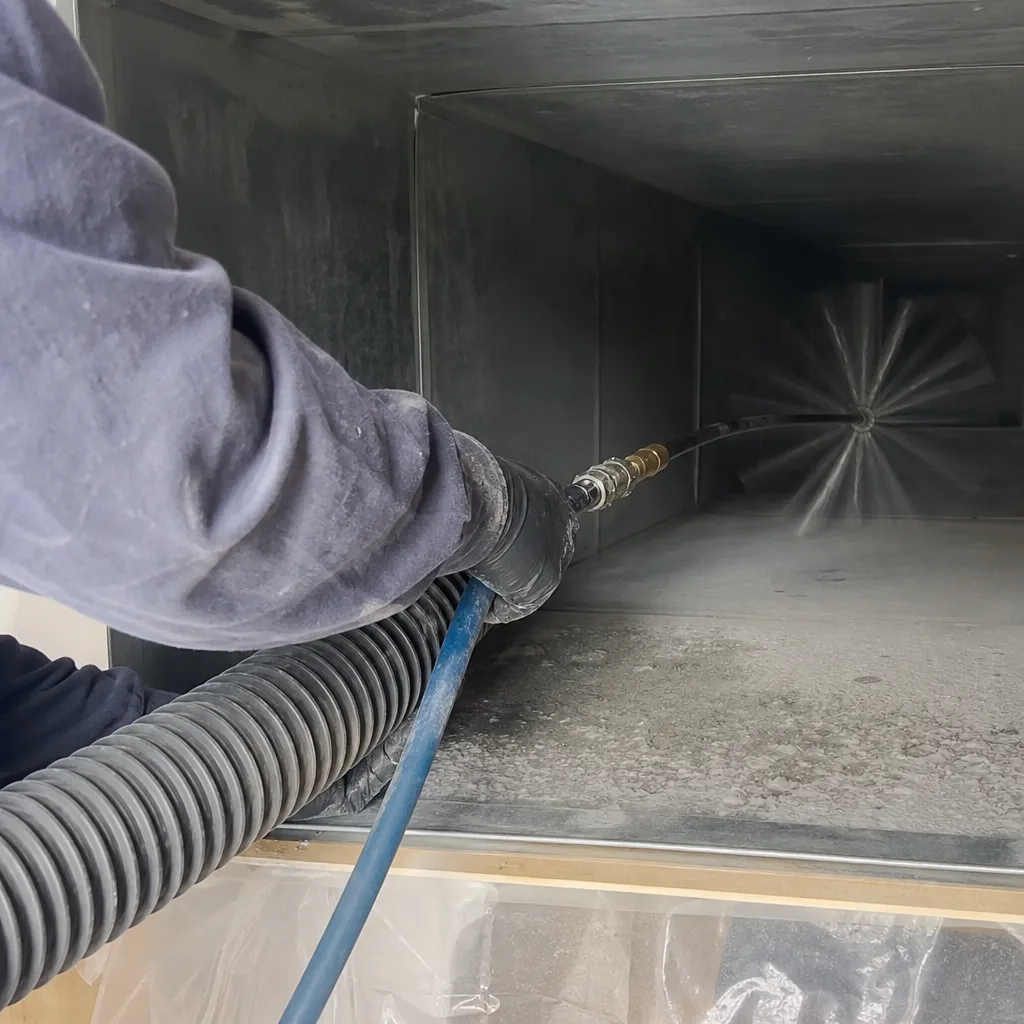
- Schedule negative-pressure extraction (duct cleaning that pulls debris toward a central vacuum point, rather than blowing it into the home) after cottonwood season ends, typically mid-June.
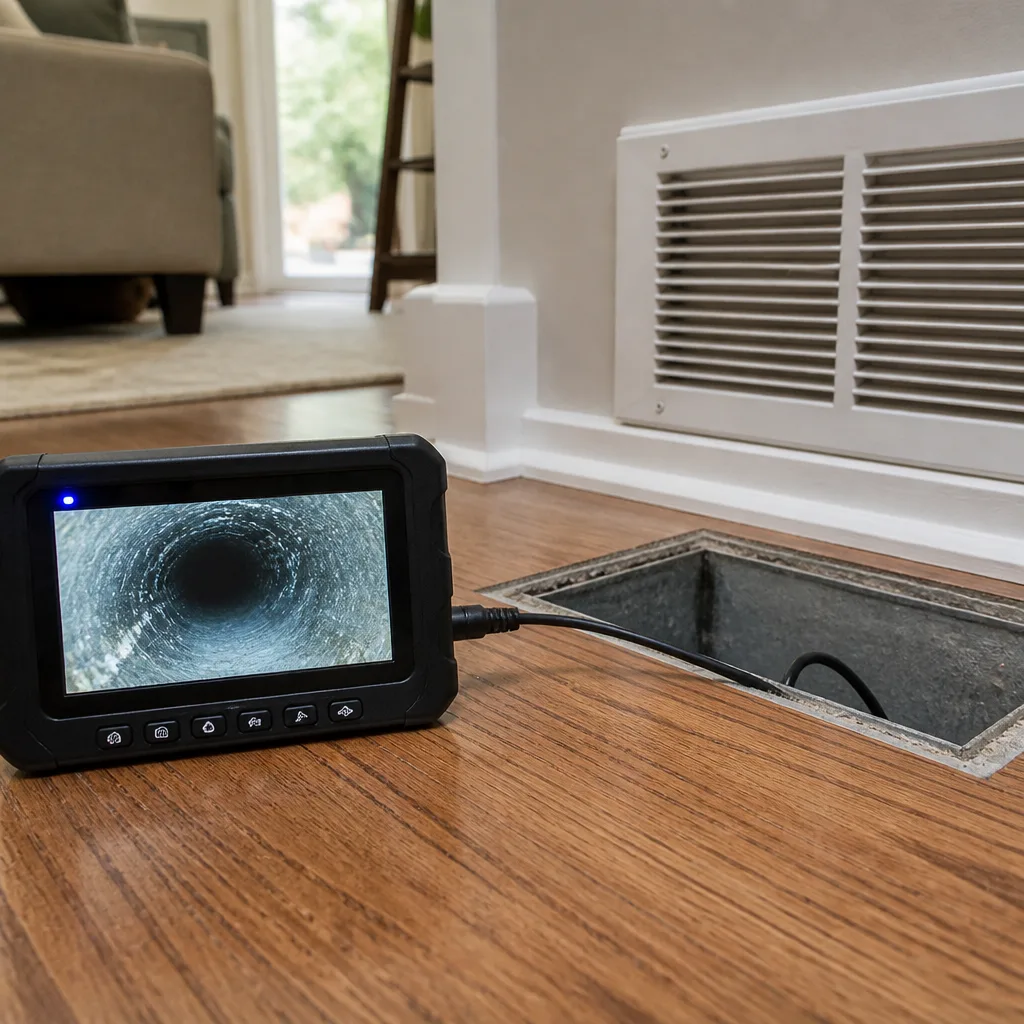
- Request register-level photography showing the boot and first duct section - this is where attic infiltration concentrates.
- Inspect attic duct seams for visible gaps; seal with mastic (a thick, brush-applied sealant) or metal-backed tape rated for duct applications, not standard “duct tape” which degrades.
- Upgrade to MERV 11 minimum for the active season, but plan cleaning regardless - the filter catches what passes through it, not what’s already inside.
Neighborhoods near the High Line Canal and Cherry Creek State Park see heavier cottonwood loads. Homes in Tallyn’s Reach, with mature tree coverage and older attic insulation, show the highest spring infiltration rates in our records. The debris isn’t just pollen and seed fiber. It includes insect fragments, spider silk, and the fine mineral dust that settles on attic surfaces all winter, re-entrained by spring wind pressure.
Summer: Wildfire Smoke Particle Assessment
Wildfire smoke season on the Front Range now extends from June through September, with Aurora frequently recording AQI readings above 150 during major events. Smoke particles differ fundamentally from standard household dust, and this difference determines whether duct cleaning is warranted after a smoke event.
Standard dust in Aurora homes averages 10-50 microns in diameter - visible to the eye, captured by MERV 8 filters, and relatively inert once settled. Wildfire smoke particles are predominantly 0.4-2.5 microns (PM2.5), with a significant fraction below 0.1 microns. These ultrafine particles penetrate standard filtration, remain suspended for days, and deposit throughout duct systems in patterns that differ from gravitational settling.
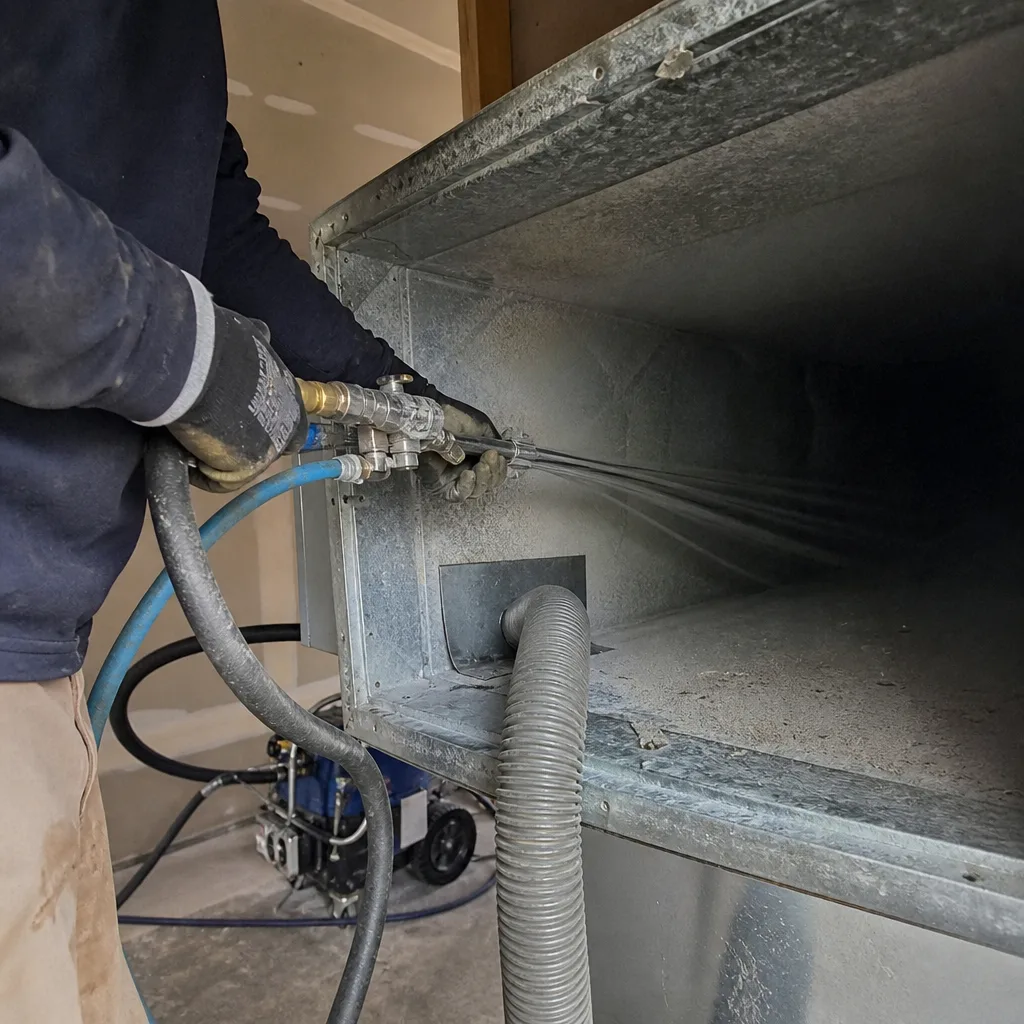
We’ve documented this difference in Aurora homes after the 2020 Cameron Peak fire and 2021 Marshall fire events. The camera showed a uniform gray film on duct surfaces rather than the localized clumps typical of dust accumulation. This film resists standard brush-and-vacuum methods because electrostatic attraction binds the particles to metal. Removal requires agitation with powered whips or compressed-air tools, followed by high-volume negative-pressure extraction.
A post-smoke-event inspection is documented differently than routine cleaning. The photo record should include:
- Wide-view plenum shots: Showing the extent of film coverage across large surfaces.
- Register-level close-ups: Demonstrating particle penetration to the delivery points.
- Filter post-mortem: The spent filter photographed before disposal, with visible loading pattern.
- System performance note: Static pressure reading (the resistance the blower works against) before and after cleaning, documented in writing.
Not every smoke event requires immediate cleaning. A single day of AQI 100-150 with windows closed and HVAC recirculating may deposit negligible material. Two weeks of AQI 150+ with outdoor air intake active justifies inspection. The dated log described later in this guide provides the factual basis for that decision.
Aurora’s position east of the foothills creates a specific exposure pattern. Smoke from western fires arrives after atmospheric transport that strips larger particles, leaving a higher proportion of the problematic sub-micron fraction. Homes in eastern Aurora - Stapleton, Reunion, the developing areas near E-470 - often see delayed but prolonged exposure as plumes circulate rather than pass.
Fall: Silica Dust from Aurora’s Construction Activity
Aurora’s growth corridor, particularly south of E-470 and east toward Watkins, generates construction activity that peaks in fall before winter ground freeze. Excavation, grading, and masonry cutting produce respirable crystalline silica - a mineral dust that behaves differently in ductwork than organic debris.
Silica particles are angular, hygroscopic (moisture-attracting), and abrasive. In ductwork, they don’t form the soft, fibrous mats of cottonwood or pollen. They create hard, crusty deposits that can damage flex duct liners and accelerate corrosion at metal seams. We’ve found silica accumulation in Aurora homes within 500 feet of active construction that measured 4-6 millimeters thick at return grille inlets - not a dust layer, a mineral crust.
The fall contamination window runs September through November, when construction accelerates and homeowners begin closing windows, increasing HVAC runtime and particle recirculation. Newer neighborhoods in Aurora, including those near Southlands and the developing areas along Gun Club Road, show this pattern most clearly. Older established areas aren’t immune; basement finishing, kitchen renovations, and even neighbor landscaping generate silica load.
Key indicators of silica contamination:
- Filters load rapidly - replacement needed at 3-4 week intervals rather than standard 2-3 months.
- Visible dust at registers has a “sparkle” or granular texture under direct light, unlike the matte appearance of organic dust.
- System blower noise increases as impeller blades accumulate abrasive buildup.
- Static pressure rises measurably; the blower works harder to move the same air volume.
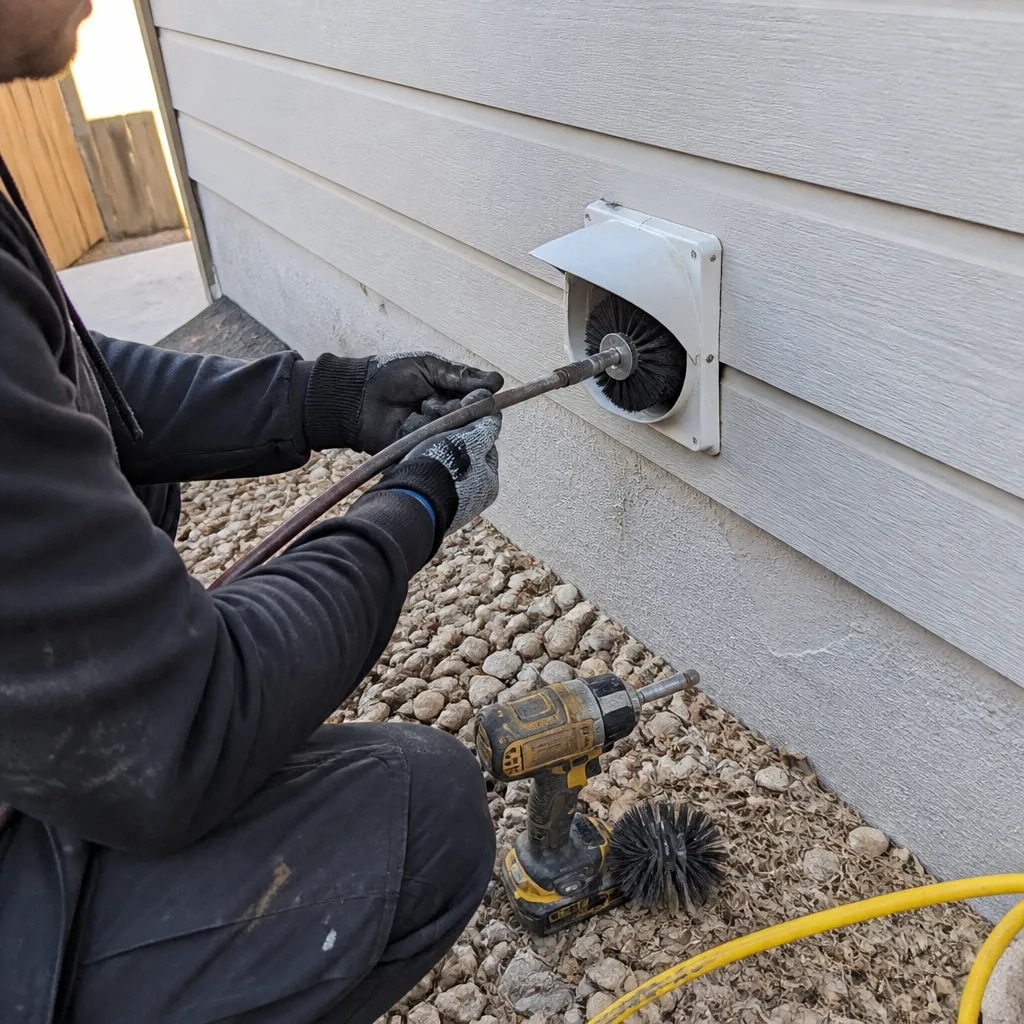
Removal requires equipment that can dislodge mineral deposits without damaging duct liners. Rotobrush systems with stiff-bristle brushes and high-velocity vacuum extraction handle this effectively. The photo record should show the crystalline structure clearly - it’s the documentation that distinguishes silica from ordinary dust, and it affects how the homeowner interprets filter replacement frequency going forward.
Building Your Seasonal Duct Log: A Step-by-Step System
Most homeowners schedule duct cleaning based on elapsed time or a technician’s recommendation. Both are poor proxies for actual need. A simple dated log transforms this into evidence-based maintenance.
The log requires no special format. A dedicated notebook, a spreadsheet, or a notes app works. The structure matters more than the medium.
- Record seasonal events: Note wildfire smoke days with AQI above 100, major pollen peaks, nearby construction start dates, and any furnace repair or filter upgrade.
- Track filter load rate: Date each filter change and photograph the loaded filter before disposal. Note the MERV rating and visible loading pattern - uniform gray, dark spots at specific registers, or rapid loading.
- Document system performance changes: Note any change in blower noise, temperature consistency between rooms, or dust accumulation rate on surfaces.
- Record professional service: Date, scope, technician name, equipment used, and whether a photo record was provided. Request and keep the photo record as a baseline for future comparison.
- Schedule inspection triggers: Set personal thresholds - for example, “inspect if two smoke events exceed 5 days each in one season” or “inspect if filter load rate doubles from prior year.”
This log serves two purposes. It provides the factual basis for scheduling decisions, replacing arbitrary intervals. And it creates a documented history that any subsequent technician can reference, reducing diagnostic time and focusing service on actual conditions.
In our experience across 52,000+ homes, the homeowners who keep such logs schedule cleaning 40% less often than those on fixed intervals - but their documented need is genuine when service occurs. The log prevents both unnecessary service and neglected maintenance.
What Equipment Actually Removes Seasonal Contaminants
The duct cleaning industry uses equipment whose capabilities vary significantly by contaminant type. Understanding what each system does helps evaluate service proposals.
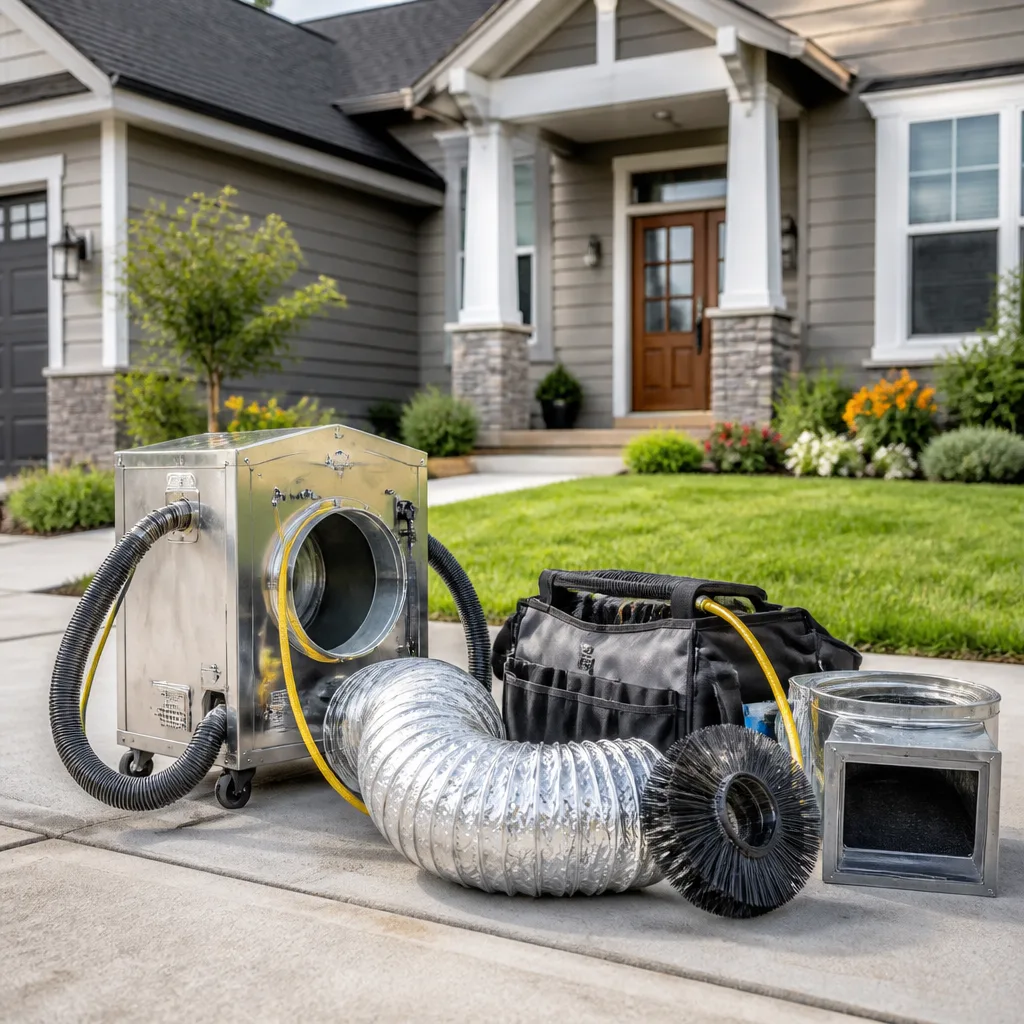
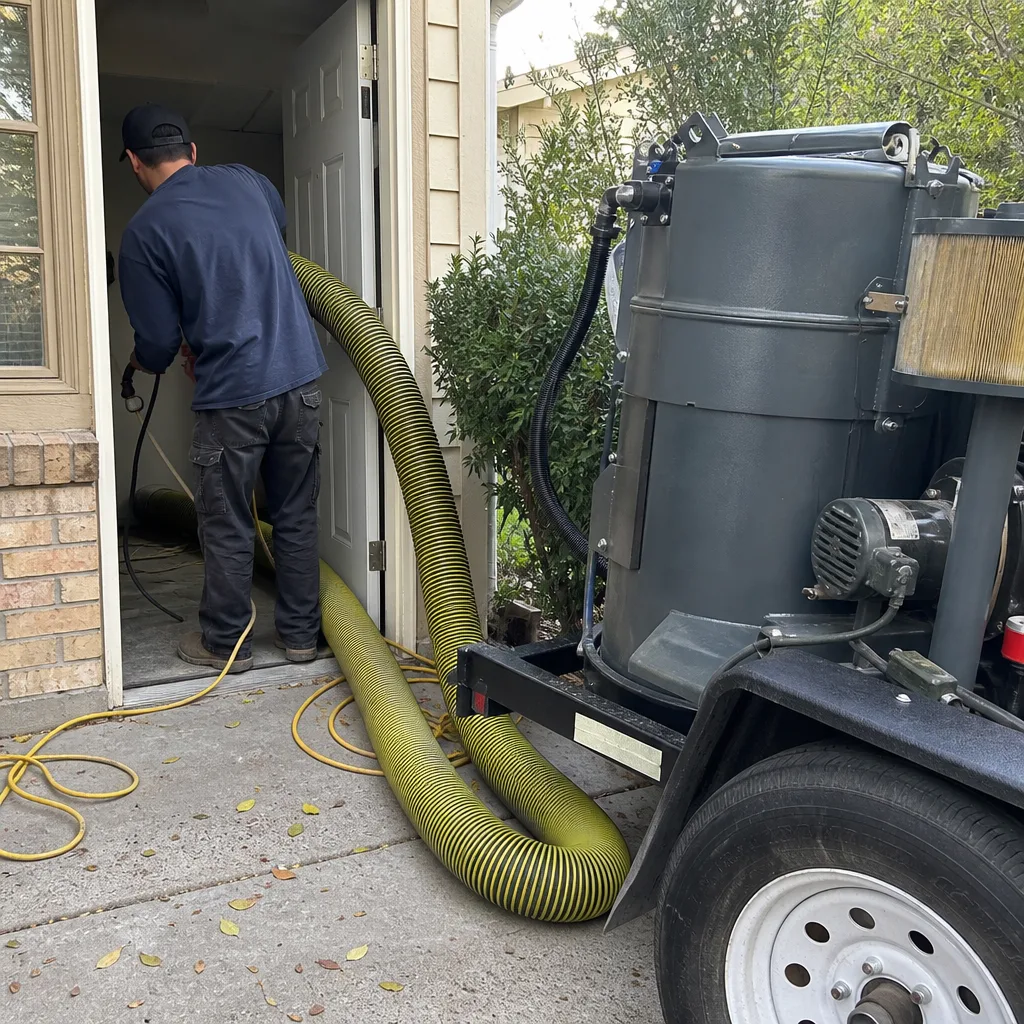
Negative-pressure extraction systems (such as Nikro and Abatement Technologies portable units) create vacuum at a central collection point, with agitation tools dislodging debris at the duct surface. This is the standard for organic debris - pollen, dust, fiber. The negative pressure ensures dislodged material exits the home rather than resettling.
Powered brush systems (Rotobrush and similar) use rotating bristle assemblies that traverse duct runs mechanically. They’re effective for adhered deposits like silica crusts and smoke film, where suction alone won’t detach particles. The brush action must be matched to duct material - stiff brushes for metal, softer configurations for flex duct liners.
Compressed-air whipping systems use rubber tentacles that flutter at high frequency, reaching corners and boot transitions that brushes miss. We deploy these for post-smoke-event cleaning where particle binding requires aggressive agitation.
HEPA filtration on collection equipment is non-negotiable for fine particle work. Standard shop vacuums exhaust particles below 5 microns back into the home. Professional units from Guardsman and Abatement Technologies include true HEPA final filters tested to 99.97% efficiency at 0.3 microns - the particle size most difficult to capture.
The equipment roster matters because it determines what can actually be removed. A service using only a shop vacuum and manual brushes cannot effectively address smoke film or silica deposits, regardless of technician effort. CleanRun’s documented equipment list - Rotobrush, Nikro, Abatement Technologies, and Guardsman - is published so customers can verify capabilities before agreeing to a written price.
What Seasonal Duct Services Cost in Aurora
Air Duct Cleaning Cost Breakdown: The Aurora Homeowner’s Reference for 2026 shows how pricing varies by system size, accessibility, and contamination severity. The industry-wide bait-and-switch pattern - a $79 coupon that becomes a $600 invoice - makes honest pricing unusual enough to state explicitly.
CleanRun’s pricing under Haven Standard Clause 1: written price before any work starts, every time. No exceptions. The price is flat per system, not per vent. Per-vent pricing creates incentive to count aggressively and upsell “additional” vents that were always part of the system.
| Service Scope | Aurora Price Range | What’s Included |
|---|---|---|
| Standard residential air duct cleaning (single HVAC system, up to 15 duct runs) | $450 - $650 | Negative-pressure extraction of all supply and return duct runs, register and boot cleaning, photo record of each run before and after |
| Post-smoke-event cleaning with HEPA collection and powered agitation | $650 - $850 | All standard services plus compressed-air whip deployment, HEPA final filtration, extended plenum photography, static pressure documentation |
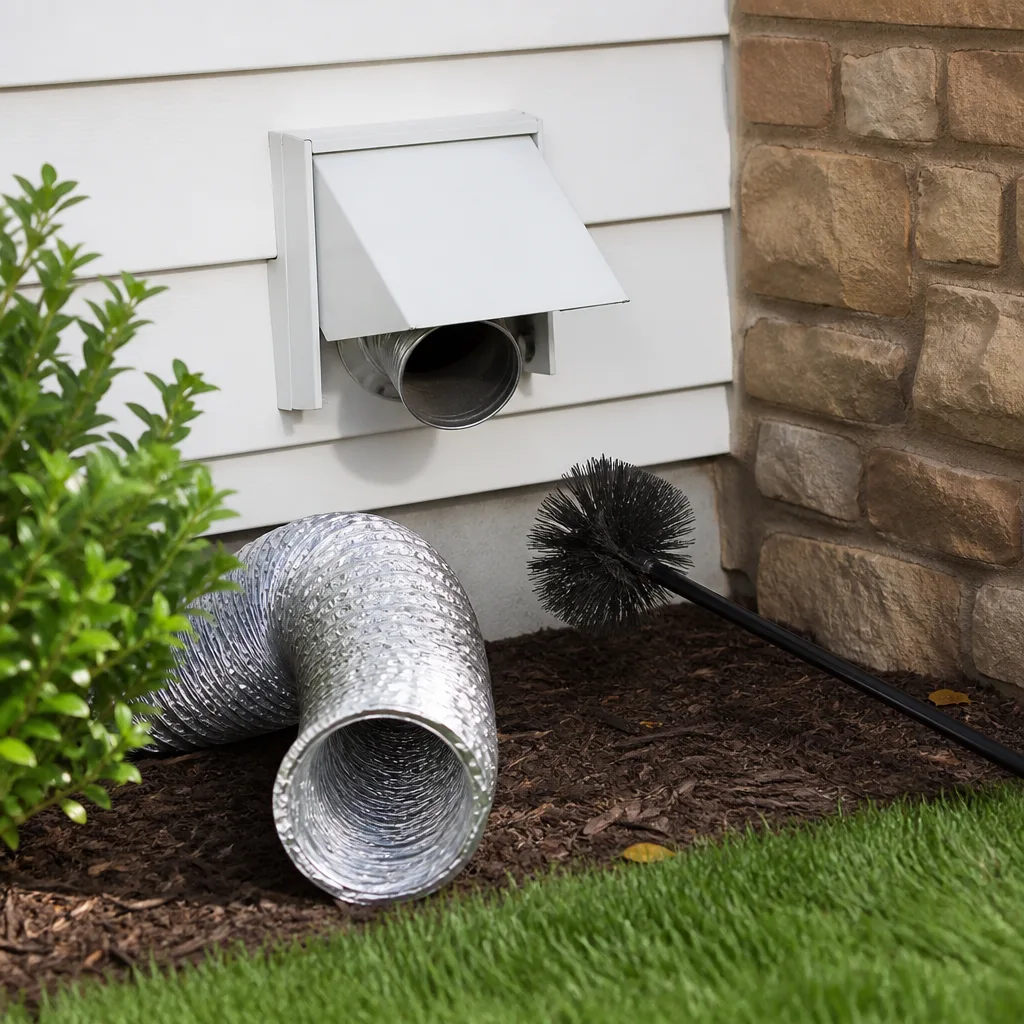
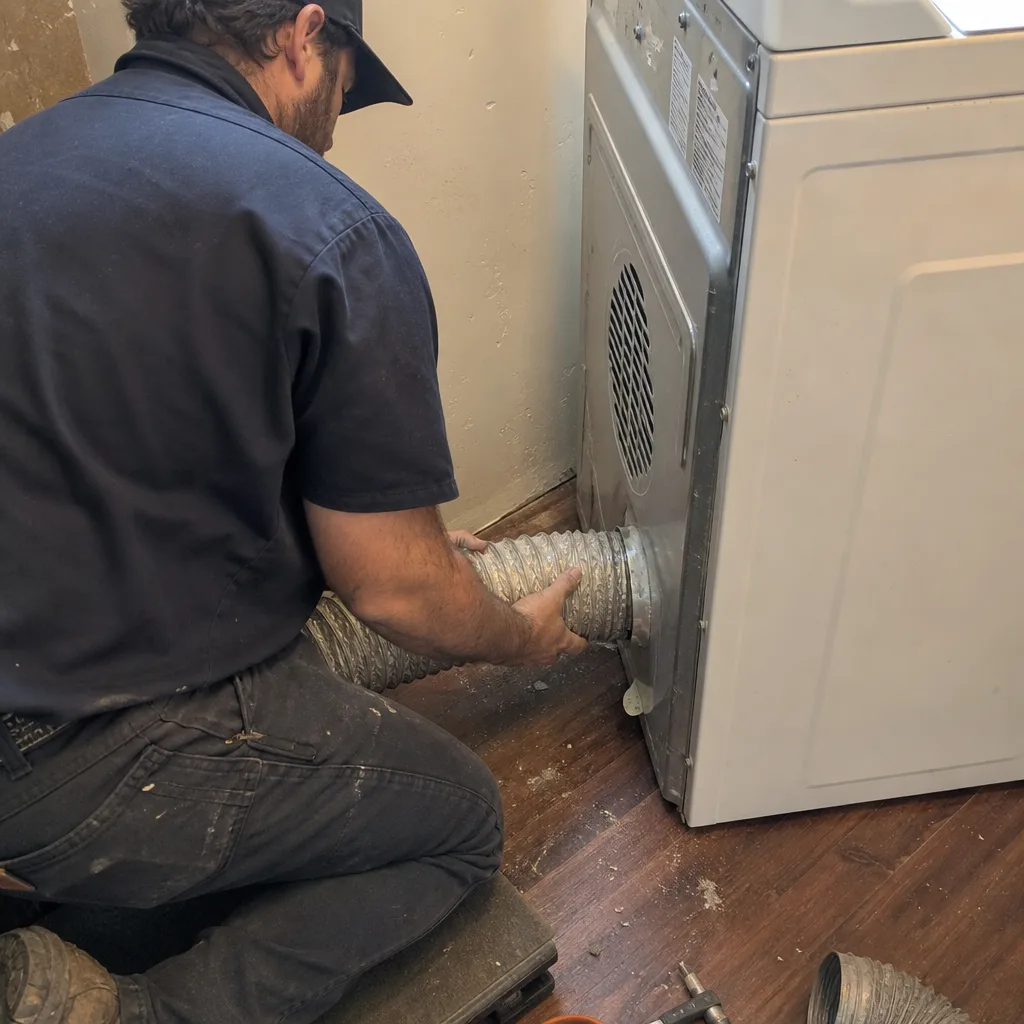
| Dryer vent cleaning (separate service) | $150 - $250 | Full vent run cleaning from dryer to exterior termination, airflow verification, photo record |
| HVAC cleaning (blower, evaporator coil, cabinet) | $300 - $450 | Component-level cleaning with appropriate chemistry, photo record, written condition assessment |
| Duct repair and sealing (per project) | $200 - $800 | Mastic sealing of accessible leaks, metal repair, written scope with photo documentation |
These ranges reflect Aurora’s market conditions - labor costs, travel distances in a spread-out metro, and the equipment investment required for documented service. Prices below $300 for full-system cleaning typically indicate either severely limited scope or undisclosed add-ons.
The Free Second Opinion on Any Written Estimate applies here. Bring a competitor’s written quote; CleanRun puts its own number next to it, with scope comparison, at no cost. The goal is informed decision-making, not price undercutting.
Call (720) 513-5159 for an exact quote on your system. Estimates are free, written, and delivered before any work discussion.
Common Mistakes to Avoid
- Scheduling by calendar, not condition: “Every three years” ignores that Aurora’s four contamination windows affect homes differently. A log-based approach replaces arbitrary scheduling.
- Assuming filter upgrades eliminate cleaning need: MERV 13 filters catch incoming particles but cannot remove material already deposited past the filter plane. Both maintenance types are necessary, not interchangeable.
- Ignoring construction proximity: Homeowners in developing Aurora neighborhoods often attribute rapid filter loading to “dusty Colorado air” without recognizing the specific silica hazard from nearby grading and masonry work.
- Accepting per-vent pricing: This model incentivizes inflated vent counts and mid-job upsells. Flat system pricing with written scope is the only transparent structure.
- Skipping photo documentation: Without before-and-after images, you cannot verify that work occurred or evaluate future change. The photo record is a standard deliverable, not an extra.
- Treating all smoke events equally: Brief AQI elevation with recirculating HVAC may warrant only filter change. Extended exposure with outdoor air intake active justifies full inspection. The log provides the basis for distinction.
- DIY duct cleaning with household equipment: Shop vacuums lack the airflow and filtration for ductwork, and aggressive brushing without negative-pressure containment disperses debris into living space. The safety caveat: ductwork contains no high-tension components, but improper agitation can damage flex duct liners and create leaks that worsen contamination.
When to Call a Professional
Call for inspection when your log shows a pattern change - filter load rate doubling, new blower noise, or visible contamination at registers after a seasonal event. Call immediately if you smell combustion odors on furnace startup, see soot at supply registers, or notice temperature inconsistency between rooms that wasn’t present previously. These indicate active system problems, not routine maintenance needs.
CleanRun Air Duct Cleaning Aurora offers free estimates in Aurora - call (720) 513-5159. Every estimate includes written scope and price before any work discussion, per Haven Standard Clause 1. The 365-Day Done Right Promise applies to all services: if the work is not right, we make it right, backed in writing on every job.
Frequently Asked Questions
Frequency depends on your home’s specific exposure, not a fixed calendar. Homes near active construction, with mature cottonwood coverage, or with extended wildfire smoke exposure may need inspection every 2-3 years. Well-maintained homes in established neighborhoods with consistent filter changes may extend to 5-7 years. The seasonal log described in this guide replaces arbitrary intervals with evidence-based scheduling. For ongoing maintenance advice, explore our more guides & resources. Call (720) 513-5159 for a free assessment of your system’s current condition.
Low quotes typically reflect limited scope - cleaning only visible registers, using shop vacuums without HEPA filtration, or omitting photo documentation. The $79 coupon model relies on arriving at your home and discovering “additional” needs that multiply the final price. CleanRun’s written flat price per system, delivered before work starts, eliminates this structure. Compare scopes, not top-line numbers.
Demand a photo record of every duct run, before and after, delivered as part of the standard job record. CleanRun has provided this on every job since 2013. Images should show identifiable duct features - elbows, boots, damper locations - that confirm the camera traveled the full run, not just the first accessible section.
Yes. Smoke particles at 0.4-2.5 microns penetrate standard filtration and deposit as a uniform film throughout duct systems. Aurora’s position east of the foothills means transported smoke has a higher proportion of these fine particles than areas closer to fire sources. Post-smoke-event inspection with appropriate equipment is warranted after extended AQI elevation.
Household equipment cannot achieve the airflow, filtration, or agitation required for effective duct cleaning. More importantly, improper technique disperses debris into living space and can damage flex duct liners. For routine maintenance, change filters regularly and keep your seasonal log. For contamination removal, professional service with documented equipment and photo verification is the appropriate response.
Air duct cleaning in Aurora addresses the distribution pathways - the metal or flex duct runs that carry air to and from rooms. HVAC cleaning in Aurora addresses the mechanical components: blower assembly, evaporator coil, and cabinet interior. Both may be needed, but they are distinct services with different equipment requirements. A complete system assessment determines which applies.
The Bottom Line
Aurora’s climate creates four distinct duct-contamination windows that generic advice ignores. Winter demands combustion byproduct inspection near heat exchangers. Spring requires addressing cottonwood and pollen that bypass filters through attic infiltration. Summer wildfire smoke deposits sub-micron particles requiring specialized agitation and HEPA collection. Fall construction generates silica dust with abrasive, crust-forming properties. A simple dated log connecting these events to filter load and system performance replaces arbitrary scheduling with documented need. When service is warranted, it should arrive with written price, documented equipment, and photo verification - the standard CleanRun has held since 2013.
Written by Tomas Reyes, Owner at CleanRun Air Duct Cleaning Aurora, serving Aurora since 2013.