
Last updated September 23, 2026
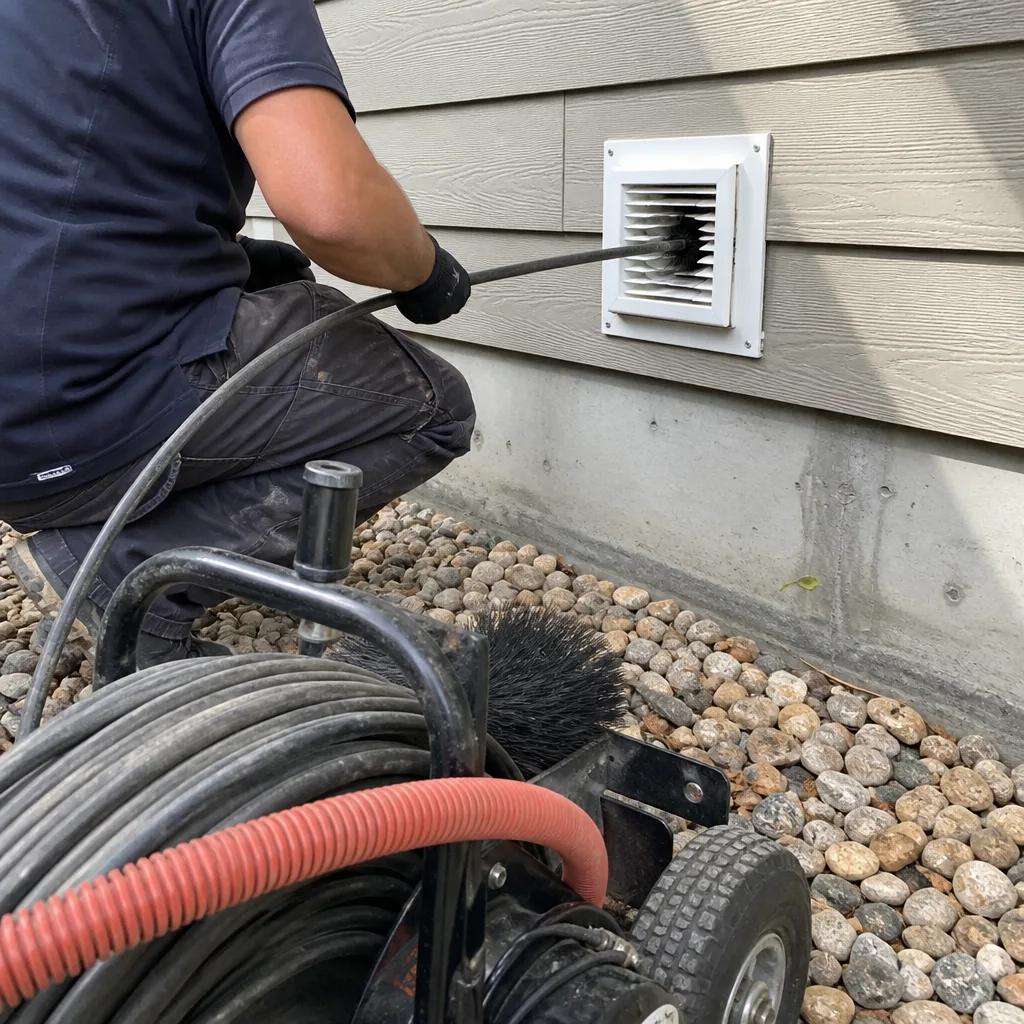
Whole-system duct and dryer vent check with before-and-after photos - you see exactly what came out of your vents
That "$99 whole-house special" is a bait ad - the real number appears once they are in your hallway, or the "clean" is a shop-vac at the register. We photograph the inside of your ducts before and after instead.
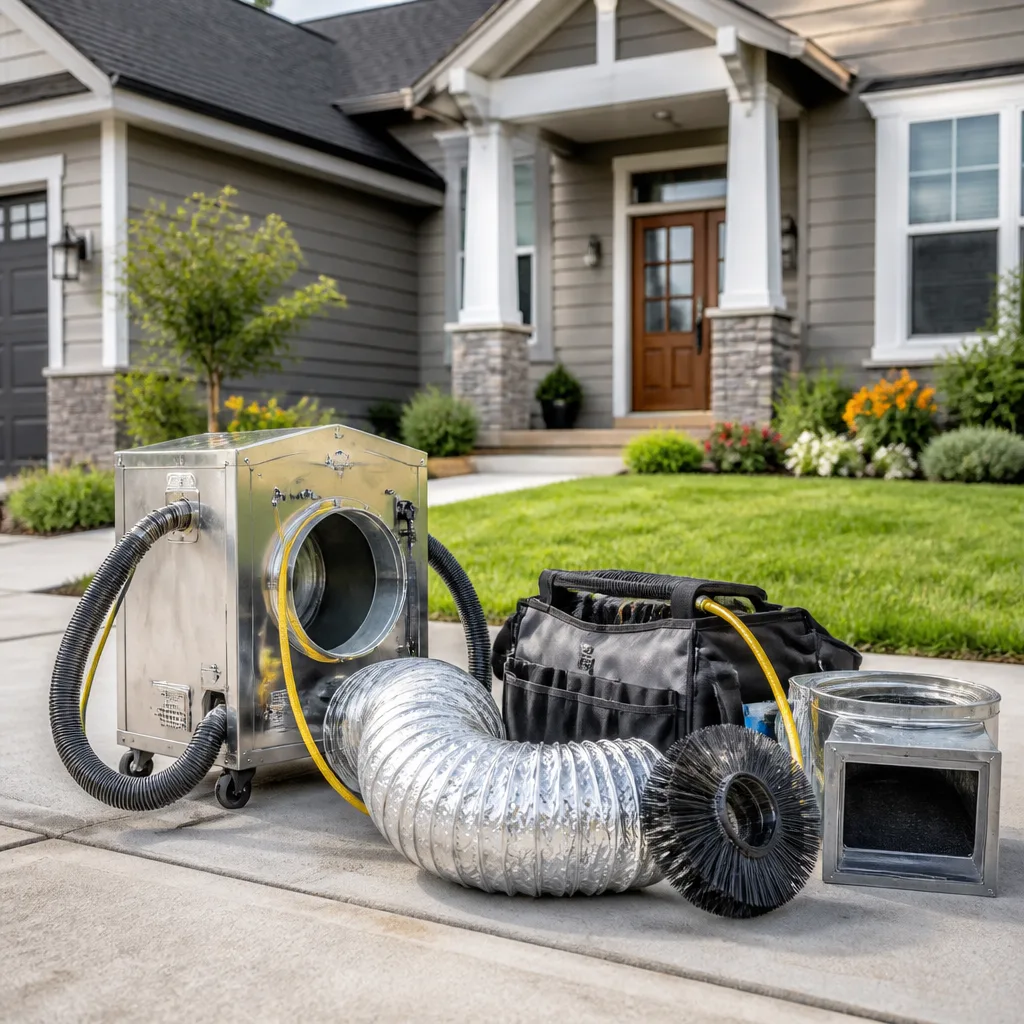
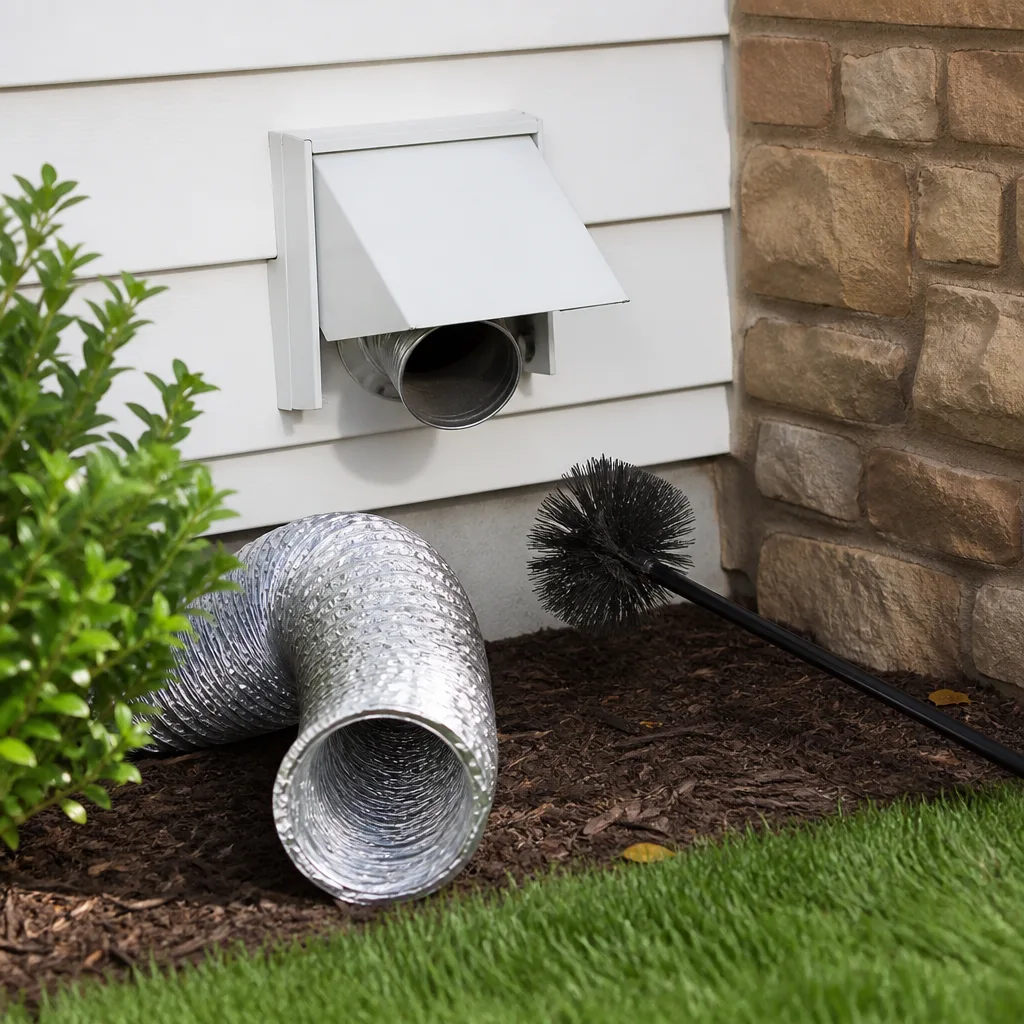
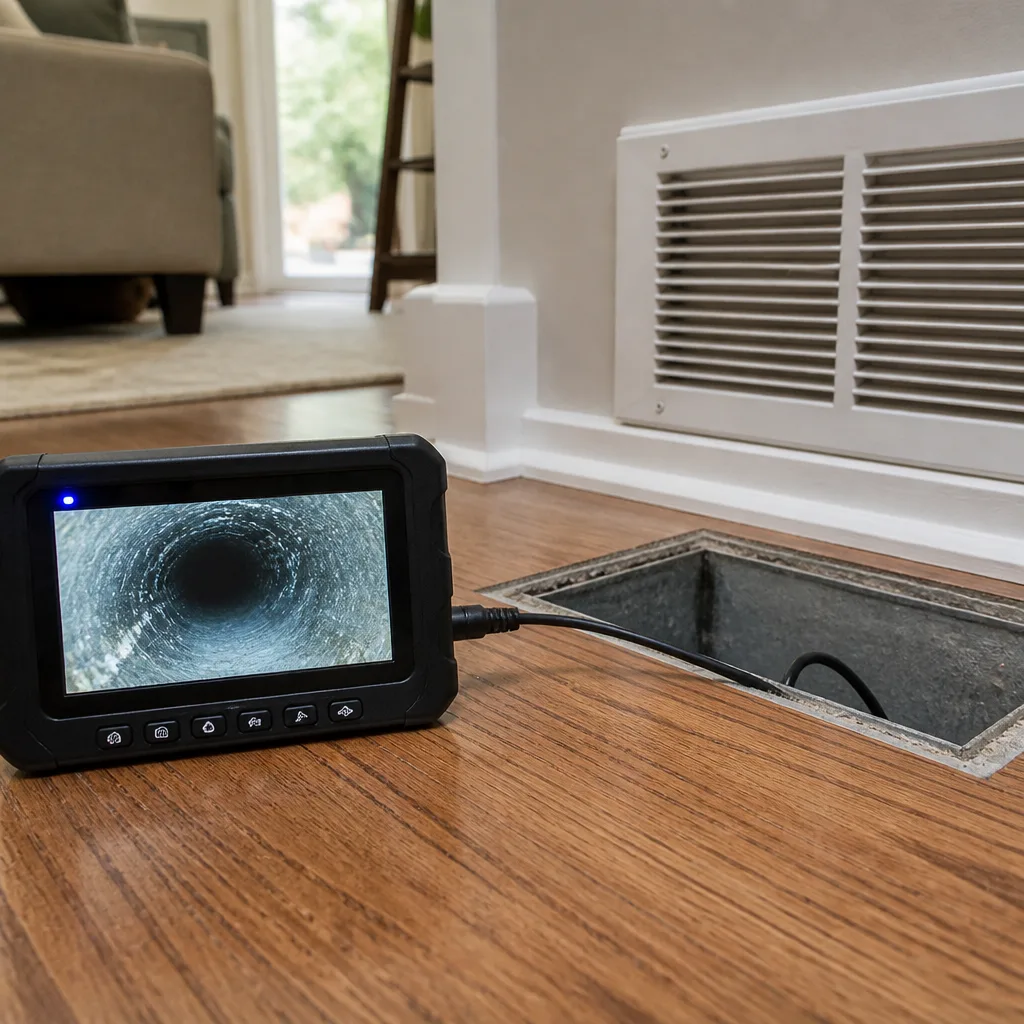
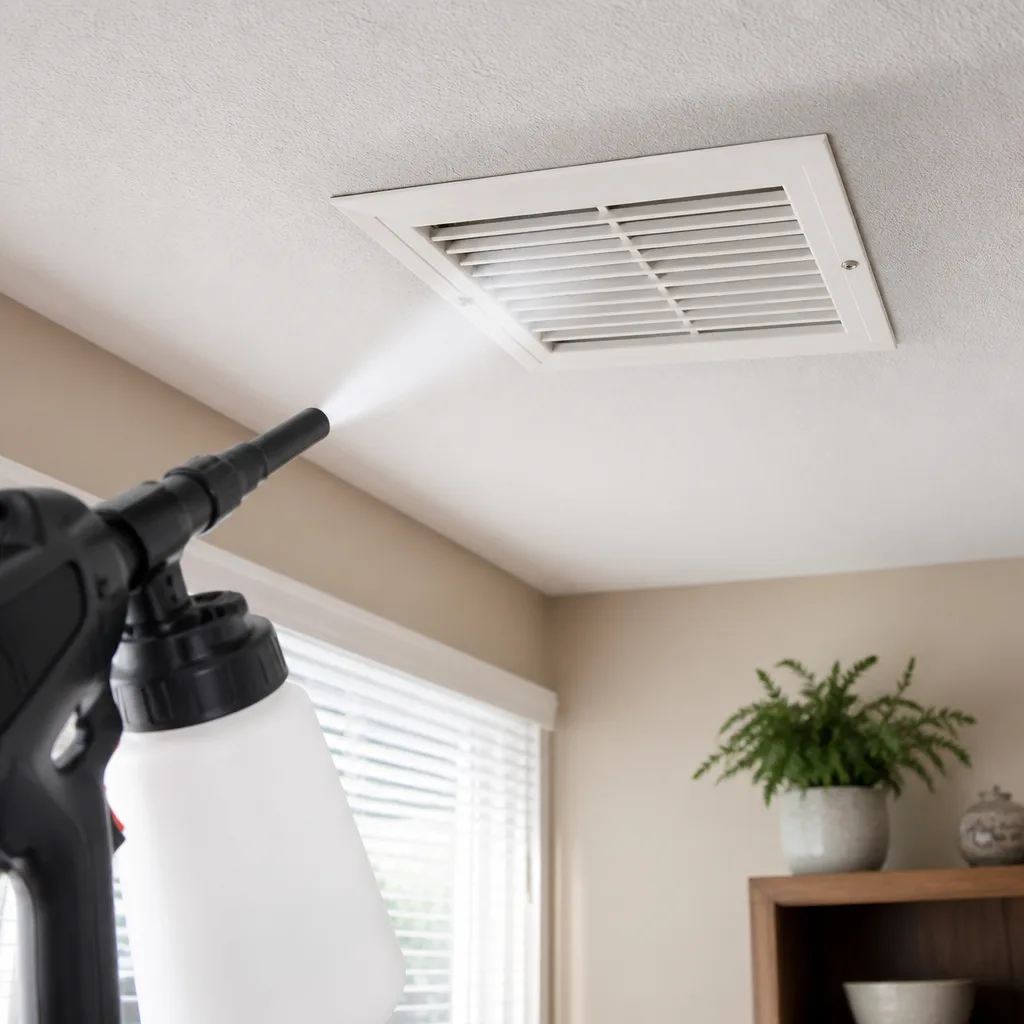
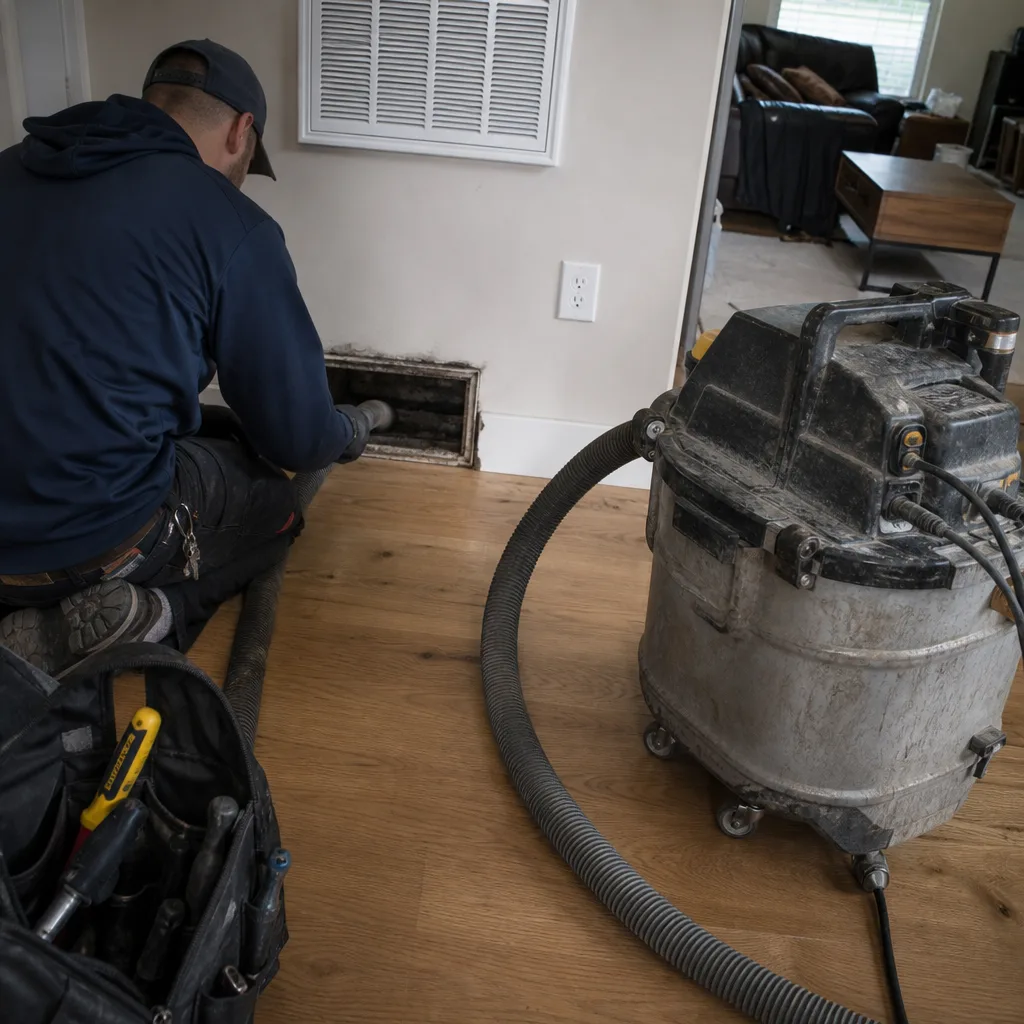 Before
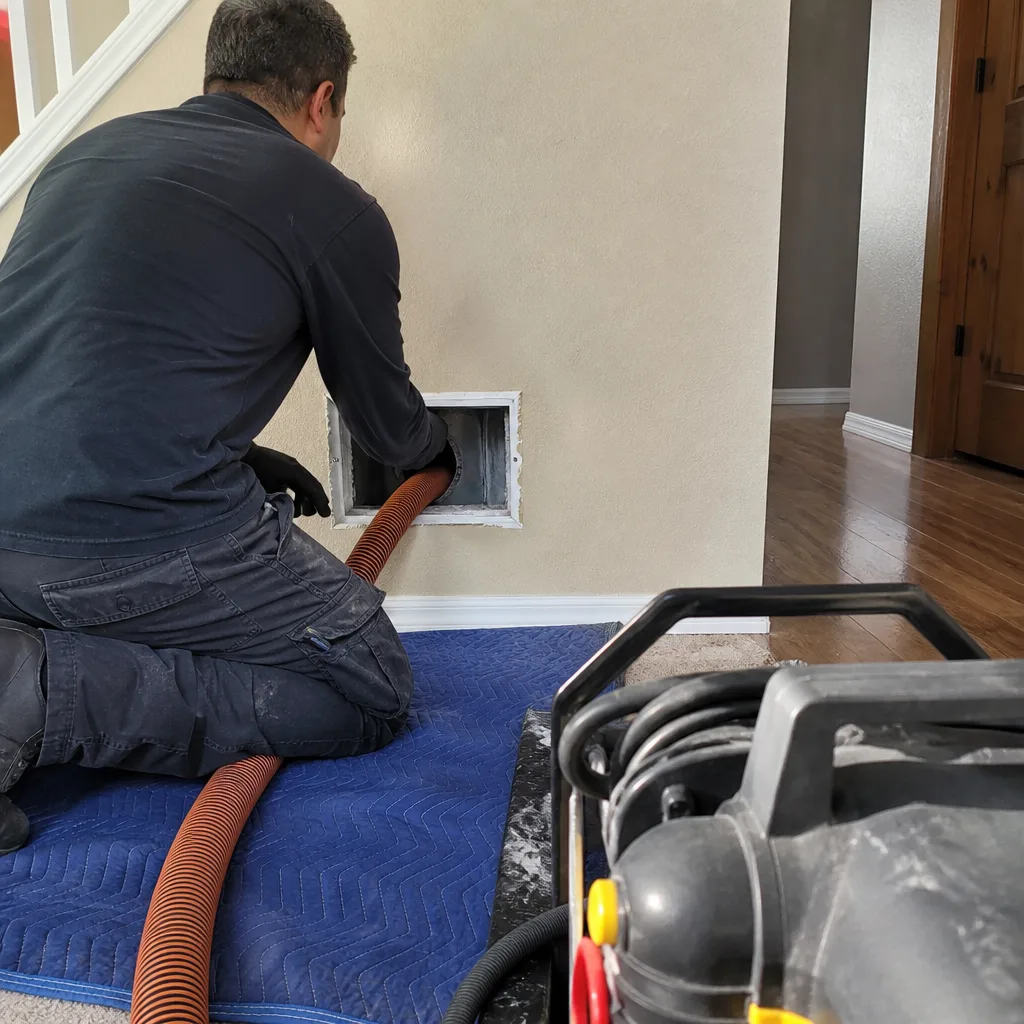 After
After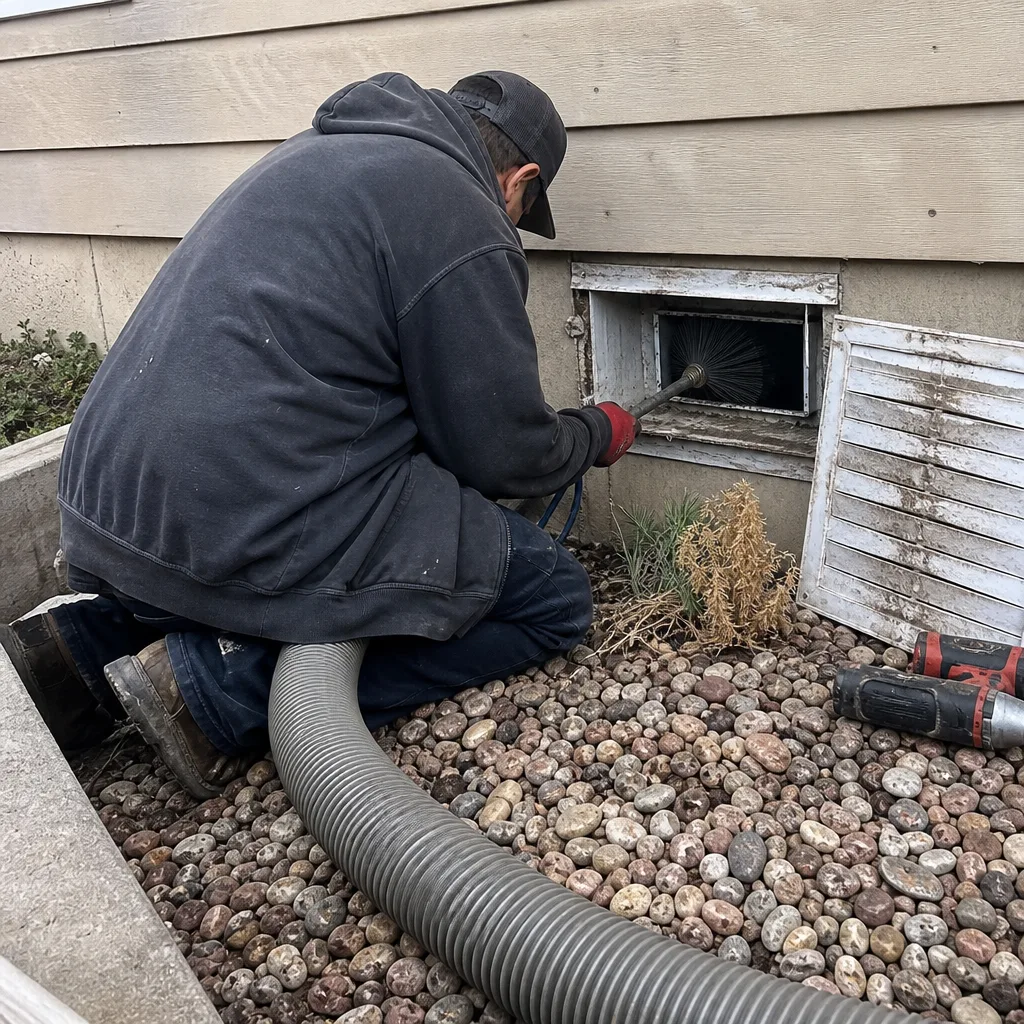 Before
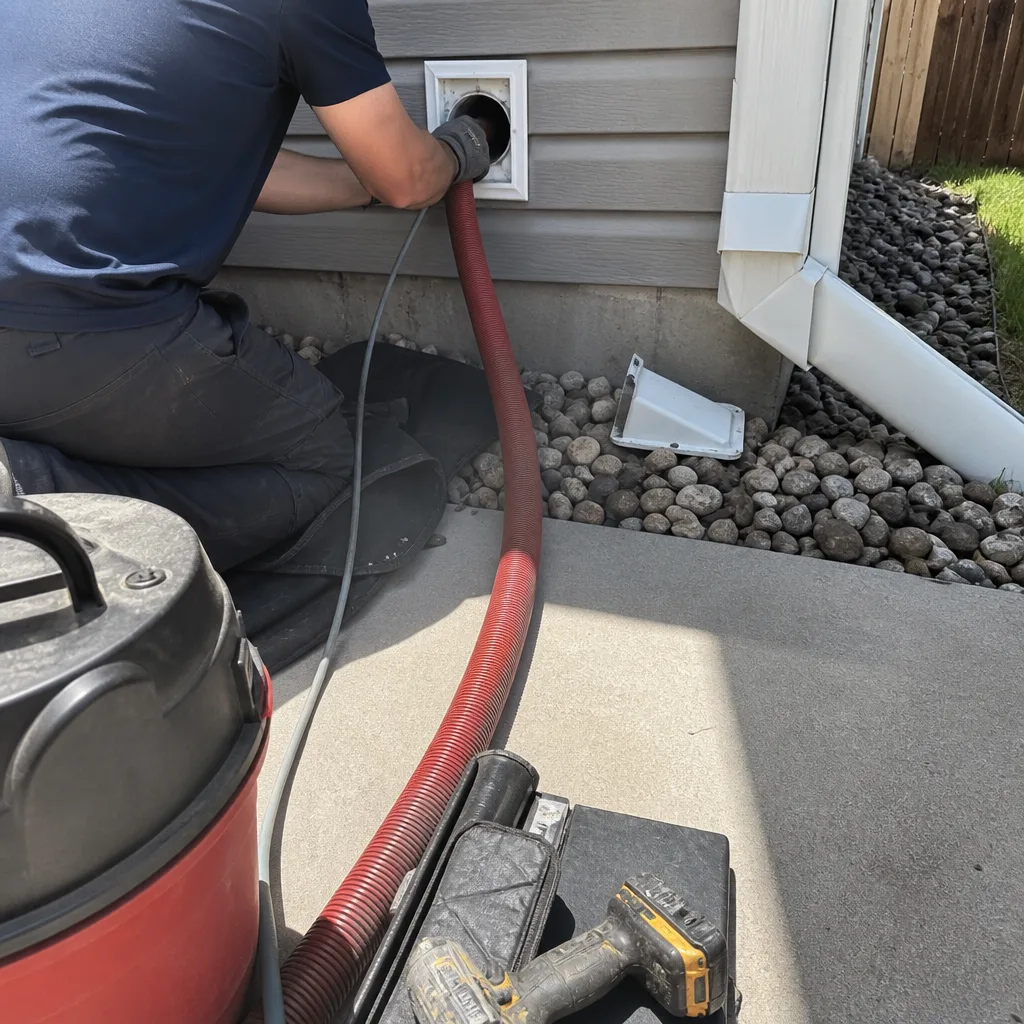 After
After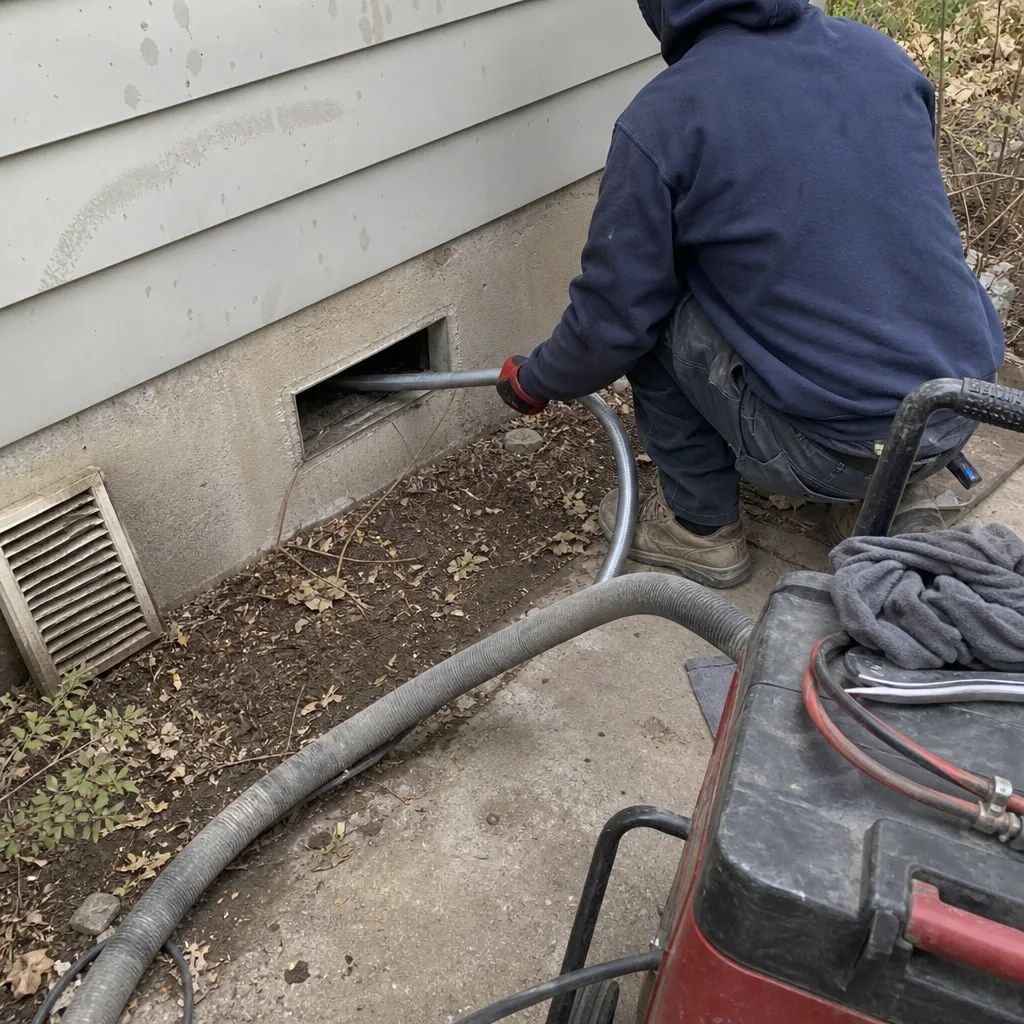 Before
 After
AfterAir Duct Cleaning Warning Signs: A Aurora Homeowner’s Reference Guide
Visible dust on your registers is what every duct-cleaning ad shows first. In most Aurora homes we’ve worked in since 2013, that dust wipes off with a damp cloth and means nothing about the condition past the first six inches. The signs that actually matter are inside the duct wall, in the trunk line, at the plenum - the sheet-metal box that distributes air from your furnace - where debris builds where no homeowner’s hand can reach. This guide shows you how to find those real warning signs using a flashlight, a phone camera, and a piece of tissue paper, so you can tell the difference between a cosmetic issue and a systemic problem before you agree to any Air Duct Cleaning services.
Quick Answer
The warning signs that indicate your Aurora home actually needs air duct cleaning are: persistent musty or chemical odors that return after filter changes, visible debris accumulation past the first elbow of the duct run, uneven airflow between rooms tested with tissue paper, and post-renovation contamination visible on camera. For a deeper dive, see The Complete Guide to Air Duct Cleaning in Aurora. Surface dust on registers, occasional sneezing, or a single high energy bill are not reliable indicators on their own.
Table of Contents
- Register Dust vs. Systemic Debris: The Six-Inch Rule
- The Odor Taxonomy: Musty, Burned Dust, and Chemical Off-Gassing
- Airflow Asymmetry: Testing Room-by-Room Pressure Balance
- Post-Renovation Contamination: Drywall Dust vs. Mold
- Cleaning Problem vs. Mechanical Problem
- What the Photo Record Should Show
- Aurora-Specific Factors: Climate, Codes, and Common Issues
- Common Mistakes to Avoid
- When to Call a Professional
- Frequently Asked Questions
BeforeAfterRegister Dust vs. Systemic Debris: The Six-Inch Rule
Every spring in Aurora, we get calls from homeowners in Tallyn’s Reach and Conservatory who’ve wiped their registers clean three times in a week. The register face - the visible grille - is a dust magnet because it’s where warm air meets cooler room air, creating static that pulls particles from the room itself. That dust is not coming from inside your ducts. It’s coming from your living space and settling on the nearest surface.
The test is simple. Remove the register and shine a flashlight into the boot, the short vertical duct that connects your floor or wall opening to the main trunk line. If the first six inches look like the register face, that’s normal. If the debris continues past the first elbow or bend, or if you can see accumulation on the horizontal surfaces deeper in the run, that’s systemic debris. It didn’t blow in from your living room. It built up over years because your system’s airflow was too low to keep it suspended, or because the trunk line has a low point where particles settle.
Here’s how to document what you find:
- Turn your system off for ten minutes so dust isn’t actively moving.
- Remove the register. Most lift out or have two screws.
- Take a photo with your phone flash on, aimed straight down the boot.
- Take a second photo angled toward the trunk line connection.
- Compare the two images. Surface dust is uniform and light. Systemic debris is clumped, discolored, or visibly thick on horizontal surfaces.
We’ve delivered Air Duct Cleaning in Aurora homes where the register looked typical but the camera showed a 2-inch debris ridge at the trunk connection. That ridge restricts airflow, creates a moisture trap, and becomes a reservoir for whatever your filter missed. The homeowner would never have found it without looking past the six-inch mark.
One note on filters: a MERV 13 filter in an older Aurora home with undersized return ducts can actually worsen this problem. The restriction starves the blower for air, reducing velocity in the trunk line and letting particles settle where they otherwise wouldn’t. If your filter looks pristine after three months but your boots show debris past the elbow, that’s a clue your system is running outside its design parameters.
The Odor Taxonomy: Musty, Burned Dust, and Chemical Off-Gassing
Smell is the most reliable warning sign and the most misdiagnosed. Homeowners in Aurora’s older neighborhoods like Original Aurora and Del Mar Parkway often tell us their ducts “smell bad” and expect a single explanation. There isn’t one. The odor type tells you the source, and the source determines whether cleaning helps, hurts, or is irrelevant.
Musty or earthy odors indicate microbial growth. In Aurora’s semi-arid climate, true mold in ducts is less common than in Gulf Coast cities, but it happens where there’s a moisture source: a humidifier set too high, a condensate pan that doesn’t drain fully, or a duct run through an unconditioned crawl space where summer humidity spikes. Musty odor that strengthens when the system first starts and fades after ten minutes suggests growth on the evaporator coil or in the plenum, not deep in the branch lines. Cleaning the ducts without addressing the coil is incomplete work.
Burned dust odor is the sharp, acrid smell when heat first kicks on each fall. It’s normal for the first 24-48 hours of heating season. If it persists past that, or appears mid-winter, it suggests excessive dust accumulation on the heat exchanger or in the supply plenum. This is where cleaning helps, but it’s also where a cracked heat exchanger becomes a possibility. The smell of burned dust from a cracked exchanger is often accompanied by soot traces around registers or a faint metallic undertone. We flag this in our inspection and recommend a furnace technician before any cleaning proceeds.
Chemical or solvent odors are the most urgent and the least responsive to duct cleaning. They point to off-gassing from materials inside the duct system: deteriorating flex duct liner, adhesives from a DIY repair, or - in homes built 2004-2010 - imported drywall with sulfur compound emissions. In Aurora’s Stapleton and Green Valley Ranch developments, we’ve found flex duct where the interior liner had degraded to a sticky residue that smelled like warm plastic. No amount of negative-pressure extraction removes that; the duct material itself needs replacement.
Documenting odor requires notes, not just memory. Write down: when it started, whether it’s constant or cyclical, which rooms are affected, and whether it changes with temperature or humidity. That record helps a technician distinguish between a cleaning candidate and a mechanical problem.
Airflow Asymmetry: Testing Room-by-Room Pressure Balance
Uneven heating or cooling is often blamed on “dirty ducts,” but the cause is frequently a structural issue: a disconnected joint, a crushed flex duct, or a damper that’s been closed for years. Before you pay for cleaning, verify whether the problem is blockage or bypass.
The tissue paper test costs nothing and takes ten minutes. You’ll need a single sheet of standard bathroom tissue and a helper if your home has two stories.
- Close all exterior doors and interior doors except the room you’re testing.
- Turn your HVAC fan to “ON” at the thermostat.
- Hold the tissue vertically, 2 inches from the supply register, and observe for 30 seconds.
- Note whether the tissue pulls toward the register (strong flow), flutters weakly, or falls away.
- Repeat at every supply register in the home.
- Repeat at return registers. The tissue should pull firmly toward these.
What the results mean:
- One room weak, others strong: Likely a disconnected or crushed branch duct, or a closed damper. Cleaning won’t fix this. Duct repair or sealing is needed.
- All rooms weak on one floor: Possible trunk line separation or major blockage at a junction. We’ve found this in Aurora townhomes where the main trunk runs through a shared wall and settling has pulled joints apart.
- Strong at supplies, weak at returns: Undersized or blocked return path. Common in 1980s Aurora ranches with a single central return. The system can’t move enough air regardless of duct cleanliness.
- Weak everywhere: Blower issue, dirty evaporator coil, or severely restricted filter. Not a duct cleaning issue.
In our experience across Aurora, from Murphy Creek to Southshore, airflow asymmetry points to a mechanical problem about 40% of the time. The other 60% involves partial blockage from debris accumulation at trunk junctions, where low velocity lets particles settle into a dam-like formation. A documented photo record from inside the trunk line shows which case you have. We deliver this as standard on every CleanRun Air Duct Cleaning Aurora home visit - Haven Standard Clause 1 requires the written price before work, and the photo record is how we prove what work was actually needed.
Post-Renovation Contamination: Drywall Dust vs. Mold
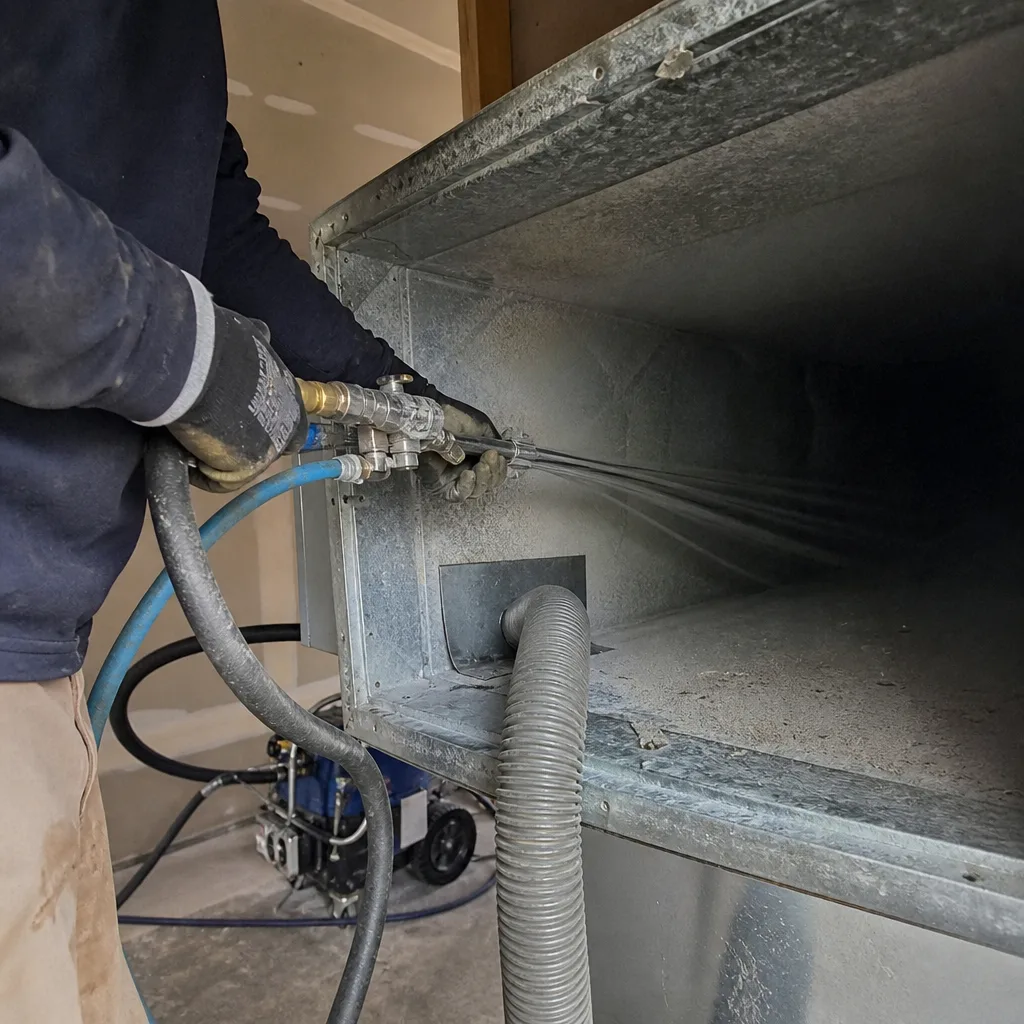
Aurora’s building boom from 2015 to 2022 means tens of thousands of homes have had recent renovation work: basement finishes, kitchen remodels, whole-home additions. Every one of those projects generated particulate that your HVAC system moved or trapped. The warning signs appear 3-12 months after completion, when the fine dust that bypassed temporary filters has settled into patterns that affect airflow or air quality.
Drywall dust has a specific signature: it’s white to off-white, extremely fine, and tends to coat horizontal surfaces in the duct with a uniform layer that looks like flour. It accumulates at low points and elbows because the particles are dense enough to settle but light enough to stay airborne in turbulent flow. In flex duct - the ribbed plastic tubing common in newer Aurora construction - drywall dust packs into the corrugations and can reduce effective diameter by 20% or more.
Mold or microbial growth looks different. It’s patchy, often greenish or black, and grows in discrete colonies where moisture and organic material coincide. In Aurora’s climate, mold in ducts almost always traces to a specific moisture event: a humidifier malfunction, a roof leak that wet ceiling insulation, or a condensate line backup that saturated surrounding materials. The colonies follow the water path, not the airflow path.
Why the distinction matters: drywall dust responds to mechanical agitation and negative-pressure extraction, the standard duct cleaning protocol using equipment like Rotobrush or Nikro systems. Mold requires source removal of the contaminated material, followed by treatment of the underlying moisture problem. Cleaning moldy flex duct without replacing it is temporary at best and can spread spores through the system at worst.
If your renovation was within the last two years and you’re seeing reduced airflow or white dust at registers, request a camera inspection focused on the trunk lines that served the construction zone. The photo record should show whether you’re looking at settled construction debris or something that requires material replacement. Our crews document this distinction on every post-renovation job - it’s why we include the photo record as a standard deliverable, not an upsell.
Cleaning Problem vs. Mechanical Problem
The duct cleaning industry profits when every symptom looks like a dirty duct. Some symptoms are mechanical failures that cleaning will not resolve and may delay. Knowing the difference protects you from paying for the wrong service. Read our DIY vs Professional Air Duct Cleaning: The Aurora Homeowner’s Decision Guide to learn more.
Signs that indicate cleaning:
- Visible debris accumulation on camera inspection past the first elbow
- Persistent musty odor that strengthens at system startup
- Register dust that returns within days of cleaning, accompanied by debris deeper in the boot
- Post-renovation white dust at multiple registers
- Documented reduction in airflow that correlates with visible blockage
Signs that indicate mechanical repair:
- Carbon monoxide detector alerts or frequent headaches during heating season - possible cracked heat exchanger
- Water stains on ceiling below duct runs - leaking condensate or disconnected humidifier line
- Rattling or whistling that changes with fan speed - loose duct joints or failed flex duct supports
- One room consistently 8+ degrees different from thermostat setpoint - bypass or major leak
- Static pressure reading above 0.5 inches water column on standard residential systems - restriction, not contamination
We’ve arrived at Aurora homes where the homeowner requested duct cleaning for “poor airflow” and found a disconnected 12-inch flex duct lying in an attic, blowing conditioned air into insulation. Cleaning that duct would have been irrelevant; reconnecting it solved the problem in twenty minutes. Our inspection protocol, backed by the 365-Day Done Right Promise, includes a basic mechanical check before any cleaning recommendation. If we find a mechanical issue, we document it with photos and recommend the appropriate trade - we don’t sell cleaning for problems cleaning won’t fix.
The HVAC Cleaning in Aurora page covers coil and blower maintenance, which is the mechanical complement to duct cleaning. Many homes need both, but the sequence matters: clean the heat exchanger and coil before the ducts, or you’ll recontaminate the ductwork immediately.
What the Photo Record Should Show
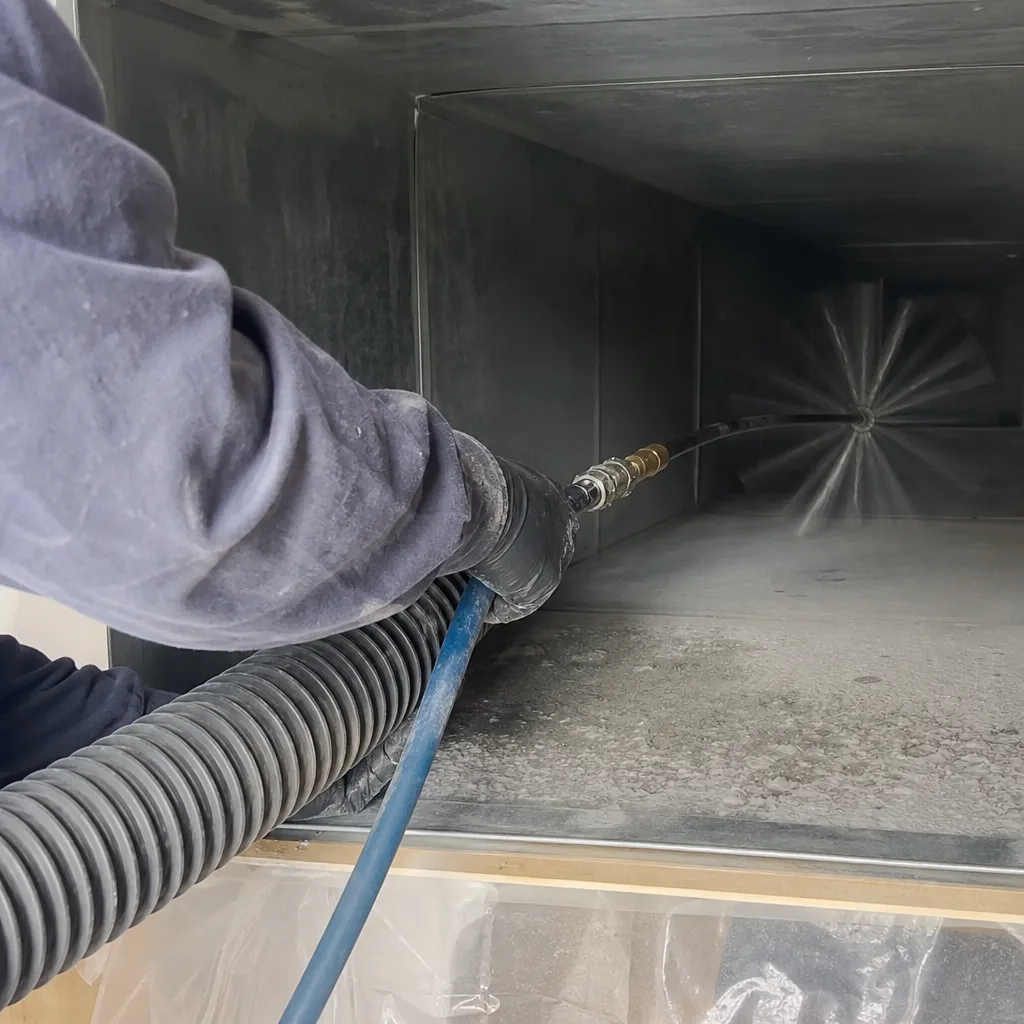
Every duct cleaning company says they “check your ducts.” Fewer than half, in our estimation, deliver a photo record that lets you verify what was found and what changed. Since 2013, CleanRun has photographed the inside of every duct run before and after service. The photo record is not marketing; it’s evidence that protects both parties.
Here’s what a legitimate photo record includes:
- Location label: Each photo is tagged with the room, register position, and direction of view (toward trunk or toward register).
- Pre-cleaning image: Shows the full circumference of the duct interior, with the camera light revealing surface condition. Debris should be visible and measurable against known duct dimensions.
- Post-cleaning image: Same position, same lighting, showing removed debris. The metal or duct liner should be visible and uniform.
- Trunk line documentation: Images at access points showing the main distribution ducts, where the most significant accumulation typically occurs.
- Deliverable format: Digital gallery or PDF provided to the homeowner, not held on a company server with “access on request.”
What the photo record prevents: the $79 coupon that becomes a $600 job because “we found mold” that the homeowner cannot verify. What it enables: comparing before and after to judge whether the cleaning was thorough, and having documentation if problems recur within the warranty period.
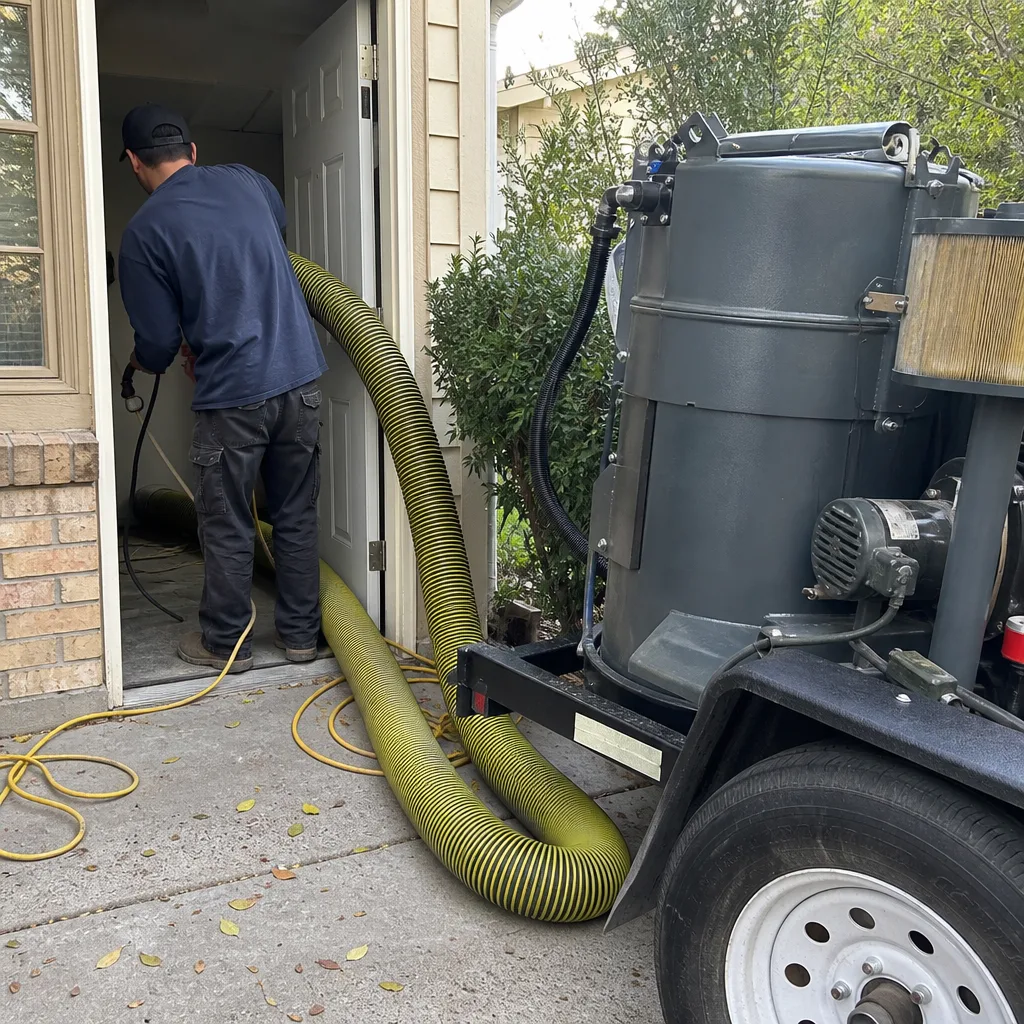
Our equipment includes Rotobrush and Abatement Technologies systems with integrated camera capability, so the technician sees what the brush contacts in real time. This matters in Aurora’s older homes with mixed duct materials - galvanized steel, duct board, and flex - where aggressive cleaning can damage fragile components. The camera shows the technician when to switch tools.
Aurora-Specific Factors: Climate, Codes, and Common Issues
Aurora’s elevation, climate, and building stock create duct conditions that differ from coastal or southern markets. Understanding these local factors helps interpret warning signs accurately.
Semi-arid climate and dust loading: Aurora receives 15-17 inches of precipitation annually and sits at 5,400 feet elevation. The thin, dry air carries more particulate than humid climates, and the high evaporation rate means dust that enters your system stays dry and mobile rather than clumping. This sounds like good news, but it means fine particles penetrate deeper into the duct network before settling. The debris we find in Aurora trunk lines is often finer and more uniform than in humid climates, requiring finer filtration and more thorough extraction.
New construction and flex duct prevalence: Homes built 2000-2020 in Aurora’s eastern developments - Reunion, Tollgate Crossing, Tallyn’s Reach - predominantly use flex duct for branch lines. Flex duct is cheaper to install but degrades faster than metal, especially where it rests on trusses or passes through unconditioned attics. The warning sign is reduced airflow in specific rooms that worsens over 5-10 years, not suddenly. Camera inspection reveals compression, sagging, or liner degradation.
Code requirements: Aurora follows the 2021 International Mechanical Code with local amendments. New duct installations require pressure testing and sealing verification, but existing systems have no maintenance mandate. This means a 1995 ranch in Hoffman Heights may have original ductwork that was never designed for modern filtration and has accumulated 30 years of loading. The warning signs in these homes are often multiple and overlapping: airflow asymmetry, odor, and visible debris together.
Wildfire smoke events: The 2020 and 2021 fire seasons pushed smoke particulate into Front Range homes at unprecedented levels. Standard HVAC filters capture large particles but miss PM2.5 and smaller. Homeowners who ran systems continuously during smoke events may have significant fine particulate loading that doesn’t show on standard camera inspection but affects air quality. Specialized testing or more aggressive filtration upgrade, not standard cleaning, may be indicated.
Hard water and humidifier scale: Aurora’s municipal water is moderately hard (120-150 ppm calcium carbonate). Whole-home humidifiers with evaporative pads accumulate mineral scale that can flake into ducts and resemble debris. The warning sign is white, crystalline particles at registers that crunch when crushed. This is not biological contamination and doesn’t respond to antimicrobial treatment; it requires humidifier maintenance or water treatment.
Common Mistakes to Avoid
- Assuming register dust means dirty ducts. In Aurora’s dry climate, register dust is often room air particulate that settles on the first surface it contacts. Wipe the register and check past the six-inch mark before concluding anything.
- Accepting “mold” claims without photo evidence. Microbial growth in ducts is less common than advertised. Demand images that show colony structure, not just dark smudges that could be ordinary dust.
- Cleaning before diagnosing mechanical issues. A cracked heat exchanger, disconnected duct, or failed blower will cause symptoms that mimic dirty ducts. Fix the mechanical problem first, or you’ll pay twice.
- Ignoring post-renovation timing. Drywall dust and construction debris show up months after project completion, not immediately. If your basement finish was last winter and you’re seeing issues now, that’s the likely source.
- Choosing per-vent pricing. This model incentivizes superficial work on many outlets rather than thorough trunk line cleaning. A whole-system approach with one flat price per system, agreed in writing before work starts, aligns the company’s incentive with actual results.
- Skipping the photo record. Without documentation, you have no proof of what was found or what changed. Every legitimate provider should deliver this without request.
- Treating all odors the same. Musty, burned, and chemical odors have different sources and different solutions. Misdiagnosis leads to paying for cleaning that doesn’t address the actual problem.
When to Call a Professional
Call for inspection when you’ve documented one or more of the following: debris visible past the first elbow on your own camera check, persistent odor that doesn’t resolve with filter replacement, airflow asymmetry confirmed by tissue testing, or symptoms that began after recent renovation. Don’t call because you saw a coupon or because it’s “been a while.”
CleanRun Air Duct Cleaning Aurora offers free estimates in Aurora - call (720) 513-5159. Every estimate includes a written price before any work begins, under Haven Standard Clause 1, and if you’ve received another company’s written quote, we provide a Free Second Opinion with our number next to theirs. Our crews are background-checked and uniformed under Haven Standard Clause 3: Verified Crews, and every job concludes with a Documented Photo Record of every duct run, included as standard.
Frequently Asked Questions
Whole-system air duct cleaning in Aurora typically ranges from $450 to $850 for a standard single-family home, depending on system size, duct material, and accessibility. CleanRun delivers one flat price per system agreed in writing before work starts - no per-vent add-ons, no post-inspection upsells. Call (720) 513-5159 for an exact quote; estimates are free.
The $79-$149 coupon model typically covers a brief vacuuming of accessible register boots, not full trunk line cleaning with negative-pressure extraction and photo documentation. The low price gets the truck on your driveway; the upsell happens after arrival. Ask any provider whether their price includes trunk line access, mechanical agitation, and a delivered photo record before you compare numbers.
Demand a photo record showing the inside of every duct run before and after service, with location labels. At CleanRun, this is standard on every job, not optional. If a company won’t show you what they found and what changed, you have no basis to evaluate their work.
For most Aurora homes without recent renovation, pets, or smokers, every 5-7 years is reasonable if no warning signs appear. Homes with multiple pets, recent construction, or occupants with respiratory sensitivity may benefit from more frequent inspection. We don’t recommend routine cleaning on a fixed schedule without evidence of need.
Register faces and boots are safe for homeowner cleaning with a vacuum and brush. Past the first elbow, ductwork contains sharp metal edges, electrical components near the plenum, and in some older Aurora homes, asbestos-containing duct tape or insulation. We recommend professional inspection before any internal work. Our crews use professional-grade equipment from Rotobrush and Abatement Technologies with integrated safety protocols.
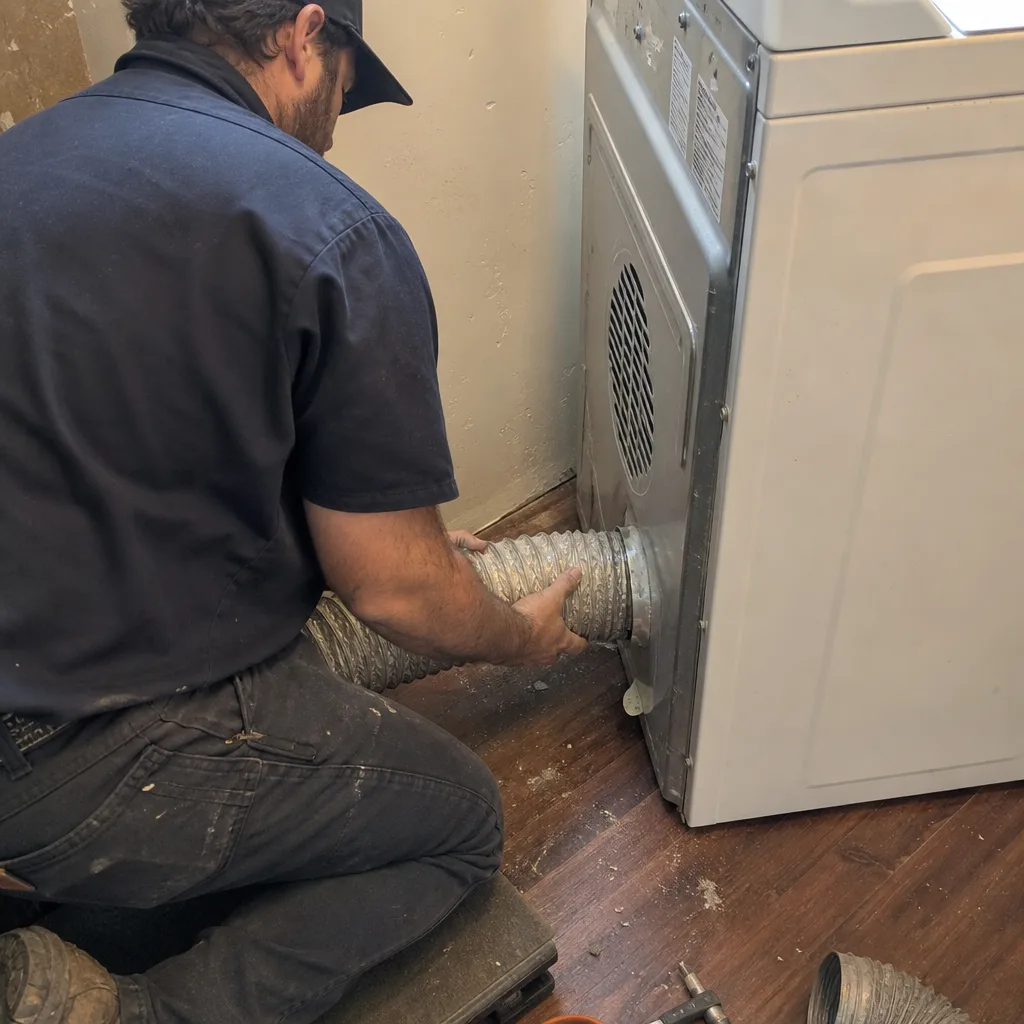
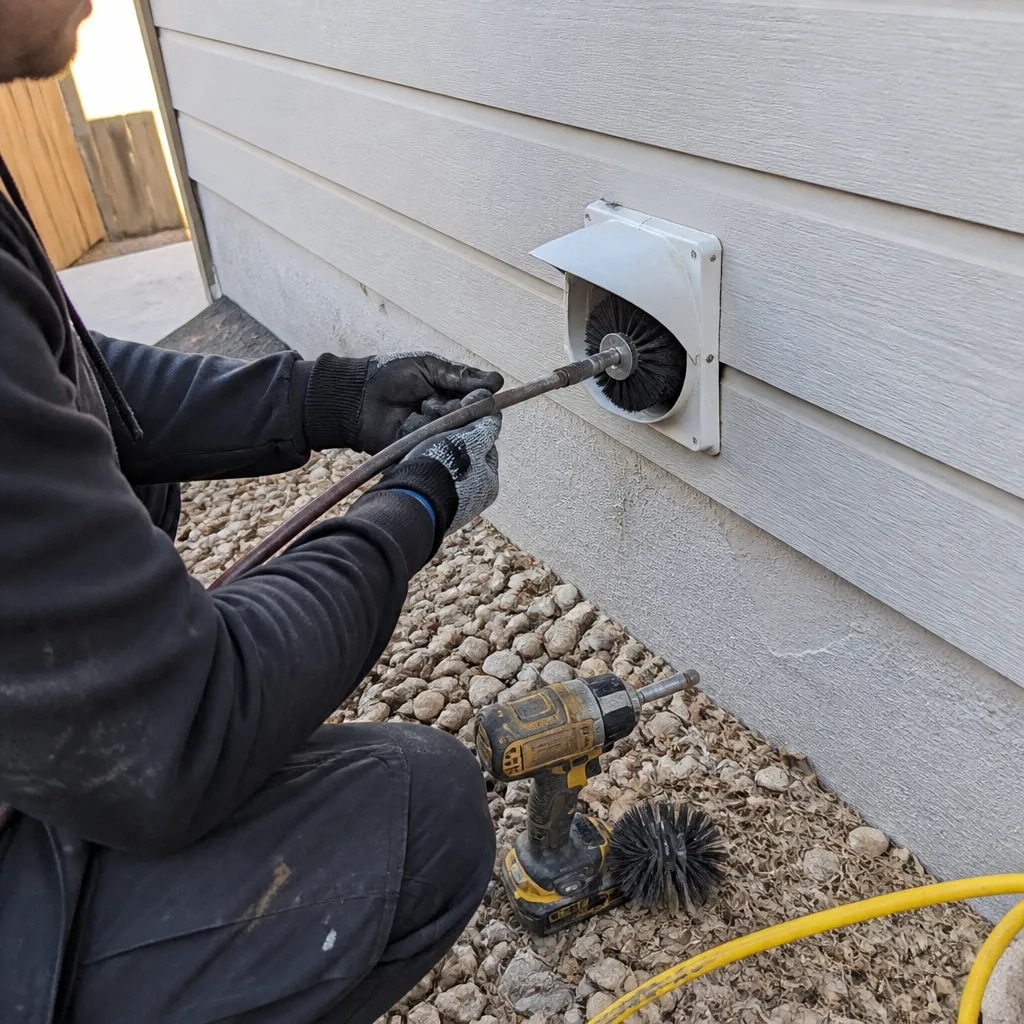
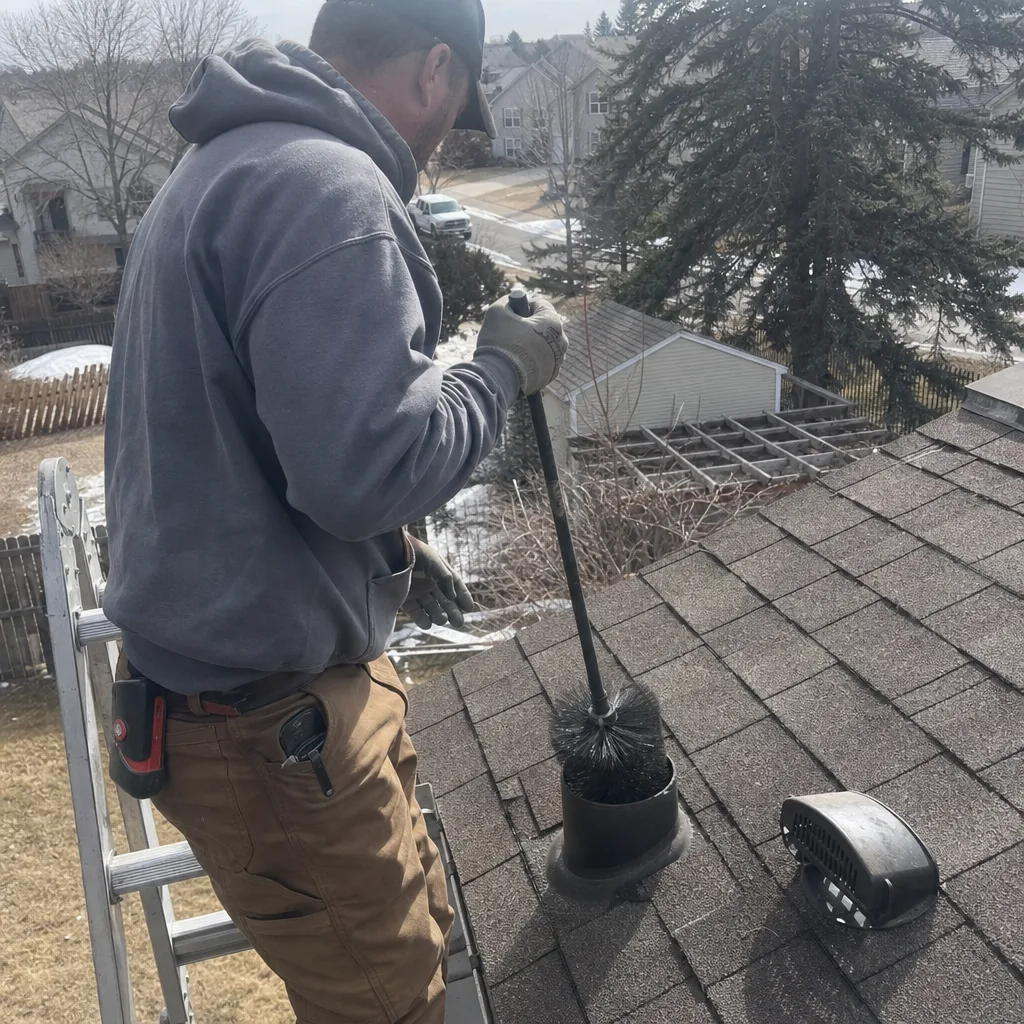
Air duct cleaning addresses the HVAC distribution system that heats and cools your home. Dryer Vent Cleaning in Aurora addresses the exhaust duct from your clothes dryer, which is a separate system with different fire safety implications. Dryer vents should be inspected annually; duct cleaning is event-driven based on warning signs.
The Bottom Line
The warning signs that matter are observable, photographable, and specific: debris past the first elbow, odor with a identifiable character, airflow imbalance confirmed by simple testing, and post-renovation contamination with a known timeline. Surface dust on registers, vague discomfort, or marketing pressure are not reasons to schedule service. Document what you find, demand the same documentation from any provider, and never agree to work without a written price that covers the complete system. Explore our more guides & resources for additional homeowner tips. Since 2013, CleanRun has served over 52,000 homes with this approach: written price first, photo record last, and the 365-Day Done Right Promise in between.
Written by Tomas Reyes, Owner at CleanRun Air Duct Cleaning Aurora, serving Aurora since 2013.